
Malaysia's electric-vehicle market is expanding, and EV owners are increasingly being offered elaborate packages before they have even collected their cars. A new EV may be shown with ceramic coating, full-body PPF, dark window tint, roof film and windscreen protection on the same quotation. But an electric drivetrain does not automatically make every one of those treatments essential.
What matters is the car's paint and glass construction, the routes it travels, where it is parked, which cameras and sensors are fitted, and what the owner actually wants to protect. A Tesla Model Y, an XPENG X9, a BYD sedan and a more budget-conscious electric hatchback can have very different priorities. Some owners will gain more from front-end film coverage than an expensive full wrap. Others may care more about legal window tint or the comfort of a large glazed roof.
This guide separates the purpose of each treatment, explains what workshop evidence can—and cannot—show, and offers a practical selection framework. Examples are drawn from user-supplied Ceramic Pro and Magnus Pro photography and videos. These demonstrate film-fitting techniques and branded facilities; they are not laboratory tests, and individual video vehicle specifications are not assumed without verified job records.
The essentials
Key takeaways
Electric cars do not require a separate, universal type of ceramic coating or PPF simply because they use batteries; vehicle-specific surface and equipment compatibility matters more.
Coating assists exterior care and cleaning, while PPF creates a separate physical film over selected painted panels. Neither makes a vehicle damage-proof.
A balanced EV protection budget starts with actual exposure—highway stone chips, parking conditions, glazing and expected ownership period—not the longest service list.
Panoramic sunroofs demand individual compatibility checks. Claims of battery-range improvements need controlled energy-consumption evidence, not promotional percentages alone.
Window-tint decisions should compare TSER, finished-glass VLT, comfort and legal requirements; a high infrared rejection number is not equivalent to TSER.
Windscreen film, window tint and SkyShield roof film serve distinct purposes. Cameras, sensors, wipers and glass construction require attention before any relevant installation.
Real installation media and a clear written handover are useful trust signals, but product specifications, actual coverage and warranty terms still need to be confirmed for the chosen vehicle.
Does an EV Need Different Car Protection From a Petrol Car?
The short answer is: not usually in the way advertisements imply. Paint is still exposed to wash marks, bird droppings, traffic residue and road grit. Glass still has to meet visibility and optical requirements. A suitable protective film does not become effective or ineffective purely because the car has an electric motor.
What can differ is the design around the surfaces being protected. Modern EVs may have broad glass roofs, large display-rich cabins, distinctive flush body panels and camera or sensor assemblies integrated near glazing, mirrors and bumpers. Some manufacturers also impose specific restrictions on roof accessories, aftermarket modifications or glass repair procedures. These differences can affect installation technique and product suitability, not the need for invented 'EV-only' coating chemistry.
When evaluating an installer, ask what they inspect on YOUR model. Will the treatment cover a camera zone, sensor housing or heating element? Are there approved instructions for its panoramic glass? Does the company quote the precise film series and warranty rather than simply a branded 'EV package'? Specific answers establish more trust than a broad badge saying 'EV expert'.
Start With the Model, Driving Pattern and Budget
An EV that spends long periods on highways encounters different exposure from a city car mostly used in covered parking. Fast motorway travel may make the bonnet, bumper and front fenders more relevant for paint protection film. Frequent outdoor parking may make glazing comfort worth examining. If the car is leased or likely to be sold soon, the owner may prefer a selective solution rather than a full wrap.
Look at the actual vehicle, not just the nameplate. Larger glass roofs can increase the importance of understanding factory glazing and available shading. A family MPV has different cabin and roof configurations from a compact hatchback. Paint colours, existing damage and the way the owner cleans the vehicle also change priorities. None of these differences justifies automatic upselling.
A useful consultation should start with three questions: What is the main problem to reduce? Which surfaces are exposed? What would count as a worthwhile result? For some customers, a carefully chosen front-end PPF and compliant tint are enough. For others, ceramic coating and no PPF is a rational choice. The correct answer can also be to leave a surface unmodified when the risk, cost or compatibility does not justify treatment. For a broader overview of deciding priorities at delivery, see our best new-car protection guide.
| Your situation | Starting option | Why consider it | What not to assume |
|---|---|---|---|
| Daily city driving, covered parking | Proper washing / optional ceramic coating | Prioritise maintenance and appearance | Every EV needs full-body PPF |
| Frequent expressway use | Targeted front-end CPF or Magnus Pro PPF | Add film to selected exposed painted panels | Stone-chip damage becomes impossible |
| Hot cabin / clear visibility preference | Appropriate Magnus Pro window tint | Evaluate documented TSER and finished-glass VLT | Darker is automatically cooler or legal |
| Large panoramic glass roof | Check factory shading, then assess SkyShield suitability | Evaluate roof comfort and compatibility | Any roof film guarantees longer EV range |
| Windscreen stone-chip concern | Assess suitable WPF | Additional layer on compatible windshield | Guaranteed chip-proof glass or sensor compatibility |
| Distinctive new colour | SHIFT colour PPF | Choose approved finish with film coverage | Same result or durability for every car/model |
| Everyday interior use | Material-specific interior protection if suitable | Protect suitable high-touch surfaces | Stains and abrasion become impossible |
What Makes a Reliable EV Protection Workshop?
It is tempting to judge an installer by the number of luxury EVs in its photographs. A better assessment is whether it can explain the work step by step. Start with a pre-installation visual check of paint, existing film, glass condition, trim and sensitive equipment. Confirm whether any damage is documented before the job. Ask where films will be cut, how contamination is controlled and how relevant equipment is protected.
A strong quotation identifies the exact Ceramic Pro or Magnus Pro product, specific panels or glazing being treated, any preparation included, expected care period and applicable written warranty. Installation photographs can show film alignment and techniques, but they do not alone establish the final quality of every vehicle. At collection, customers should have a chance to inspect coverage, edges, optical clarity and relevant controls in an appropriate way.
For camera or sensor areas, the correct process depends on the automaker and product: a photographic close-up is not proof that a film is compatible with the sensor. If an installer cannot establish compatibility, that area should not be modified just to complete a package. Good practice includes being willing to say no to an unsuitable treatment.
Ceramic Pro 9H: Useful Surface Care, Not Stone-Chip Armour
Ceramic coating is often recommended for a freshly delivered EV because it helps manage the appearance and maintenance of treated surfaces. With suitable preparation, a product such as Ceramic Pro 9H can contribute to gloss, easier routine cleaning and protection against certain everyday environmental contamination under the product's actual care instructions.
It is not a thick physical barrier that prevents every stone impact. A coated bonnet can still receive rock chips, and a coated car can still be scratched by poor washing. Buyers should not confuse pencil hardness terminology with guaranteed resistance to all scratches. The exact Ceramic Pro coating package should also be checked for included paint, glass, wheels and interior work rather than assuming every tier treats the same components.
Ask how the finish will be prepared, what curing and washing precautions apply, and which written warranty governs the selected package. Ceramic coating is often a sensible starting point for an owner who wants easier maintenance but does not need extensive film coverage. It can also complement PPF on eligible areas if the manufacturer-approved installation sequence and maintenance guidance are followed.
Paint Correction Comes Before Long-Term Protection
A vehicle described as 'new' is not automatically free from light swirls, handling marks or contamination. Before coating or a large film panel is fitted, the surface should be assessed under suitable lighting. Machine polishing and paint correction can improve eligible fine marks and finish clarity, but deeper scratches or damaged clear coat may need different work. No responsible shop should guarantee a flawless result from polishing based on an arrival photograph alone.
The preparation conversation matters because a coating follows the underlying surface and clear PPF does not necessarily hide existing defects. The customer should understand which panels will be assessed, which correction steps are included, whether additional work requires approval, and what happens if previously repaired paint is discovered.
The owner-confirmed Ceramic Pro CPF / Urban PPF and Magnus Pro PPF workflow includes complimentary paint correction before film installation to address eligible minor imperfections. That does not mean unlimited restoration is included for every EV. Ask for the actual approved scope. Thorough, realistic preparation is more valuable than claims that an EV requires an exotic new chemical treatment.
Ceramic Pro CPF: When Paint Protection Film Is Worth Considering
Clear paint protection film is a distinct product category from ceramic coating. Ceramic Pro CPF places a film layer over selected exterior painted panels where the owner wants additional resistance to everyday scuffing and some road debris. It may help reduce damage from certain minor impacts and abrasion, but no film eliminates all rock-chip risk. A sufficiently strong impact can damage the film, the paint beneath or both.
For frequent highway drivers, a front-end package can be a reasonable alternative to full-body coverage. The quotation should identify whether the bonnet, bumper, front fenders, mirrors and other specified panels are actually included. A full-front package and a full wrap are not interchangeable. The car's actual contours, sensors and the planned edge-finishing method should be considered before film fitting.
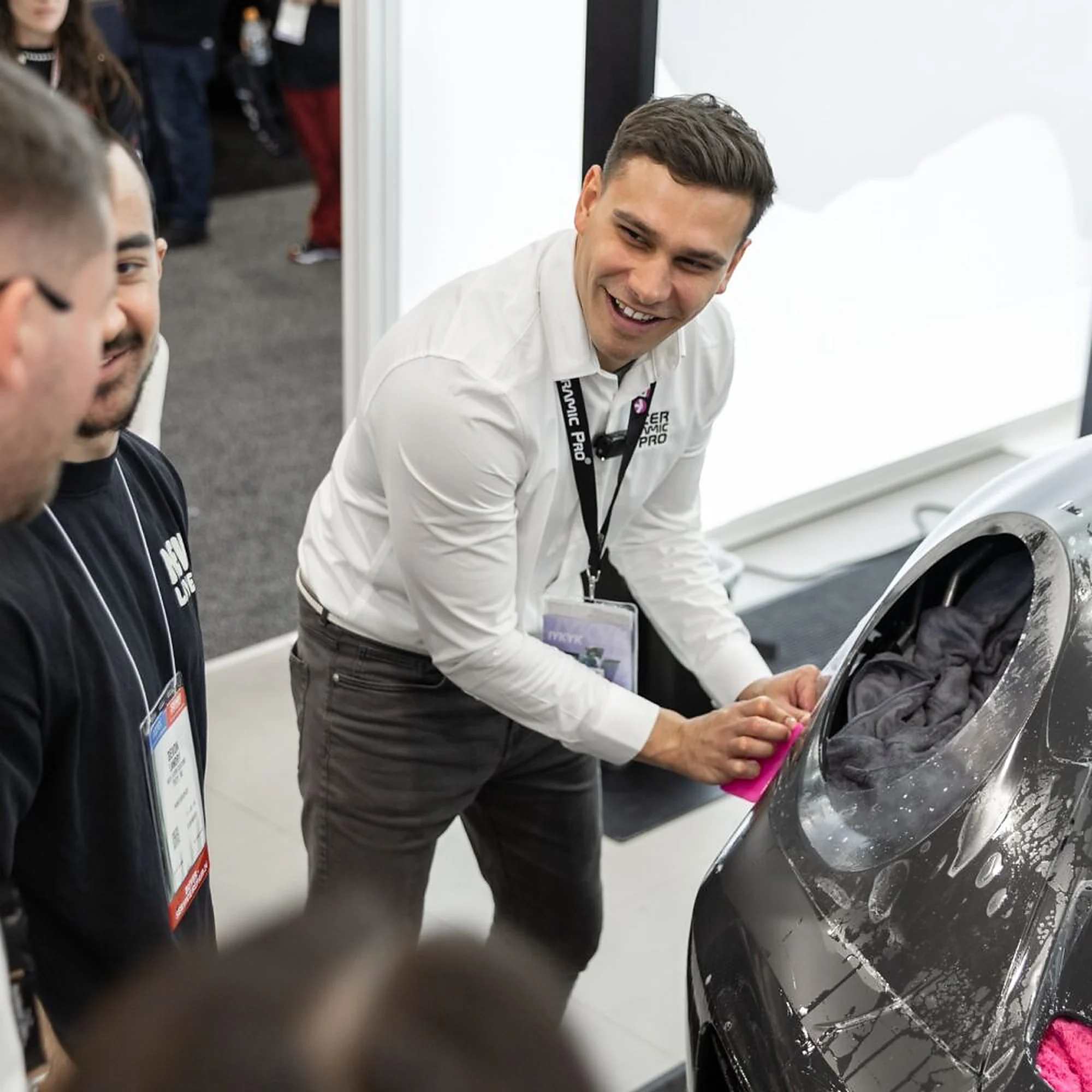
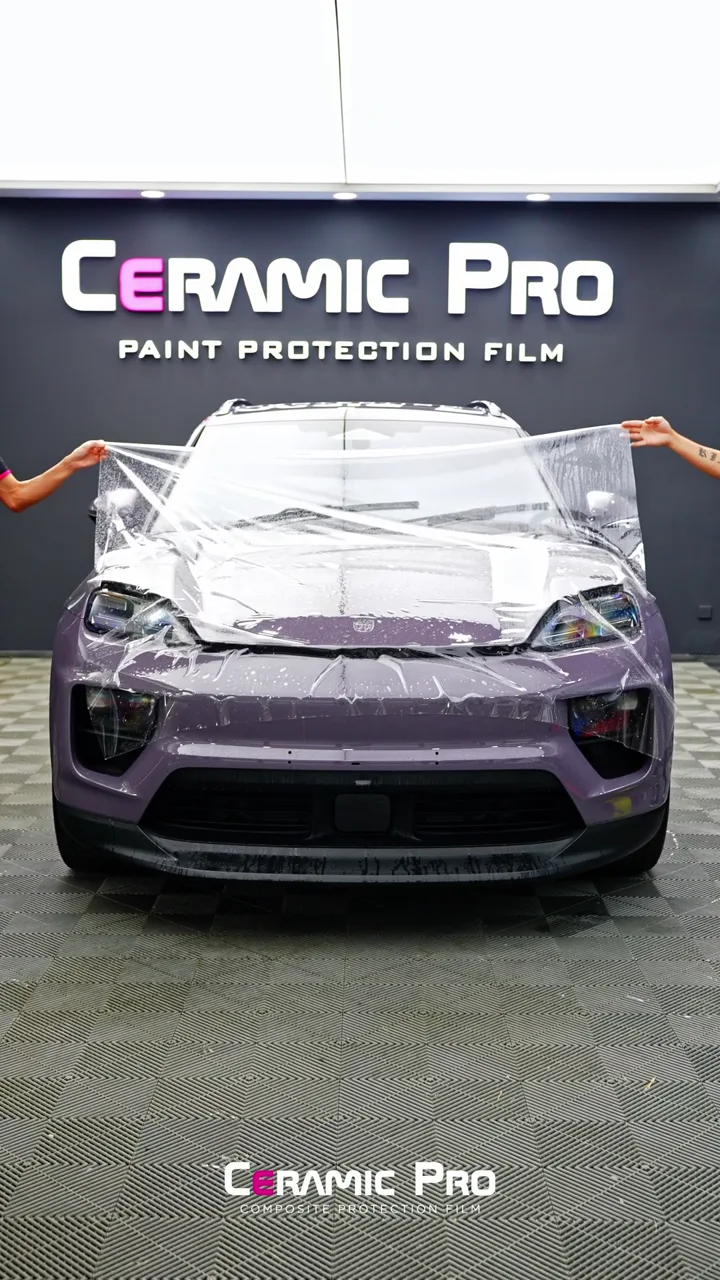
The supplied professional CPF footage shows hands-on film fitting and final presentation. That is evidence of the demonstrated process, not an independent test of impact performance or proof of a particular EV variant. The useful consumer questions are: Which film series? Which exact panels? Which written warranty? What aftercare and curing guidance? And what should be inspected at collection?
Ceramic Pro CPF Installation
Magnus Pro PPF: Compare the Film and the Workmanship
Magnus Pro PPF gives EV and non-EV owners another clear-film option for relevant painted surfaces. It should be evaluated using the chosen product series, documented performance characteristics, intended coverage, visual finish, warranty and installation quality rather than treating every product called 'PPF' as identical.
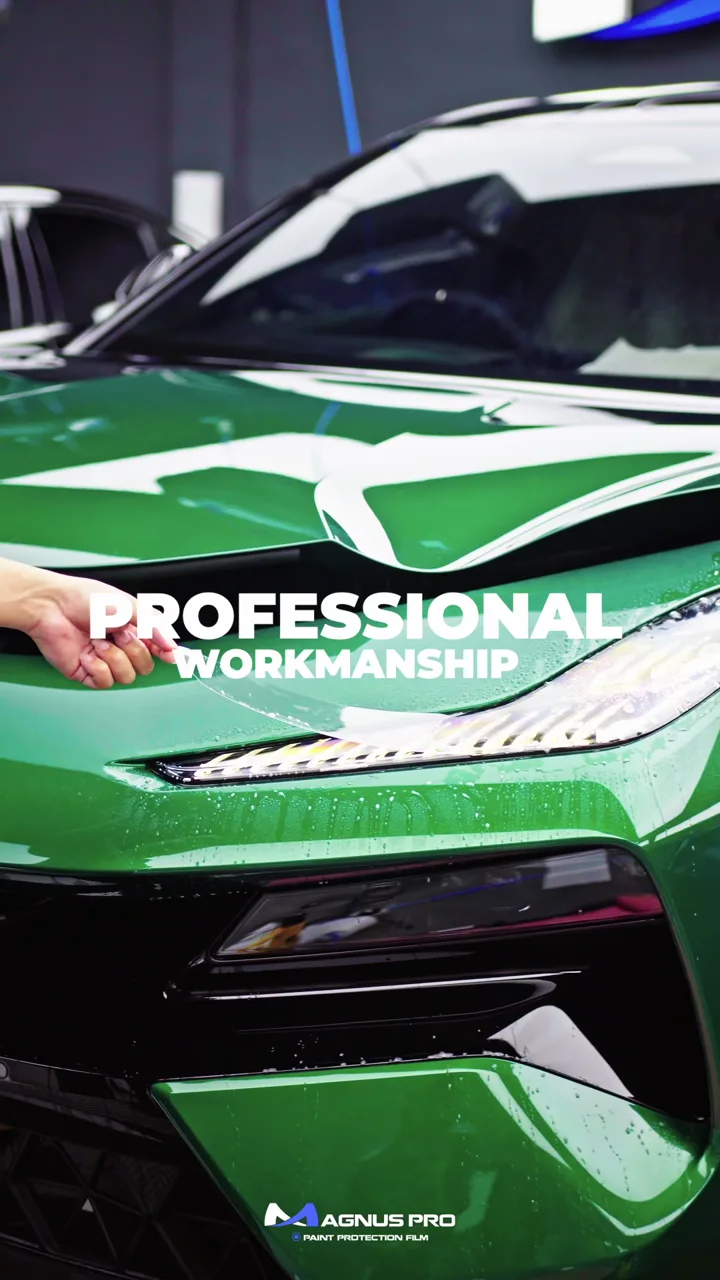
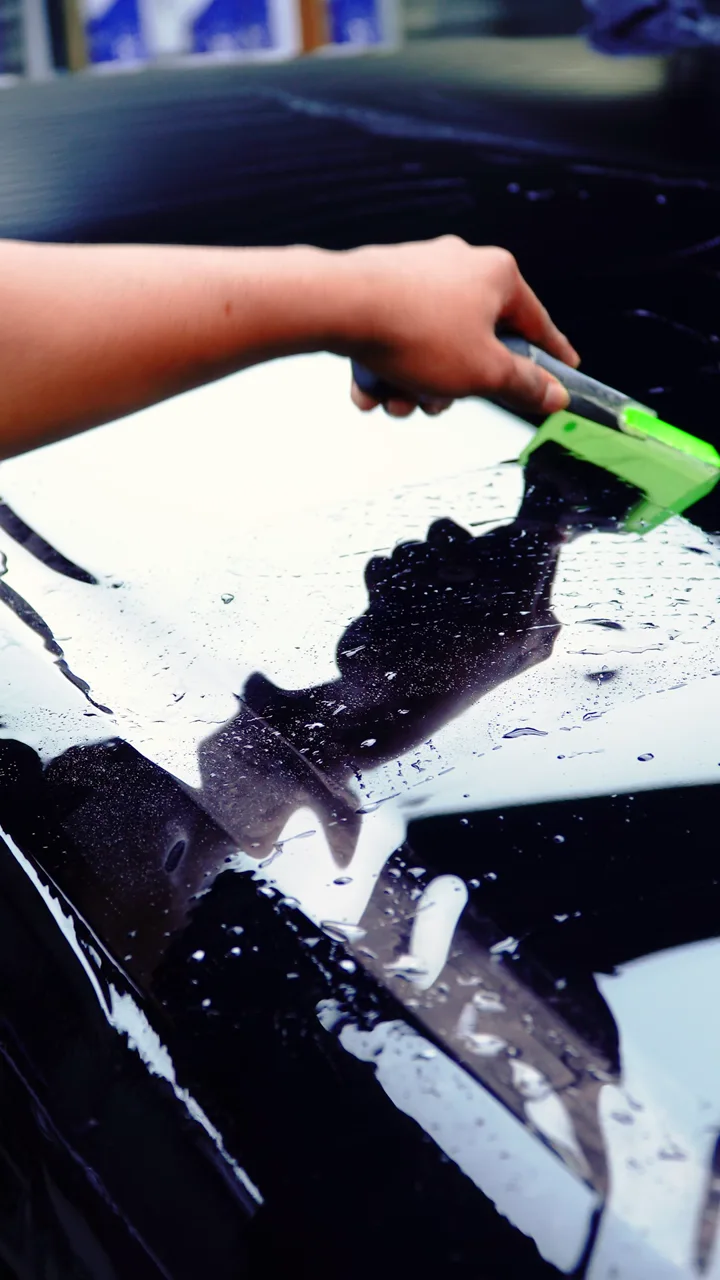
The supplied Magnus Pro photograph and professional video show film preparation and placement on actual vehicle bodywork. The video includes a green vehicle and work near curved panels; this can help readers appreciate the care needed for corners, edges and alignment. We have not independently verified every pictured vehicle's EV powertrain, so the visual should not be described as an EV-specific case study until its work order is confirmed. Readers comparing pattern-cutting approaches can also review our machine pre-cut PPF software guide.
If a customer asks whether they need full-body film, discuss expected driving conditions, paint-colour appearance, exposed areas and the total quote. A selective approach may be more appropriate. Film does not remove the need for washing and care, and claims that one brand is universally better need evidence from comparable film-specific tests rather than a slogan.
Magnus Pro PPF Installation
EV Panoramic Roof: SkyShield, Tint, Shade or No Modification?
Panoramic glass roofs make EV heat protection a major conversation in Malaysia. However, not every roof is constructed the same way. The factory glass may already have coatings, tint, multiple layers or a built-in shade. The suitability of aftermarket films therefore depends on the exact glass design, vehicle manufacturer's instructions, and product compatibility.
Magnus Pro SkyShield is a specialist sunroof protection film option to assess for suitable vehicles. It should not be presented as a universal answer to every panoramic roof. Before approving an installation, ask whether the roof is compatible, what surface the product is fitted to, how optical appearance is affected, how it interacts with existing factory glazing, and what written coverage applies. A removable shade or using the car's existing shade may be the better lower-risk solution for some owners.
Solar radiation entering the cabin can contribute to heat load, and reducing it may reduce air-conditioning demand under particular conditions. That does NOT establish a guaranteed increase in EV driving range. A battery percentage shown on two different journeys is not a controlled energy-saving experiment. To claim a quantified range benefit, a study would need comparable conditions, measured energy use and clearly described limitations. Treat headline '95% infrared', '95% heat reflection' and '95% TSER' as different measurement statements, not synonyms.
Magnus Pro SkyShield Sunroof Protection
EV Window Tint: Compare TSER, VLT and the Finished Glass
Window tint is often a more immediate comfort priority than full-body PPF, but selecting it by how dark it looks can lead to poor choices. Total Solar Energy Rejection (TSER) describes solar-energy rejection under a defined method. Visible Light Transmission (VLT) describes how much visible light passes through the measured glazing. Infrared rejection figures can use selected wavelengths or methods and should not be compared blindly with TSER. Ask for actual film-series data rather than accepting one impressive percentage. For why darker glass can still feel warm, see why a tinted car still feels hot.
For ordinary private passenger cars in Malaysia, the established 2019 regulation requires at least 70% VLT at the front windscreen and 50% at the front side windows. Rear glazing may have different applicable limits; vehicle classes and exemptions vary. The measured glass-plus-film result matters, especially on vehicles with factory-tinted glazing. Check current JPJ rules when publishing, and do not use an isolated film-only laboratory number as proof that the completed car complies.
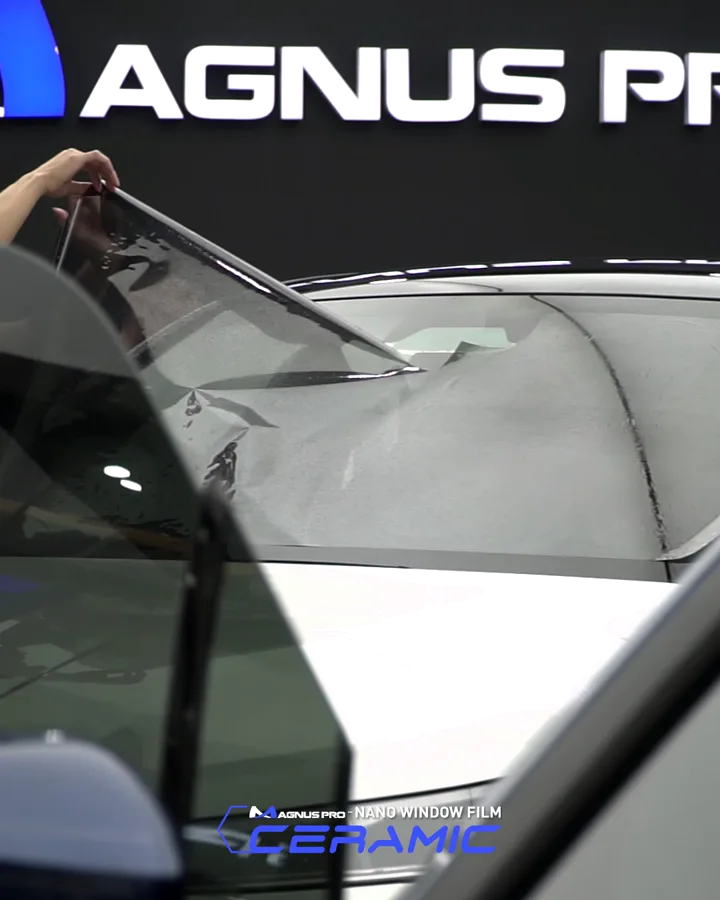
Magnus Pro Nano Ceramic and Nano Titanium are separate window-film offerings and should be discussed in terms of the actual selected series and documented functions. A film that reduces unwanted solar heat does not make the cabin immune to hot weather, and a higher marketing infrared number is not proof of a predictable driving-range gain. Customers should confirm tint suitability near cameras, HUD areas, antenna systems and any manufacturer-restricted glazing zones where applicable.
Magnus Pro Window Film Installation
| Marketing phrase | Useful real evidence | Critical limitation |
|---|---|---|
| '95% infrared rejection' | Film-specific certified testing and wavelength/method | IR measurement is not the same as total solar energy rejection |
| 'Better EV battery range' | Repeated controlled kWh/100 km or energy-use study | Same battery-percentage snapshot is not proof of film-caused saving |
| 'EV-certified PPF specialist' | Verifiable training, formal scope and named certification issuer | Marketing designation is not automaker endorsement |
| 'ADAS-compatible tint' | Model-specific OEM guidance, optical/functional checks | No blanket compatibility from a generic camera image |
| 'Scratchproof ceramic coating' | Honest product limitations, warranty, application data | Coating is not a stone-impact film |
| 'Full coverage PPF' | Signed exact panel map and final inspection | Coverage differs by package, trim and vehicle geometry |
| 'JPJ-compliant tint' | Finished-glass VLT measurement and correct vehicle class | Film-only VLT or an unverified photo is not legal proof |
Windscreen Protection Film Is Not Normal Window Tint
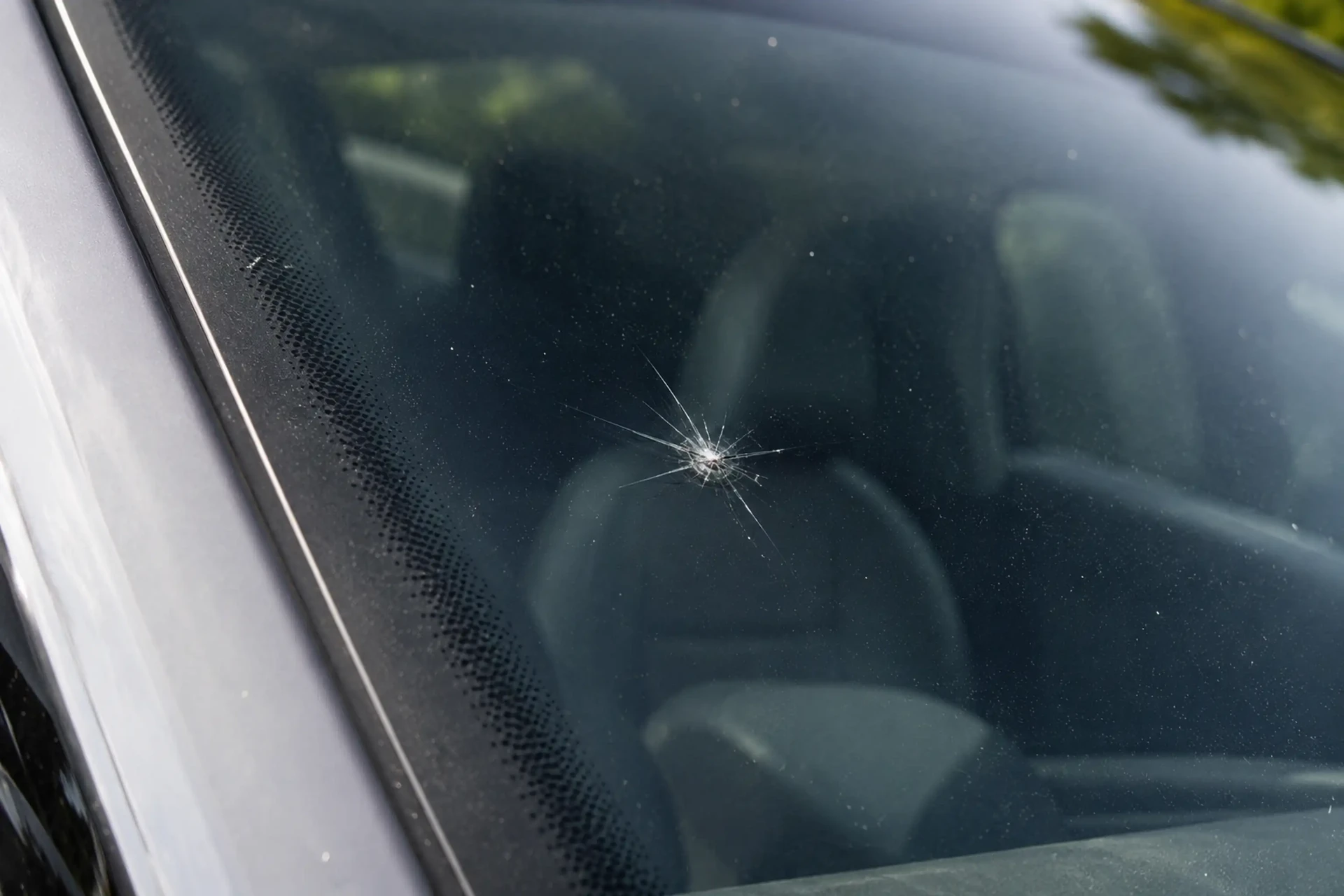
A windscreen faces a different set of exposures from a side window. Small road debris can cause chips; wipers, sensors and optical clarity matter for everyday use. Dedicated windscreen protection film is intended to provide an additional layer of protection for suitable glass against certain road exposure. It cannot guarantee that a windscreen will never crack, chip or require replacement.
Before choosing WPF for an EV, ask about compatibility with the exact windscreen, camera housing, wiper operation, heating functions, optical clarity and applicable care instructions. If there is already damaged glass, its condition must be evaluated rather than concealed beneath another layer. A film that affects a driver's forward view or a camera zone should not be installed simply to increase package value.
The important distinction is functional: window tint is principally evaluated for solar control and light transmission, while WPF concerns external glass exposure and stone-chip risk. Neither is a universal substitute for the other. The supplied WPF graphic is an illustrative media candidate with unverified provenance; until reviewed, the safest publication choice is to omit it and rely on the text or a previously approved genuine workshop photograph linked from the windscreen product page.
Cameras, Sensors and EV Warranty: What Should Be Checked?
Modern EVs may integrate exterior cameras, radar or ultrasonic systems, windscreen camera housings, rain/light sensors, antennas and driver-assistance systems. Their exact design differs between makes, model years and markets. A camera illustration is not evidence that a particular tint or PPF works safely on every vehicle; the correct answer requires manufacturer information and installation-specific assessment.
Ask the installer to identify any relevant restricted zones and explain how trim, sensors and glass-mounted equipment will be handled. Film placement, tools, heat, chemicals and removal work must not interfere with relevant components. If the vehicle's manufacturer specifies constraints or a calibration procedure after glass work, those instructions should be followed by qualified personnel. Do not claim that normal film installation automatically recalibrates safety systems, or that a particular film can never cause interference.
Similarly, warranty language must be precise. An aftermarket accessory is not necessarily a blanket cancellation of every vehicle warranty, but damage caused by an incompatible part or modification may be excluded under the applicable terms. Tesla, for example, expressly notes limits for non-original equipment in its Malaysian Model Y owner manual. Customers should inspect the actual vehicle warranty and ask written questions where suitability is uncertain.
Appearance, SHIFT Colour PPF and Interior Choices
EV ownership is not just about stone chips or cabin temperature. Some owners want a colour change, a different surface finish or easier interior care. Ceramic Pro SHIFT is a colour paint protection film option that should be evaluated using the actual sample, approved finish, panel coverage and maintenance instructions. A branded before-and-after photo can illustrate a visual concept, but it is not a controlled durability experiment or proof that every EV model has been completed in that exact finish.
Interior surfaces also deserve attention. Touchpoints, seats, trims and screens are used frequently, but different materials need different cleaning and protective methods. An interior treatment is not permission to ignore spills or abrasive products, and no generic treatment should be advertised as compatible with every dashboard, screen or seating surface. Check the actual package inclusions and manufacturer's recommendations.
For an owner with limited funds, spending on the colour change or comprehensive interior treatment may make sense only if it matches the goals they care about. Those services are optional personal preferences, not essential engineering requirements for every EV. A credible installer can explain alternatives without making the customer feel under-protected.
The EV Protection Checklist Before Collection and Aftercare
The handover is when a quotation becomes something a customer can inspect. Before leaving, confirm exactly which body panels, glass surfaces and interior areas were treated. Review visible film edges and seams, ask what normal curing looks like, check relevant cameras and controls where appropriate, and collect the names of the products used. Request warranty documents and specific cleaning precautions rather than relying on a verbal promise that everything is maintenance-free.
Later maintenance should follow the actual coating and film guidance. Wash methods still matter: avoid aggressive abrasion, unsuitable chemicals and attempts to peel or repair film edges yourself. Before using pressure washing or mechanical cleaning near vulnerable film edges, follow the supplier's written advice. Ceramic Pro Malaysia's After Care & Warranty page should be the primary route for genuine product-specific warranty and care instructions. Auto Bath Club can be mentioned as a separate optional car-care service, not as a mandatory warranty condition.
For local enquiries, customers can consult Ceramic Pro Malaysia's published locations directory for outlets in Glenmarie, Petaling Jaya and Kuala Lumpur and ask whether the exact desired film, package and vehicle-specific work are available at that branch. Use only existing verified outlet and GBP links, never invented place IDs or independent EV-only GBP profiles. The supplied ribbon-and-handover image supports the idea of a finished-vehicle presentation; it does not establish which product was fitted to the pictured car.
Frequently Asked Questions
Conclusion
The best EV protection package is the one you can justify for the surfaces and risks on your actual car. Ceramic Pro 9H, Ceramic Pro CPF, Magnus Pro PPF, SHIFT colour PPF, window tint, windshield film and SkyShield do not all perform the same job. The strongest advice distinguishes which surface is being protected, what improvement is realistic, which limitations apply and what evidence supports the claim. An installer who can show genuine work, document compatible materials, explain legal visibility and warranty conditions, and give a clear handover earns more confidence than one who relies on 'EV expert' labels alone.
Sources & Methodology
- Ministry of Transport Malaysia — 2019 VLT Review Paper
2019 parliamentary paper detailing Malaysia VLT amendment context for private passenger vehicles.
- Jabatan Pengangkutan Jalan Malaysia (JPJ) — Vehicle Tint Application Guidance
Confirm current JPJ rules for vehicle class, exemptions and finished glass-plus-film compliance before installation.
- Tesla Malaysia — Model Y Owner's Manual (Non-Original Equipment Terms)
Manufacturer reference illustrating how aftermarket modifications and non-original parts are addressed under vehicle terms.
- Ceramic Pro Malaysia — After Care & Warranty
Published product-specific aftercare guidance and written warranty conditions.
- Ceramic Pro Malaysia — Outlets & Locations Directory
Official Glenmarie, Petaling Jaya and Kuala Lumpur outlet addresses, contacts and verified map directions.
- Ceramic Pro Malaysia — Protection Products Overview
Current Ceramic Pro and Magnus Pro product routes covering coating, PPF, SHIFT, tint, windscreen and SkyShield.
Methodology note: TSER, IRR and VLT numerical claims require relevant product-specific data sheets and finished-glass measurement. No unsupported performance table, unverified VLT test reading or original EV range-saving study is offered in this guide.