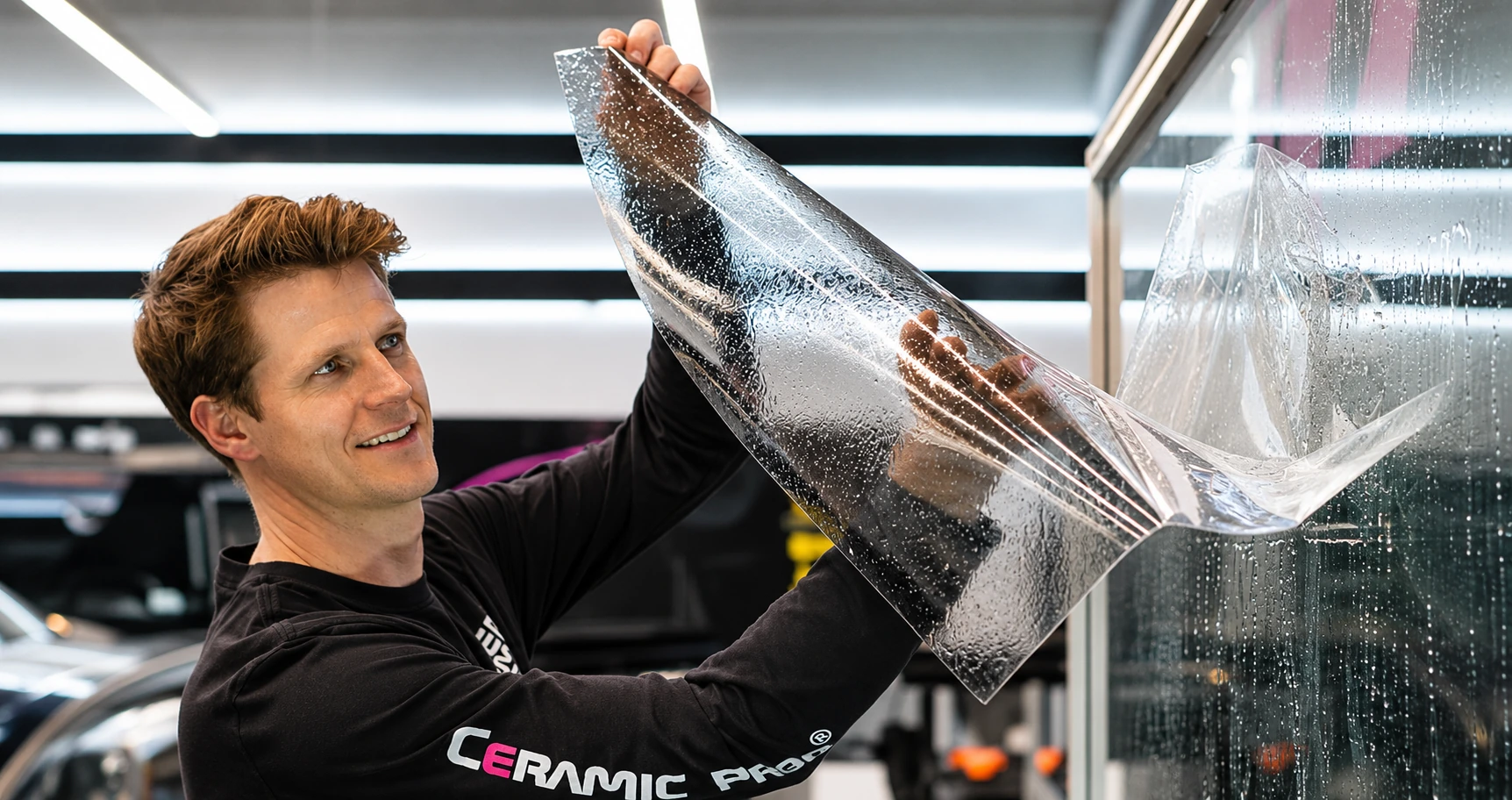
You have already paid to tint your car, but driving through Malaysian afternoon traffic still feels uncomfortable. The dashboard gets hot, sunlight feels intense through the windows, and the cabin becomes extremely warm after parking outside.
Does this mean your window tint is ineffective?
Not necessarily.
Window film is designed to reduce the amount of solar energy entering through treated glass. It does not prevent every source of heat from entering a vehicle or make a parked car remain at an air-conditioned temperature.
The amount of heat you experience depends on the film's actual performance, the glass being covered, sunlight exposure, roof construction, air-conditioning performance and the condition of the installation.
A dark-looking film may also perform very differently from a high-quality solar-control film.
Before spending money replacing your tint, it is worth understanding what is actually causing the discomfort.
This guide explains eight possible reasons your car remains hot, how to investigate them and when a better-performing window film may be worthwhile.
We also explain how Magnus Pro Nano Ceramic and Nano Titanium fit into the decision—without assuming every heat problem requires new tint.
Editorial Disclosure
This guide is published by Ceramic Pro Malaysia, which offers Magnus Pro automotive window films.
Product recommendations are based on documented manufacturer information and customer requirements, not independent head-to-head laboratory testing.
The essentials
Key takeaways
Window tint reduces solar heat gain through treated glass; it cannot eliminate every source of cabin heat.
Even a properly tinted car can become very hot when parked in direct sunlight.
Darker film does not automatically provide better overall heat rejection.
TSER is more meaningful for overall solar-energy rejection than an isolated IRR percentage.
Windscreen glazing, panoramic roofs and untreated glass can contribute to cabin heat.
A hot cabin does not automatically mean the film has failed; air-conditioning and exposure also matter.
Professional inspection and correct film specifications should guide any replacement decision.
01 — Why Can Your Car Still Feel Hot After Tinting?
Window tint reduces a portion of the solar energy entering through treated glass. It does not eliminate all heat sources or actively cool the cabin.
Sunlight can enter through glass while the roof, body panels and other vehicle surfaces absorb and transfer heat.
Interior materials such as seats, dashboards and trim also absorb solar energy and become warm.
These surfaces can then release heat into the surrounding cabin air.
During prolonged outdoor parking, a vehicle can continue gaining heat even when effective solar-control film is installed.
Window tint may reduce or slow solar heat gain through the treated glass, but it does not guarantee a comfortable parked-cabin temperature.
While driving, the air-conditioning system removes heat from the cabin.
Comfort then depends partly on the balance between heat entering the vehicle and the cooling system's ability to remove it.
A suitable window film can help reduce solar heat load, but it cannot control the complete thermal environment of the car.
02 — Eight Reasons Your Tinted Car May Still Be Hot
1. Your Tint May Have Low Overall Solar Heat Rejection
Not all window films reject the same amount of solar energy.
Some films are selected mainly for appearance or privacy rather than strong solar-control performance.
A film may appear dark while providing limited overall heat rejection.
Check the exact film model and its documented specifications, particularly TSER.
Do not assume every product marketed as ceramic tint has identical performance.
2. You May Be Looking at IRR Instead of TSER
Some window-tint sales presentations emphasize a very high infrared rejection percentage.
IRR can be useful, but its meaning depends on the wavelengths and measurement method.
An isolated IRR percentage does not describe all incoming solar energy.
Review the film's TSER, relevant infrared measurements, VLT and applicable testing conditions.
A high infrared percentage alone cannot prove a particular level of cabin comfort.
3. Your Film May Be Dark but Not Thermally Effective
Tint darkness is generally described through Visible Light Transmission, or VLT.
Lower VLT means less visible light passes through.
However, visible-light transmission and overall solar heat rejection are different measurements.
Two similarly dark films can perform differently against solar energy.
A lighter film may provide useful thermal performance depending on its construction.
Choosing darker film purely to reduce heat may create unnecessary visibility or legal-compliance concerns.
4. Your Windscreen May Be the Main Heat Entry Area
A windscreen is a large glass surface exposed to changing sunlight angles.
Depending on the vehicle's orientation, significant sunlight may enter through it.
If its solar-control performance differs from the side windows, the driver may still feel strong heat around the dashboard and front cabin.
Check the actual windscreen film and glazing configuration.
Do not automatically replace every window because the front cabin feels hot.
Any replacement must comply with applicable windscreen VLT requirements.
5. Your Sunroof or Panoramic Roof May Add Heat
Vehicles with panoramic glass roofs have an additional potential pathway for solar heat.
The actual impact depends on the roof's construction, factory glazing treatment, sunshade position and sunlight exposure.
High-performance side-window tint does not automatically address a large roof-glass area.
Before recommending film for a sunroof or panoramic roof, check the vehicle manufacturer's requirements and the glass system's compatibility.
Do not assume aftermarket film is suitable for every roof-glass construction.
6. Your Car Has Been Parked in Strong Sunlight
A properly tinted vehicle can still become very hot during prolonged outdoor parking.
Heat continues to affect the roof, body panels and other surfaces.
Warm interior materials can retain heat even after the vehicle starts moving.
This does not automatically mean the window tint is defective.
Pay attention to how the cabin cools after starting the vehicle and whether discomfort persists during normal driving.
Do not promise that a particular tint specification will guarantee a fixed parked-cabin temperature.
7. Your Existing Tint May Have Aged or Developed Defects
Window film may develop visible defects over time.
Examples include peeling, bubbling, discoloration, cracking or deterioration.
These issues can affect appearance, visibility and installation integrity.
However, a visual defect does not establish the exact remaining solar-control performance.
Similarly, a film that looks normal is not automatically proven to perform to its original specifications.
Identify the installed product, inspect its condition and review applicable warranty terms before deciding whether replacement is appropriate.
8. Your Air-Conditioning System May Be Underperforming
A hot cabin is not always a window-tint problem.
An underperforming air-conditioning system can leave the vehicle uncomfortable even when effective film is installed.
Possible issues include inadequate cooling, weak airflow, an obstructed cabin filter or faults requiring professional diagnosis.
If the cabin remains hot during ordinary driving, have the cooling system assessed.
Replacing window tint cannot repair a defective air-conditioning system.
03 — Parked Car vs Driving Car: Why the Difference Matters
A vehicle can feel very different depending on whether it is parked or moving.
When the Car Is Parked
The air-conditioning is normally off.
Sunlight continues affecting the glass, roof and exterior surfaces.
Interior materials absorb and release heat.
Effective window tint may reduce solar heat gain through the treated glass, but it cannot guarantee a cool cabin after extended parking.
When the Car Is Moving
The air-conditioning system can remove heat.
Ventilation, sun direction and the external environment influence comfort.
Reducing solar energy through the glass may help manage the cooling load.
What Should You Evaluate?
Consider:
- How much direct sunlight reaches the cabin.
- How quickly the cabin cools after starting.
- Whether one window feels particularly uncomfortable.
- Whether the air-conditioning works correctly.
- Whether the installed film has appropriate documented solar-control specifications.
Do not judge the film solely by how hot the dashboard feels after hours of outdoor parking.
04 — TSER, IRR, IRER and VLT: Which Numbers Matter?
These window-tint measurements are not interchangeable.
| Metric | Meaning | Useful For | Limitation |
|---|---|---|---|
| TSER | Total Solar Energy Rejection | Overall solar-energy rejection | Does not predict a fixed cabin temperature |
| IRR | Infrared Rejection | Infrared rejection within the stated measurement range | May not reflect total solar energy |
| IRER | Infrared Energy Rejection | Broader infrared-energy assessment under its defined method | Requires comparable test conditions |
| VLT | Visible Light Transmission | Amount of visible light passing through glazing | Does not establish total heat rejection |
| UV Rejection | Reduction in ultraviolet transmission | UV exposure and interior protection considerations | Does not alone establish thermal comfort |
Why TSER Deserves Attention
TSER assesses overall solar-energy rejection under specified test conditions.
This makes it particularly relevant when comparing broad solar heat-control performance.
However, specifications must be compared on an equivalent basis.
Film-only results and film-on-glass measurements may not be identical.
Why IRR Can Be Misleading on Its Own
Infrared rejection can be measured over different wavelength ranges.
A percentage measured within a limited range should not automatically be compared with another manufacturer's broader-spectrum measurement.
Ask for the test method and actual specification.
Why Darkness Is Not a Heat-Rejection Guarantee
VLT measures visible-light transmission.
It is not a direct measurement of overall solar heat rejection.
Two films with similar VLT can have different solar-control properties.
Choose based on the complete relevant technical information, not darkness alone.
05 — Which Part of Your Car Feels Hot?
Where the discomfort occurs can help identify what needs investigation.
| Observation | Possible Area | Suitable Check |
|---|---|---|
| Strong sunlight through the windscreen | Windscreen glazing and film | Verify film specification and VLT |
| Heat near a side window | Side-glass solar exposure | Check exact film model and solar-control performance |
| Heat coming from above | Roof or panoramic glass | Inspect roof construction and sunshade |
| Very hot cabin after parking | General solar heat buildup | Evaluate parking conditions and cooling behaviour |
| Car remains hot while AC operates | AC system and solar load | Check cooling-system performance |
| Tint is peeling or bubbling | Film condition | Request installation and warranty assessment |
| Dark tint still feels ineffective | Film performance | Check TSER and measurement conditions |
| Different comfort between windows | Different glazing or films | Confirm exact products on each glass area |
These observations are not confirmed diagnoses.
Touching glass or feeling sunlight cannot establish a precise TSER figure.
06 — How to Check Whether Your Existing Tint Is Performing Properly
Step 1 — Identify the Original Tint
Find the product brand, model, VLT option, receipt, warranty details and installation date.
An advertisement for another film series does not establish the specifications of your installed product.
Step 2 — Identify When the Discomfort Occurs
Is the car hottest immediately after parking?
Does it remain uncomfortable during afternoon driving?
Is the heat concentrated on one side?
Does the problem persist when the air-conditioning is running?
Step 3 — Identify the Exposed Glass
Check whether the windscreen, side windows, rear glass and roof have different factory treatments or applied films.
Step 4 — Review Verified Specifications
Check the actual product's:
- TSER.
- IRR or IRER, where provided.
- VLT.
- Testing methodology.
- Shade-dependent performance.
Do not compare incompatible measurement methods.
Step 5 — Inspect the Film Condition
Look for peeling, bubbling, discoloration or damage.
Seek a professional assessment when needed.
Do not remove or damage the film yourself to investigate performance.
Step 6 — Check the Installed VLT
Where required, obtain an appropriate VLT measurement of the glass-and-film combination.
A film's labelled VLT does not necessarily equal the finished glazing measurement.
A VLT meter does not directly measure TSER.
Step 7 — Assess Air-Conditioning Performance
If cooling seems abnormal, have it professionally checked.
Do not assume window film is the cause.
Step 8 — Decide What Action Is Justified
Possible outcomes:
- Keep the existing film.
- Obtain a warranty inspection.
- Replace an affected section.
- Replace an unsuitable tint.
- Investigate another heat source.
Professional diagnosis can help avoid unnecessary expenses.
07 — Can a Heat Lamp Test Prove Which Tint Is Better?
Heat lamps, infrared meters and temperature displays are often used during tint demonstrations.
Their results depend on the test equipment, wavelength range, glass, distance and exposure time.
Infrared Meters
An infrared rejection meter may measure transmission over a specific wavelength range.
That reading is not automatically a measure of full-spectrum TSER.
Infrared Thermometers
An infrared thermometer measures apparent surface temperature.
Its measurement can be influenced by surface emissivity and operating conditions.
It does not directly measure total solar-energy rejection.
Heat-Lamp Demonstrations
A controlled lamp demonstration may illustrate differences between samples.
However, a lamp may not reproduce the full solar spectrum.
Do not claim that a dramatic demonstration guarantees an identical effect on a vehicle under Malaysian sunlight.
Better Evidence to Request
Ask for:
- Exact film model.
- Manufacturer specifications.
- Clear measurement definitions.
- Relevant test conditions.
- Suitable glass-and-film VLT measurements.
- Professional assessment of the actual vehicle.
A sales demonstration is not a substitute for transparent technical evidence.
08 — Can You Install Better Heat-Rejection Tint Without Going Darker?
Yes, depending on the available film specifications.
Window films can manage different portions of the solar spectrum.
This means visible darkness does not directly establish overall heat-rejection performance.
A relatively light film may provide useful solar control.
However, not every film labelled ceramic or premium offers identical performance.
Compare the precise VLT and solar-control specifications.
Why This Matters in Malaysia
The commonly applicable Malaysian private-vehicle tint rules introduced in 2019 specify:
- Front windscreen: at least 70% VLT.
- Front driver/passenger windows: at least 50% VLT.
- Rear side windows and rear windscreen: no minimum VLT under the applicable private-vehicle framework.
Specific categories and exemptions may differ. The rear-window allowance applies to eligible private vehicles equipped with the required side mirrors. Confirm the currently applicable JPJ rules and your vehicle classification before choosing a film.
Compliance must be determined from the final glass-and-film combination.
Do not imply that a film's labelled VLT guarantees legal compliance.
The Better Buying Question
Instead of asking:
"How dark should my tint be?"
Ask:
"Which suitable, legally compliant window film has the documented solar-control performance my vehicle needs?"
09 — When Should You Replace Your Existing Car Tint?
Replacement should be based on the film's condition, actual performance and customer needs.
Replacement May Be Justified When:
- The film has confirmed defects.
- Peeling or deterioration is present.
- Visibility is unacceptable.
- The film no longer suits practical requirements.
- Solar-control specifications are inadequate for the intended use.
- The tint does not comply with applicable law.
- A professional assessment identifies a legitimate replacement need.
Replacement May Not Be Necessary When:
- The film remains serviceable.
- Its documented performance is suitable.
- Heat mainly occurs after prolonged outdoor parking.
- The cooling system is underperforming.
- An untreated roof or other surface causes discomfort.
- The main concern is an unrealistic expectation that tint prevents all cabin heating.
What About Warranty?
Check the actual warranty terms issued for the installed product.
A warranty may cover specified defects subject to conditions.
Feeling hot inside the cabin does not automatically establish a covered manufacturing defect.
10 — Should You Replace All Your Windows or Just One Area?
Not every problem requires a full-car retint.
| Situation | First Action | Possible Outcome |
|---|---|---|
| Existing film is suitable and sound | Investigate other heat sources | Keep existing tint |
| Windscreen has inadequate solar control | Verify its actual specification | Consider targeted replacement |
| One section is peeling | Inspect film and warranty | Replace affected area if justified |
| Several areas have unsuitable specifications | Compare alternatives | Consider partial or full retint |
| Panoramic roof appears responsible | Inspect roof glazing | Evaluate compatible roof solutions |
| Air-conditioning is weak | Obtain AC diagnosis | Repair cooling system if needed |
| Installed tint is non-compliant | Obtain accurate VLT reading | Correct glazing configuration |
These are decision aids, not definitive diagnoses.
Film removal also requires appropriate care.
Existing adhesive, glass features and rear-window defroster elements should be considered before removal.
11 — Which Magnus Pro Window Tint Should You Consider?
Where inspection establishes that replacement is worthwhile, Magnus Pro Nano Ceramic and Nano Titanium are two products customers can evaluate.
The correct choice depends on actual product specifications and requirements.
Magnus Pro Nano Ceramic
Magnus Pro Nano Ceramic is positioned as a ceramic-based window film developed for solar control and optical clarity.
It may be relevant to customers prioritising:
- Thermal comfort.
- Documented solar-control performance.
- Everyday visibility.
- Suitable VLT options.
- Professional installation.
Actual performance depends on the selected product and shade.
Do not claim every option performs identically.
Official manufacturer product information
Magnus Pro Nano Titanium
Magnus Pro Nano Titanium is positioned as a premium window safety-film option.
It may be relevant to customers considering solar control together with the additional safety-focused characteristics documented for the precise product.
However, such characteristics do not guarantee theft prevention or universal impact protection.
Nor do they automatically establish superior heat rejection.
Compare the actual tested specifications and VLT options.
Official manufacturer product information
Our Recommendation
If your main concern is solar heat, begin by evaluating suitable Nano Ceramic specifications.
If additional safety-film characteristics are important, compare the relevant Nano Titanium options.
Choose according to the documented product performance, the vehicle, JPJ requirements, warranty and professional assessment.
We do not recommend replacing serviceable tint solely to change brands.
We recommend replacement when there is a genuine, identifiable need.
12 — What Else Can Help Keep Your Car More Comfortable?
Window film should be part of a broader cabin-comfort approach.
Park in Shade When Practical
Reducing direct sunlight exposure can help limit heat buildup.
Use Suitable Sunshades
A windscreen sunshade can reduce direct sunlight reaching interior surfaces while parked.
Remove it before driving.
Ventilate Safely
When practical and safe, allow accumulated hot air to escape during initial cooling.
Follow the vehicle manufacturer's recommendations.
Maintain Your Air-Conditioning
Proper cooling-system performance matters.
Have unusual cooling problems professionally diagnosed.
Consider Other Glass Areas
Panoramic roofs and other glazing may require separate assessment.
Do not assume every glass panel is compatible with aftermarket film.
Maintain Your Window Film
Follow the manufacturer's aftercare instructions.
Avoid unsuitable chemicals and abrasive cleaning.
13 — Questions to Ask Before Paying for New Tint
Ask the tint installer:
- What exact film is currently installed?
- Can we determine whether the discomfort comes from the film, glazing or another source?
- What are the proposed film's TSER and relevant infrared values?
- Are the performance measurements comparable?
- What will the installed glass-and-film VLT be?
- Does the proposal comply with applicable JPJ requirements?
- Should the windscreen have a different film specification?
- Is a separate panoramic-roof assessment needed?
- Could partial replacement be sufficient?
- What are the warranty conditions and exclusions?
- How will existing film and adhesive be removed safely?
- What is the full installed price, including removal?
A trustworthy installation proposal should explain the actual need and product suitability.
Do not choose a film solely because of a dramatic heat-lamp demonstration or a high infrared percentage.
14 — Final Verdict — Should You Retint a Car That Still Feels Hot?
Not immediately.
A hot cabin does not automatically mean your existing window film has failed.
Suitable solar-control tint can reduce incoming solar energy through treated glass, but comfort also depends on the vehicle's construction, sunlight exposure, roof, parking conditions and air-conditioning performance.
Start by identifying where the heat problem occurs.
Then examine the original film's specifications and condition.
If the tint is defective, unsuitable or genuinely fails to meet reasonable requirements, replacement may make sense.
If it remains appropriate, investigate other causes before spending unnecessarily.
When replacement is justified, Magnus Pro Nano Ceramic is worth considering for its intended solar-control and optical characteristics.
Magnus Pro Nano Titanium may also be appropriate where the customer's requirements include the relevant additional safety-film features.
Choose based on verified product specifications, JPJ compliance and professional installation.
The objective is not simply darker glass.
It is greater driving comfort through informed product selection and realistic expectations.
Frequently Asked Questions
Sources and Further Reading
- Magnus Pro — Nano Ceramic
Manufacturer product positioning; performance depends on the selected option.
- Magnus Pro — Nano Titanium
Manufacturer safety-film positioning; not a guarantee of theft prevention or universal impact protection.
- Ceramic Pro Malaysia — Magnus Pro Window Film
Local product range and specification context.
- Magnus Pro — After Care & Warranty
Consult the terms issued for the installed product; cabin heat alone does not establish a covered defect.
- Ministry of Transport — Private-Vehicle VLT Rules
Official private-vehicle framework: 70% front windscreen, 50% front sides, rear allowance subject to mirrors. Confirm current applicability and classification.