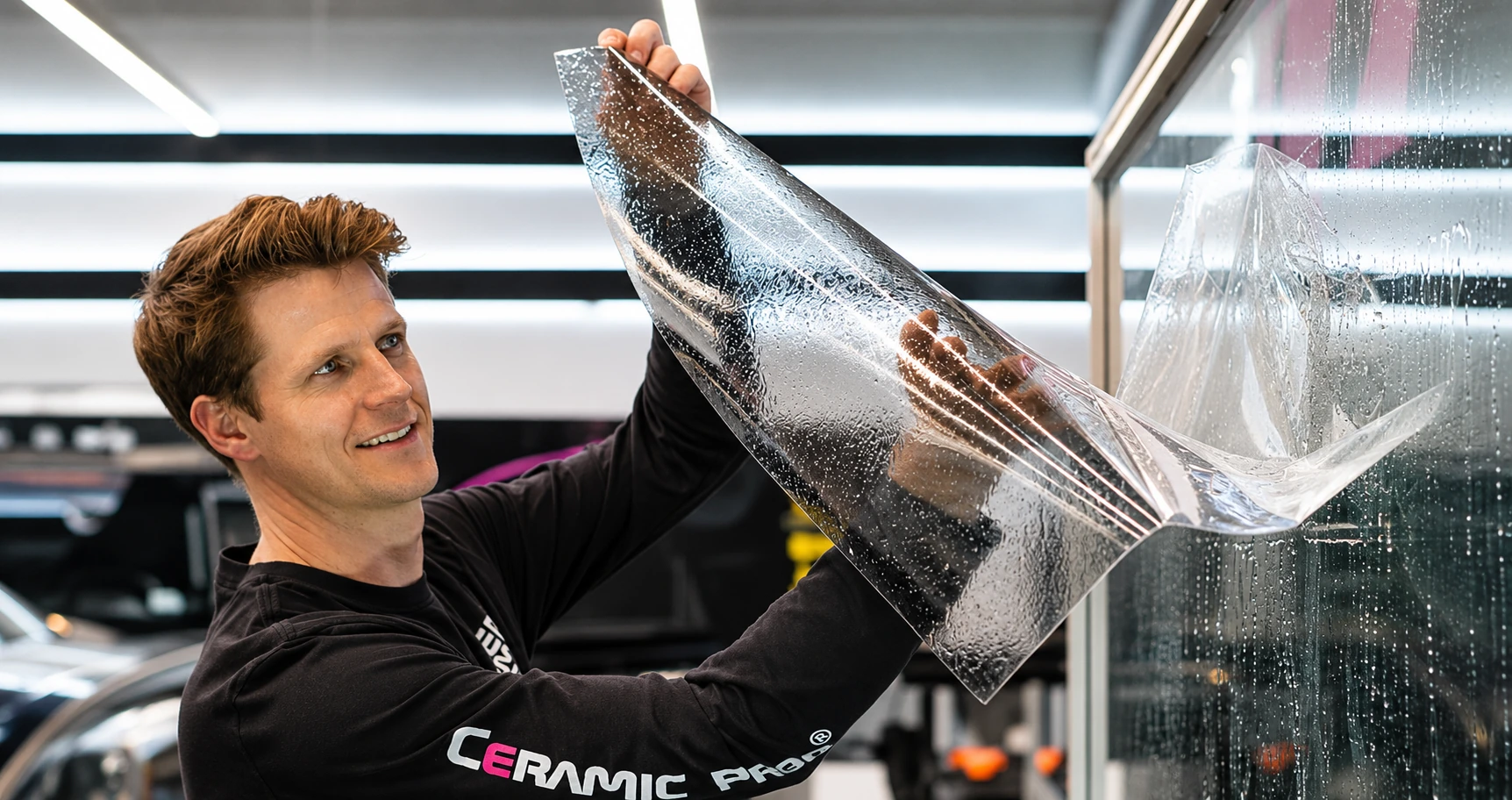

Nano Ceramic window tint is an excellent choice for Malaysian drivers prioritising solar heat rejection, UV protection and clear everyday visibility. Nano Titanium window film is worth considering when you want solar control together with additional safety-focused window protection.
Both technologies are available within the Magnus Pro Window Film range.
They are designed around different customer priorities.
Magnus Pro Nano Ceramic uses an advanced 2-mil multi-layer window film construction focused on driving comfort.
Magnus Pro Nano Titanium uses a thicker 6-mil protective construction designed to combine heat management with enhanced physical window protection.
For Malaysian motorists regularly exposed to strong sunlight, busy roads and changing weather, understanding these differences helps make the right decision.
However, choosing the best car tint involves more than comparing film names or thickness.
Visible Light Transmission (VLT), Total Solar Energy Rejection (TSER), optical clarity, safety features, installation quality and warranty support all matter.
This guide explains the differences between Magnus Pro Nano Ceramic and Nano Titanium, how to interpret their performance and which option may suit your vehicle.
1. Nano Ceramic vs Nano Titanium: What's the Main Difference?
The main difference is the intended balance between everyday solar comfort and additional safety-focused film protection.
Nano Ceramic focuses on advanced solar-control performance, UV protection, glare management and optical clarity.
Nano Titanium combines relevant solar-control performance with a thicker protective film structure designed to support additional glass protection.
Magnus Pro Window Film Comparison
| Feature | Magnus Pro Nano Ceramic | Magnus Pro Nano Titanium |
|---|---|---|
| Main positioning | Premium everyday driving comfort | Solar comfort and enhanced window protection |
| Film thickness | 2 mil | 6 mil |
| Heat rejection | Yes, shade-specific | Yes, shade-specific |
| UV protection | Yes | Yes |
| Glare reduction | Yes | Depends on selected shade and specifications |
| Optical clarity | Key product focus | Important product characteristic |
| Physical safety focus | Conventional solar-control film | Additional safety-focused construction |
| Glass-fragment retention | Not its primary advertised function | Designed to help retain fragments in certain breakage events |
| Published warranty | 10 years | 10 years |
| Special film-replacement benefit | Standard warranty terms | Eligible 1:1 film-replacement programme |
This comparison reflects Magnus Pro's published product positioning. Actual performance depends on the specific film series, shade, glass and test conditions.
The Simple Answer
Choose Magnus Pro Nano Ceramic when everyday comfort, tested heat rejection, UV protection and visibility are your main priorities.
Consider Magnus Pro Nano Titanium when you also value a thicker safety-focused film with additional glass-fragment retention characteristics.
Neither product should be judged solely by thickness or a single advertised percentage.
2. What Is Magnus Pro Nano Ceramic Window Film?
Magnus Pro Nano Ceramic is a professional automotive window film designed to manage sunlight entering through vehicle glass.
Its multi-layer construction combines specialised film materials and functional coatings to provide solar-control characteristics.
Advanced Nano Ceramic Technology
Magnus Pro publishes a multi-layer Nano Ceramic construction incorporating PET film, mounting adhesive, ceramic technology, UV and infrared rejection layers, glare-control features and a scratch-resistant surface.
These elements work together to deliver the intended window film characteristics.
Solar Heat Rejection
Nano Ceramic is designed to reduce the amount of solar energy entering through suitable vehicle windows.
This can support improved driving comfort under Malaysia's strong sunlight.
Actual performance depends on the selected film shade and tested configuration.
UV Protection
The Nano Ceramic system incorporates UV-rejection technology designed to reduce ultraviolet transmission.
This provides an additional layer of UV protection for vehicle occupants and interior surfaces.
Optical Clarity
Clear visibility is important when driving during daytime, heavy rain and after dark.
Magnus Pro Nano Ceramic is designed to balance solar-control properties with optical clarity.
Glare Control
Appropriate window film can reduce some visible-light glare, depending on the selected shade.
The correct balance should maintain suitable driving visibility.
Premium Everyday Comfort
Nano Ceramic is particularly worth considering for owners who want a professional solar-control film system without making enhanced glass-security construction their primary purchasing consideration.
Magnus Pro Nano Ceramic combines heat management, UV protection and visibility in a film designed for everyday driving comfort.
Explore the Nano Ceramic options:
3. What Is Magnus Pro Nano Titanium Window Film?
Magnus Pro Nano Titanium is a premium safety-focused automotive window film.
It combines solar-control features with an additional protective film structure designed for enhanced window protection.
6-Mil Protective Construction
Magnus Pro Nano Titanium has a published film thickness of 6 mils.
Its thicker construction forms part of the product's safety-focused design.
Additional Physical Window Protection
Nano Titanium is engineered to provide a protective layer that can help retain glass fragments during certain breakage events.
This is different from conventional window film whose primary focus is solar-control performance.
Glass-Fragment Retention
When compatible automotive glass breaks, a suitably installed safety-focused film can help hold some fragments together.
The extent of retention depends on the type of glass, film construction, installation, impact and breakage conditions.
Impact-Related Characteristics
Magnus Pro publishes mechanical-performance information for Nano Titanium, including tensile strength and elongation properties.
These technical characteristics contribute to understanding the film's construction.
However, numerical strength specifications alone do not establish guaranteed resistance to every type of impact.
Solar Heat Control
Nano Titanium also provides solar-control performance.
Customers should compare its actual TSER, VLT and UV rejection values for their preferred film variant rather than assuming thickness determines heat rejection.
Premium Safety-Focused Choice
Nano Titanium may appeal to owners who value additional window protection alongside driving comfort.
Magnus Pro Nano Titanium combines solar-control properties with a specialised 6-mil safety-focused film system.
Explore Nano Titanium:
4. Nano Ceramic vs Nano Titanium: Which Rejects More Heat?
Heat rejection is one of the most important considerations for Malaysian drivers.
However, a fair comparison requires looking at the actual performance measurements for each film.
It is not accurate to assume that one film rejects more heat simply because it is thicker.
Understanding TSER
TSER means Total Solar Energy Rejection.
It indicates the proportion of total incident solar energy rejected by a tested window-film and glazing configuration.
TSER considers more than infrared radiation alone.
For meaningful heat-control comparisons, it is generally more useful than looking only at an infrared rejection figure.
Understanding IRR
IRR means Infrared Rejection.
It describes the rejection of infrared radiation within the stated measurement range.
Different products may use different test wavelengths.
A very high advertised IRR number does not automatically mean equally high total solar heat rejection.
Understanding VLT
VLT means Visible Light Transmission.
It measures how much visible light passes through the tested film or glass system.
Lower VLT produces a darker appearance, while higher VLT allows more visible light through.
VLT is not the same measurement as total solar heat rejection.
Understanding UV Rejection
UV rejection describes the proportion of ultraviolet radiation blocked under specified testing conditions.
It is relevant for protecting occupants and reducing UV exposure through vehicle glazing.
UV rejection should not be confused with TSER or IRR.
The Four Measurements That Matter
| Measurement | What It Tells You | Why It Matters |
|---|---|---|
| TSER | Total solar energy rejected | More complete solar heat-control comparison |
| IRR | Infrared energy rejected over a stated range | Indicates one part of solar-control performance |
| VLT | Visible light transmitted | Affects brightness, visibility and JPJ compliance |
| UV rejection | Ultraviolet radiation rejected | Supports UV protection |
Magnus Pro Nano Ceramic Performance
Magnus Pro publishes a TSER figure of up to 84% for its C10 film variant.
This is a shade-specific product claim, not a universal performance value for every Nano Ceramic film.
The C10 shade should not be assumed suitable for every vehicle window or legal position.
What About Nano Titanium?
Nano Titanium should be evaluated using its own published TSER, VLT and UV rejection values for the selected variant.
Do not assume the 6-mil film automatically provides better heat rejection than the 2-mil Nano Ceramic film.
Which Is Better for Heat?
The correct answer depends on the exact film variant and the conditions under which its specifications were measured.
Compare equivalent VLT choices and tested TSER values wherever possible.
Choose window film according to verified solar performance and suitable visibility—not film thickness or one impressive infrared percentage.
5. Is Nano Titanium Better for Window Safety?
Nano Titanium's safety-focused construction is an important point of differentiation.
Its thicker protective structure is designed to support additional physical window protection.
What Happens When Automotive Glass Breaks?
Automotive glass may behave differently depending on its type and construction.
Some side windows are made from tempered glass, while others use laminated constructions.
The glass and any installed film work together as part of the finished window system.
How Safety-Focused Film Helps
A suitable safety-oriented film can help hold some broken glass fragments together in certain incidents.
This can provide an additional glass-retention benefit.
Does It Prevent Break-Ins?
No window film should be described as guaranteeing prevention of forced entry.
The film's contribution depends on the attack, impact, installation and type of glass.
Does It Make Windows Unbreakable?
No.
Nano Titanium does not make automotive glass unbreakable.
The product should be understood as an additional protective film system, not a replacement for the vehicle's original glass safety design.
Is Nano Titanium Worth Considering?
For customers who prioritise additional physical window protection, Nano Titanium offers a meaningful feature beyond ordinary solar-control positioning.
Its primary advantage is the combination of solar control and safety-focused film construction, not a promise that glass cannot break.
6. Which Window Tint Is Better for Malaysia's Hot Weather?
Malaysia's tropical climate makes effective solar-control performance valuable for everyday driving.
Vehicles frequently experience strong sunlight, warm cabin conditions and variable weather.
Both Magnus Pro Nano Ceramic and Nano Titanium are developed for these conditions.
For Daily City Driving
Traffic congestion can expose vehicles to prolonged sunlight.
Nano Ceramic is worth considering when solar comfort and clear visibility are the main priorities.
Nano Titanium may also be suitable if the customer wants its additional safety-oriented features.
For Highway Driving
Long-distance drivers may value heat rejection, optical clarity and comfortable visibility during changing light conditions.
Compare the selected film's TSER and VLT specifications.
For Outdoor Parking
Window film can help manage solar energy entering through vehicle glazing.
However, vehicles parked in direct sunlight can still become hot.
Neither film should be presented as a guarantee that the cabin will remain cool without air conditioning.
For Family Vehicles
Families may value UV protection, solar-control performance and a comfortable cabin.
The appropriate film depends on the chosen shade and installation requirements.
For Premium Vehicles
Owners of premium sedans, SUVs and electric vehicles may consider Nano Ceramic for comfort or Nano Titanium for added window-protection characteristics.
Vehicle-specific glass and electronic features should be assessed before installation.
Practical Recommendation
Both film systems offer relevant benefits.
Choose Nano Ceramic primarily for everyday solar comfort, or consider Nano Titanium when enhanced physical window protection is also important.
7. Which Window Film Is Better for JPJ Compliance?
In Malaysia, window tint selection must consider the applicable JPJ Visible Light Transmission requirements.
Legal compliance depends on the completed window, including both the original vehicle glass and installed film.
Standard Private Passenger-Car Requirements
For standard private passenger cars, the established requirements include:
| Window Position | Minimum Combined VLT |
|---|---|
| Front windscreen | 70% |
| Front side windows | 50% |
| Rear side windows | No minimum for eligible private passenger vehicles |
| Rear windscreen | No minimum for eligible private passenger vehicles |
The rear-window allowance is subject to relevant conditions, including applicable mirror requirements.
Different rules may apply to commercial, public-service and other vehicle categories.
Confirm current requirements with JPJ or PUSPAKOM.
Original Glass Affects the Result
Vehicle glass often has its own visible-light transmission characteristics.
Adding film reduces the amount of light passing through the complete window.
For example, installing a film labelled 70% VLT does not automatically result in a finished windscreen measuring 70% VLT.
Is Nano Ceramic Automatically JPJ-Compliant?
No.
Compliance depends on the actual film variant, original glass and completed-window VLT.
Is Nano Titanium Automatically JPJ-Compliant?
No.
The same principles apply.
Customers should review the selected film's VLT and the complete installed window.
Why Visibility Still Matters
Even where darker tint is legally permitted, customers should consider visibility during night driving, rain and poorly lit conditions.
Choosing the Right Shade
Ask the installer to assess the original glass and recommend a suitable film that meets applicable requirements.
For complete guidance:
JPJ Tint Rules in Malaysia: VLT Limits Explained
A premium tint should balance solar comfort, protection, legal compliance and clear driving visibility.
8. How Important Is Professional Window Film Installation?
The performance and appearance of window tint depend partly on the quality of installation.
A suitable film should be applied by technicians familiar with automotive glass and the selected film system.
Glass Inspection
The installer should inspect the glass and assess its suitability.
Existing tint, scratches or damage may affect preparation.
Thorough Cleaning
Careful cleaning is necessary before applying film.
Dust or contamination trapped during installation can affect the final appearance.
Precision Application
Window film must be positioned and fitted to the shape of the glass.
Different glass curves and vehicle features can influence the installation process.
Water Removal and Edge Finishing
Proper application involves removing installation solution and finishing the film appropriately.
Glass and Vehicle Compatibility
The installer should consider window movement, sensors, defogger lines and other relevant vehicle features.
Curing and Aftercare
Newly installed films may display temporary moisture-related haze while curing.
The correct waiting period before lowering windows or cleaning the film depends on the specific product and installation conditions.
Follow the installer's instructions.
Final Quality Inspection
The installer should inspect visibility, alignment, edges and general finish before handover.
Professional installation helps bring together the film's intended characteristics and a refined vehicle appearance.
9. Magnus Pro Window Film Warranty and Replacement Benefits
Warranty and after-sales support are important when selecting premium automotive window film.
Magnus Pro publishes a 10-year window film warranty against specified manufacturing defects.
Published Warranty
The current Magnus Pro Window Film warranty covers specified manufacturing defects according to the applicable conditions.
Published examples include:
- Bubbling.
- Lines.
- Oxidation.
- Cracking.
- Peeling.
- Discolouration.
Customers should review the actual warranty documents for covered events, exclusions and claim requirements.
Exclusive Nano Titanium 1:1 Replacement
Magnus Pro also offers a special replacement programme for eligible Nano Titanium installations.
If a covered window breaks in a qualifying incident, the affected Nano Titanium film may be replaced under the programme.
What the Programme Covers
The programme concerns replacement of eligible affected Nano Titanium window film.
It does not mean that the manufacturer pays for the broken vehicle glass.
Who Qualifies?
Eligibility depends on the installed film, relevant covered window, incident, participating outlet and current programme terms.
Do not assume every type of Nano Titanium installation or every incident qualifies.
Why This Matters
The programme provides a distinctive ownership benefit for eligible Nano Titanium customers.
It complements the film's safety-focused positioning.
Choosing with Confidence
Before confirming an installation, ask about:
- Exact film model.
- Published warranty.
- Warranty registration.
- Applicable exclusions.
- Nano Titanium replacement eligibility.
- Participating service location.
- Claim procedure.
A clear warranty and properly explained after-sales programme add value to the Magnus Pro ownership experience.
10. Nano Ceramic vs Nano Titanium: Which Offers Better Value?
Value is not determined solely by the initial quotation.
Customers should consider the complete film, installation and after-sales experience.
Nano Ceramic — Everyday Comfort Priorities
Nano Ceramic is worth considering for customers who want professional solar-control technology, UV protection and optical clarity.
It focuses on the comfort benefits that many Malaysian drivers use every day.
Nano Titanium — Comfort and Additional Protection
Nano Titanium is worth considering when additional window protection is part of the buying decision.
Its 6-mil construction and qualifying replacement programme add a different ownership dimension.
What Should You Compare?
| Buying Consideration | Question to Ask |
|---|---|
| Heat control | What is the selected film's tested TSER? |
| Visibility | What is the film's VLT and final installed VLT? |
| UV protection | What is the published UV rejection? |
| Safety features | Does the selected film provide additional glass protection? |
| Thickness | What does the construction contribute to its intended purpose? |
| Installation | Who will install the film and what is included? |
| Warranty | What defects and conditions are covered? |
| Replacement benefits | Does the selected Nano Titanium installation qualify? |
| Quotation | Which windows, shades and services are included? |
How Much Do the Films Cost?
The final price depends on the selected film series, vehicle, window coverage, installation requirements and any additional work.
Rather than assuming one universal package price, customers should request a personalised quotation.
This allows the team to recommend an appropriate solution without unnecessary disclosure of detailed package pricing.
Final Buying Recommendation
Nano Ceramic and Nano Titanium are designed around different priorities.
The best value comes from selecting the film that matches the customer's desired balance of comfort, protection, visibility and professional support.
For more pricing guidance:
11. Which Magnus Pro Window Film Should You Choose?
The right choice becomes clearer when you identify the features most important to you.
Window Film Decision Guide
| Your Main Priority | Film Worth Considering |
|---|---|
| Everyday solar heat control | Nano Ceramic |
| High-quality optical clarity | Nano Ceramic |
| UV protection | Both, according to tested specifications |
| Additional window safety-focused construction | Nano Titanium |
| Glass-fragment retention support | Nano Titanium |
| 6-mil protective film | Nano Titanium |
| Strong total solar energy rejection | Compare exact film variants and TSER |
| Legal front-windscreen installation | Choose a compliant finished-window VLT |
| Qualified 1:1 replacement benefit | Eligible Nano Titanium |
| Professional warranty support | Both, subject to terms |
For Drivers Focused on Cabin Comfort
Start by comparing Nano Ceramic film variants using their TSER, VLT and UV rejection values.
For Drivers Seeking Additional Safety Features
Explore Nano Titanium's protective construction and eligible ownership benefits.
For Customers Who Want Both
Nano Titanium combines solar-control performance with safety-focused protection.
Compare the exact film specifications and suitable installation positions before deciding.
For Customers Uncertain About Shade
Use the Magnus Pro Window Film product page to explore available shade options.
Ask an installer to explain the selected film's tested performance and expected combined VLT.
The ideal Magnus Pro film is the one that matches your actual driving, protection and visibility requirements.
12. Frequently Asked Questions
13. Final Verdict: Nano Ceramic or Nano Titanium?
Magnus Pro Nano Ceramic and Nano Titanium offer two premium approaches to automotive window protection, each designed around different customer priorities.
Nano Ceramic focuses on advanced solar-control performance, UV protection and optical clarity for everyday driving comfort.
Nano Titanium combines relevant solar-control characteristics with a thicker safety-focused construction designed to provide additional glass protection.
Both offer access to Magnus Pro's professional window film technology, installation expertise and published warranty support.
For Malaysian drivers, the ideal choice depends on the selected film's TSER, VLT, UV protection, safety features and suitability for the vehicle.
The best decision begins with understanding your priorities and comparing verified product specifications.
Two technologies. One standard of protection.
Explore Magnus Pro Window Film and discover the option that suits your vehicle.
About This Comparison
This guide is published by Ceramic Pro Malaysia and compares the two professional window film technologies available within the Magnus Pro range.
The product descriptions and benefits are based on official Magnus Pro Malaysia information.
The comparison focuses on technology, film construction, solar-control measurements, safety characteristics and published ownership benefits.
It is not an independent laboratory ranking of every automotive window film in Malaysia.
Film performance varies according to the exact variant, testing conditions and vehicle glass.
No guaranteed cabin-temperature reduction, forced-entry prevention or independently measured superiority is claimed.