
Buying a new car is exciting. Keeping it looking new after months of Malaysian driving is a different challenge.
Stone chips from highway journeys, intense sunlight, sudden rain, road grime and everyday washing can gradually affect the vehicle's appearance.
The good news is that different protection products address different problems. The key is understanding what each one actually does before spending money on a package.
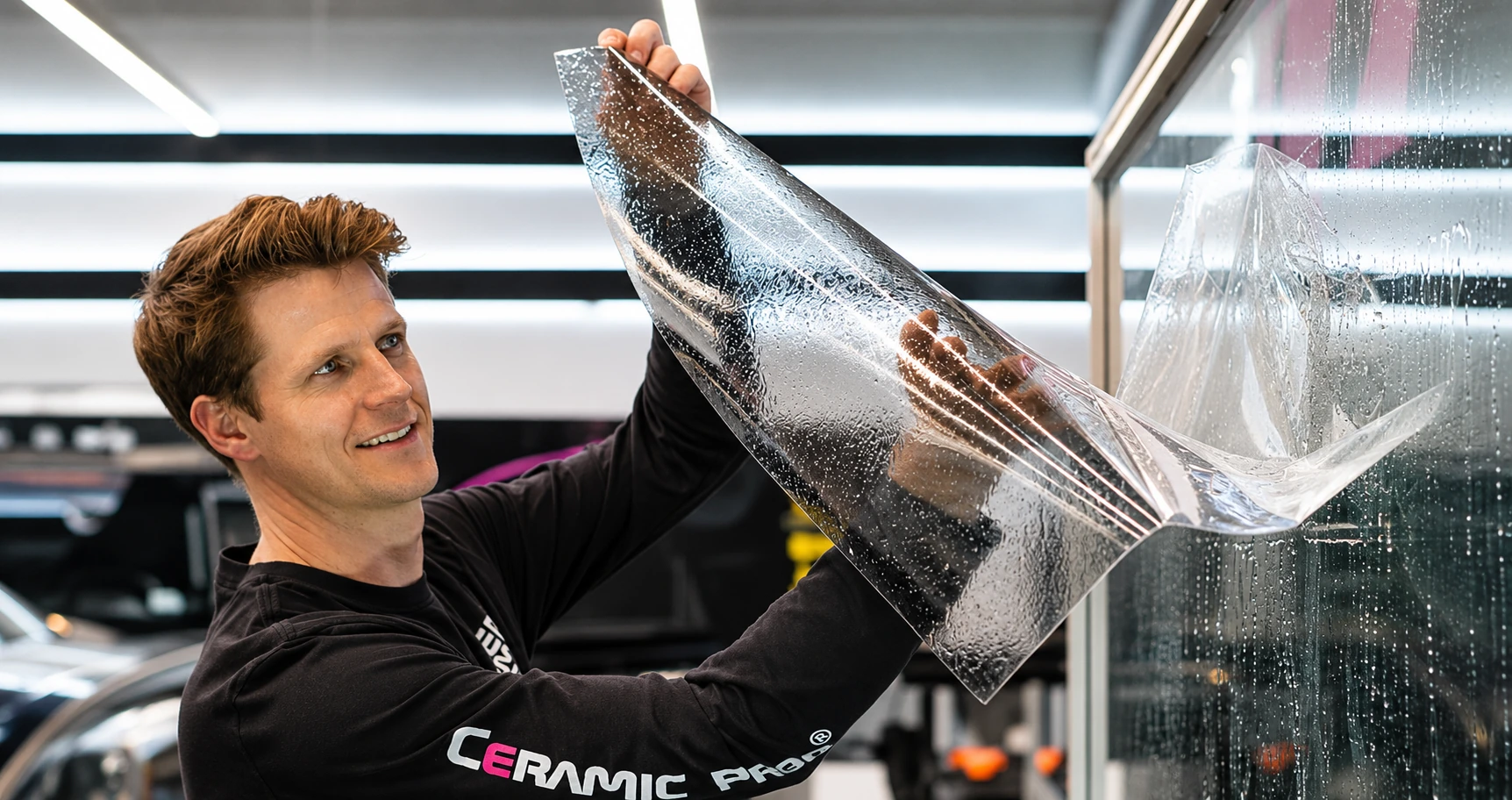
Paint protection film (PPF) provides a physical barrier against certain road impacts and surface damage. Ceramic coating enhances surface properties such as gloss, water repellency and ease of cleaning. Window tint helps manage sunlight and cabin comfort. Specialist films offer additional protection for windscreens, panoramic roofs and selected interior surfaces.
So what should you install first?
For many new-car owners, the most sensible approach is to prioritize the problem that matters most: stone chips, paint maintenance, cabin heat or everyday wear.
Ceramic Pro Malaysia offers several options across Ceramic Pro and Magnus Pro, including Urban PPF, Composite Protection Film, professional ceramic coatings, premium window films and specialist glass protection.
This guide explains where each product makes sense, what it cannot do, and how to choose a balanced protection plan without paying for services you may not need.
Editorial Transparency
This guide is published by Ceramic Pro Malaysia, which offers the Ceramic Pro and Magnus Pro products discussed below.
The recommendations reflect the documented functions of these products and practical suitability for different ownership needs. They are first-party recommendations, not an independent ranking of all automotive protection brands.
Actual results depend on vehicle condition, product selection, installation quality, driving conditions and maintenance.
The essentials
Key takeaways
No single product protects every part of a car.
Choose protection according to the type of damage or discomfort you want to reduce.
PPF is the better starting point when stone chips, road debris and physical paint damage are the main concerns.
Ceramic Pro 9H coating is worth considering when gloss, hydrophobic performance and easier washing matter more than physical impact resistance.
Magnus Pro Window Film addresses cabin comfort and solar exposure, but film darkness alone does not establish heat-rejection performance.
Full-front PPF can be a practical compromise for highway drivers, while full-body coverage extends protection to more painted panels.
New cars still require paint inspection before protection.
The right installation process and aftercare matter as much as the product selected.
A considered combination of products may be appropriate, but installing every available treatment is not necessary for every owner.
01 — What Protection Does a New Car Really Need?
The best protection for a new car depends on how it will be used.
A vehicle that spends most of its time commuting through Kuala Lumpur has different daily exposure from one regularly travelling along the North–South Expressway.
A family MPV with a large panoramic roof may raise different comfort concerns from a weekend sports car with low, exposed bodywork.
Begin with the problem you want to solve.
| Main concern | Protection to consider | Primary purpose |
|---|---|---|
| Stone chips and road debris | Paint Protection Film | Physical paint protection |
| Gloss and easier washing | Ceramic Pro 9H | Surface appearance and maintenance |
| Hot cabin and sunlight | Magnus Pro Window Film | Solar-control glazing |
| Panoramic roof exposure | Magnus Pro SkyShield | Roof-specific film protection |
| Windscreen stone chips | Magnus Pro Windshield Protection Film | Additional windscreen surface protection |
| Change vehicle colour while protecting paint | Ceramic Pro SHIFT Color PPF | Appearance and physical film coverage |
| Routine washing and upkeep | Appropriate washing and aftercare | Preserve the installed protection |
These treatments are not interchangeable.
A ceramic coating should not be sold as equivalent to a physical PPF barrier.
Similarly, window tint may improve comfort but does not replace paint protection.
The first recommendation is therefore simple:
Choose the protection that addresses your most significant ownership concern, then consider whether a second treatment provides a genuinely different benefit.
02 — PPF vs Ceramic Coating vs Window Tint
Although all three are described as automotive protection, they serve different purposes.
Paint Protection Film
PPF is a physical film applied to suitable painted panels.
Its purpose is to provide a sacrificial barrier between the original paint and certain everyday hazards, including small stones, road debris and minor surface marking.
Many premium films include self-healing surface characteristics that can reduce the appearance of certain fine surface marks under suitable conditions.
However, PPF cannot guarantee prevention of every stone chip, collision mark, deep cut or paint defect.
Ceramic Coating
Ceramic coating is a protective treatment applied to appropriately prepared surfaces.
It can improve gloss, hydrophobic behavior, ease of cleaning and resistance to certain environmental contaminants.
Unlike PPF, an automotive ceramic coating is not a thick impact-absorbing film.
It should not be treated as a substitute for PPF when physical stone-chip protection is the primary objective.
Automotive Window Tint
Window tint is applied to appropriate vehicle glazing.
Depending on its documented specifications, it can help reduce solar heat transmission, glare and exposure to portions of the solar spectrum.
Visible Light Transmission (VLT) and Total Solar Energy Rejected (TSER) describe different performance characteristics.
A darker film does not automatically provide better overall heat rejection.
Owners must also consider Malaysia's applicable tint regulations and the VLT of the completed glass-and-film system.
| Treatment | Main benefit | Not a guarantee against |
|---|---|---|
| PPF | Physical paint protection | Severe impacts, deep cuts and all scratches |
| Ceramic coating | Gloss, hydrophobicity and easier cleaning | Stone chips, water spots and every scratch |
| Window tint | Solar control and cabin comfort | Every source of cabin heat or unrestricted VLT compliance |
| Sunroof film | Panoramic roof protection and solar control | Roof-glass breakage in every scenario |
| Windscreen film | Additional sacrificial windscreen layer | Every chip, crack or severe impact |
Which is best?
There is no universal winner.
If your biggest concern is highway stone chips, begin by considering PPF.
If your priority is keeping paint glossy and easier to maintain, ceramic coating is relevant.
If cabin heat is the main frustration, evaluate window tint.
Many owners benefit from combining two or more complementary solutions, but each addition should have a clear purpose.
03 — Which PPF Should You Choose for a New Car?
For owners who want physical paint protection, Ceramic Pro Malaysia offers three key clear-film options: Ceramic Pro Urban, Ceramic Pro Composite Protection Film and Magnus Pro PPF.
Each has a different product positioning, surface construction and published warranty.
Ceramic Pro Urban PPF — Everyday Protection
Ceramic Pro Urban is designed around daily driving and practical paint protection.
Its TPU-based film construction and self-healing top coat help protect the vehicle's original finish from everyday road debris and certain minor surface marks.
Urban is a sensible option to consider when you want professionally installed PPF for regular use without automatically selecting the highest-positioned film in the range.
It can suit:
- Daily-driven sedans.
- Family hatchbacks.
- Everyday SUVs.
- New-car owners prioritizing practical coverage.
- Drivers balancing protection scope with budget.
The currently published Urban PPF warranty is three years, subject to the relevant conditions.
Its film is approximately 7 mil nominal thickness, although current manufacturer documentation should be consulted for exact product measurements and tolerances.
Why consider Urban?
It provides an entry point into branded, professionally installed PPF with physical film protection and an established aftercare framework.
It is not automatically the correct choice for every car or every exposure level.
Ceramic Pro CPF — Film Protection With Ceramic Surface Technology
Ceramic Pro Composite Protection Film, or CPF, combines a physical paint protection film with Ceramic Pro's ceramic surface technology.
The official product information identifies Flexible Ceramic Composite Technology (FCCT) and ION coating within the system.
CPF is designed to provide physical paint protection together with surface characteristics such as hydrophobic performance and easier maintenance.
Its published nominal thickness is approximately 8 mil, and the currently listed manufacturer warranty is five years against specified defects.
Certain published CPF packages also include five complimentary maintenance sessions, subject to the package terms.
CPF is worth considering for owners who want:
- Physical protection for vulnerable body panels.
- A film system incorporating ceramic surface technology.
- A premium clear-film solution.
- Full-front or full-body coverage.
- Structured warranty and maintenance support.
A full-front CPF installation is particularly relevant to owners who regularly drive on Malaysian highways and want to protect the bonnet, front bumper, front-facing fenders and other specified high-exposure areas.
The exact covered panels depend on the chosen package.
Ceramic surface technology does not make CPF indestructible. Deep cuts, severe impacts and unsuitable maintenance can still cause damage.
Ceramic Pro Composite Protection Film
Magnus Pro PPF — A Flagship Multilayer Film Option
Magnus Pro PPF is positioned as a premium multilayer protective film.
Its manufacturer documentation describes Covalent NanoTech, a multilayer surface system, self-healing characteristics and hydrophobic performance.
The featured Magnus Pro PPF has a published nominal thickness of 8.5 mil, approximately 215 microns.
The current featured warranty is six years against specified manufacturing defects.
Different film variants and packages may have different properties, so these figures should not be assumed to apply to every Magnus Pro product.
Magnus Pro PPF is worth considering for:
- Premium and performance vehicles.
- Owners who want a flagship clear-film option.
- Long-term vehicle ownership.
- Customers evaluating full-front or full-body protection.
- Drivers placing emphasis on the film's published construction and service support.
Its suitability should be assessed from the complete film specifications, installation scope and warranty—not thickness alone.
A thicker nominal film is not automatically better in every measurable property.
Magnus Pro Paint Protection Film
Clear PPF Comparison
| Product | Product positioning | Approx. nominal thickness | Published warranty |
|---|---|---|---|
| Ceramic Pro Urban | Everyday clear PPF | 7 mil | 3 years |
| Ceramic Pro CPF | Composite film with ceramic surface technology | 8 mil | 5 years |
| Magnus Pro PPF | Featured premium multilayer film | 8.5 mil | 6 years |
All specifications are based on the identified published product ranges.
Warranty periods cover the applicable defined terms. They are not guarantees against all physical road damage.
These products have different characteristics, and the table does not constitute an independent performance ranking.
What About Ceramic Pro SHIFT Color PPF?
If you want to change your new car's appearance as well as add a physical film layer, Ceramic Pro SHIFT Color PPF is another option to consider.
It provides coloured or finish-changing film options for owners seeking a different visual result without relying solely on a conventional decorative vinyl wrap.
The appropriate finish, coverage and maintenance requirements should be confirmed for the selected product.
SHIFT is not necessary when the primary objective is maintaining the original factory colour.
04 — Is Ceramic Pro 9H Worth It for a Brand-New Car?
A new car provides a good opportunity to protect paintwork before prolonged daily exposure.
However, "new" does not necessarily mean that the paint is flawless.
Transport, dealership preparation and washing can leave contamination, light swirls or other imperfections.
A professional installer should inspect the paint before coating and recommend only the preparation actually required.
Ceramic Pro 9H is a professional nano-ceramic coating system intended to provide a durable protective surface and enhanced appearance.
Its practical benefits include:
- Gloss enhancement.
- Hydrophobic performance.
- Easier regular washing.
- Reduced direct exposure of paint to certain contaminants.
- A structured professional application and maintenance process.
These benefits do not eliminate the need to wash the vehicle.
Water spots, bird droppings, tree sap and other contaminants can still require prompt removal.
Ceramic Pro 9H is also not an alternative to PPF for meaningful physical stone-chip resistance.
Which Ceramic Pro Package Should You Consider?
Ceramic Pro Malaysia currently lists Silver, Gold and Platinum coating packages.
| Package | Published warranty | Ownership consideration |
|---|---|---|
| Silver | 3 years | A shorter warranty commitment |
| Gold | 5 years | A longer ownership and aftercare horizon |
| Platinum | 7 years | The longest listed coating warranty commitment |
The published warranty periods are not guaranteed product lifespans and do not represent protection against every kind of damage.
Actual package inclusions, qualifying conditions and maintenance requirements must be reviewed before booking.
Gold and Platinum may include additional surface treatments under their current package configurations. Do not generalize their inclusions without confirming the official package details.
When Coating Is a Better First Purchase
Ceramic coating may be a more appropriate starting point than PPF when:
- Stone chips are not the owner's main concern.
- The owner prioritizes gloss.
- Easier regular cleaning is important.
- The car is washed frequently.
- The available budget does not support the desired PPF coverage.
- The customer prefers a coating-oriented maintenance solution.
For owners who also want physical protection, PPF on vulnerable areas and compatible coating on appropriate remaining surfaces can be considered together.
The application sequence and compatibility should be confirmed with the installer.
05 — Why Window Tint Matters for New Cars in Malaysia
In Malaysia, cabin comfort is often one of the first things new-car owners notice.
A vehicle parked outdoors can become uncomfortably hot, while strong sunlight can affect comfort during long daytime journeys.
Automotive window film can help manage solar energy entering through the glass.
However, selecting a window tint involves more than choosing how dark it looks.
Three considerations are especially important:
- Visible Light Transmission and the applicable regulations.
- Documented heat-rejection performance.
- Clarity, installation quality and product compatibility.
Magnus Pro Nano Ceramic Window Film
Magnus Pro Nano Ceramic is a window-film range designed for automotive solar control and everyday driving comfort.
The published product range uses a nominal 2-mil film construction.
It is worth considering for new-car owners who want an automotive window tint solution with documented product options for sunlight and heat management.
The suitable variant depends on the vehicle's existing glass, desired VLT, product specifications and driving needs.
Do not assume that every Nano Ceramic tint has the same heat rejection or VLT.
Magnus Pro Nano Titanium Window Film
Magnus Pro Nano Titanium is a distinct window-film range with a thicker published 6-mil construction.
Customers considering this range should compare its verified optical performance, heat-rejection figures, installation suitability and warranty with the Nano Ceramic range.
The thicker film construction is a product characteristic, not automatic proof that every Titanium variant has superior heat rejection or prevents glass breakage.
Do not make unverified safety-film, security, impact-rating or shatterproof claims.
Does Darker Tint Mean Better Heat Rejection?
Not necessarily.
VLT measures visible light transmission.
TSER describes total solar energy rejection under the applicable testing method.
Infrared-related performance figures can also depend on which wavelengths were measured.
A dark appearance cannot replace documented performance information.
In Malaysia, the applicable VLT rules must also be considered, particularly for the front windscreen and front side windows.
The finished glass-and-film combination matters—not just the film label.
A professional installer should help customers evaluate a suitable selection based on the vehicle's glazing and applicable requirements.
Which Magnus Pro Window Film Would We Consider?
For an owner seeking a straightforward premium automotive solar-control film, Magnus Pro Nano Ceramic is a relevant option to evaluate.
For an owner interested in a thicker film construction, Magnus Pro Nano Titanium is also worth evaluating.
Neither should be declared universally superior without comparing the actual selected variants and verified specifications.
A final recommendation should account for VLT, heat rejection, optical clarity, vehicle compatibility and the customer's preferences.
06 — Do You Need Sunroof and Windscreen Protection?
Not every new car requires an additional specialist glass film.
However, certain vehicle designs and driving conditions make these products worth considering.
Magnus Pro SkyShield for Panoramic Roofs
Large panoramic glass roofs can increase the amount of solar energy entering a vehicle.
Magnus Pro SkyShield is designed specifically for panoramic sunroof and roof-glass applications.
The product combines roof-specific surface protection with solar-control characteristics.
It may be relevant for:
- SUVs with large glass roofs.
- Family MPVs.
- Premium vehicles with panoramic glass.
- Certain EVs with extensive roof glazing.
- Owners who regularly park outdoors.
SkyShield is offered in different VLT options.
The appropriate version depends on vehicle-glass construction, product compatibility, desired light transmission and installation requirements.
Do not claim that SkyShield guarantees a specified cabin temperature reduction or increases EV range.
Do not assume that every vehicle's panoramic roof is suitable for every film configuration.
Compatibility should be assessed by an approved installer.
Magnus Pro Windshield Protection Film
The windscreen is exposed to stones and road debris during driving.
Magnus Pro Windshield Protection Film is a dedicated clear protective film intended to provide an additional sacrificial surface layer.
It may be worth considering for:
- Frequent highway drivers.
- Vehicles exposed to road debris.
- Owners concerned about stone-chip damage.
- Cars with costly or complex windscreen assemblies.
No protective film can guarantee that a windscreen will never chip or crack.
Before installation, confirm:
- Vehicle compatibility.
- Optical clarity requirements.
- Appropriate final glazing light transmission.
- Wiper and rain-sensor considerations.
- Relevant camera and ADAS compatibility.
- Product warranty and maintenance requirements.
- Applicable regulations.
Do not present the product as universally approved for every windscreen or driver-assistance system.
07 — Our Protection Recommendations for Different Drivers
A useful protection plan starts with the vehicle's actual use, not simply its purchase price.
These are practical examples, not universal prescriptions.
| Owner profile | First option to consider | Additional option | Reason |
|---|---|---|---|
| City commuter | Ceramic Pro Urban PPF or 9H | Magnus Pro Window Film | Balance paint-care needs and cabin comfort |
| Frequent highway driver | CPF or Magnus Pro full-front PPF | Window Film or WPF | Prioritize road-debris exposure |
| Family SUV/MPV | Window Film | PPF and SkyShield if applicable | Comfort, family use and vulnerable panels |
| EV with panoramic roof | Window Film | SkyShield and selected PPF | Glazing comfort and exposed paintwork |
| Premium performance car | CPF or Magnus Pro PPF | Compatible coating | Protect original exterior finish |
| Budget-conscious new-car owner | Targeted PPF or coating | Window Film when comfort is a priority | Focus spending on the main concern |
Everyday City Commuting
For a daily-driven sedan or compact SUV, the first decision is whether paint impacts or paint maintenance matter more.
Ceramic Pro Urban may be worth considering for targeted physical protection.
Ceramic Pro 9H may suit owners whose principal priorities are gloss and easier maintenance.
Magnus Pro Window Film can address cabin comfort separately.
There is no obligation to install all three.
Frequent Highway Driving
For someone regularly travelling between Kuala Lumpur, Penang, Ipoh or Johor, front-facing paint can encounter road debris.
Full-front PPF deserves consideration because it protects more of the areas exposed during forward travel than a small targeted package.
Ceramic Pro CPF and Magnus Pro PPF are two premium options to assess based on coverage, construction, warranty and quotation.
Windscreen protection may be considered separately where compatibility is confirmed.
Family SUVs and MPVs
Comfort, cleaning practicality and general wear can matter as much as paint appearance.
Window film may be a high-priority purchase when solar exposure is the main concern.
If the vehicle has a large panoramic roof, SkyShield is also relevant after compatibility assessment.
PPF can be considered for vulnerable exterior areas, particularly for vehicles used frequently on highways.
Electric Vehicles
EVs do not require a completely different category of paint protection simply because they are electric.
The relevant questions are still about paint exposure, glazing, climate and owner preference.
A glass-roof EV may benefit from evaluating solar-control options, while an owner concerned about stone chips may prioritize PPF.
Avoid assuming that film installation produces a measurable battery-range improvement without vehicle-specific evidence.
Performance and Luxury Cars
Owners of premium or performance vehicles may place a high value on preserving their original finish.
A premium PPF system such as CPF or Magnus Pro PPF is worth considering when physical paint protection is the objective.
Full-body coverage offers more extensive coverage than a full-front package, but it also requires more film and installation work.
The right decision depends on the intended ownership period, exposure, maintenance preferences and available budget.
08 — Full-Front PPF or Full-Body Wrap?
Choosing the film is only one part of the decision.
Coverage may have a greater practical impact on how much of the vehicle is protected.
Targeted Protection
Entry-level packages generally focus on selected front-facing or frequently touched areas.
They can be practical for owners who want some physical protection without committing to the widest available installation.
Exact coverage varies by product and package.
Full-Front Protection
A full-front package generally includes the front bumper, bonnet, front-facing fenders and other specified components.
This is often a sensible consideration for highway drivers because those surfaces regularly face forward-moving road debris.
It does not protect the entire car.
Full-Body Protection
A full-body or full-wrap installation extends film coverage to a much larger portion of the painted exterior.
This may appeal to owners seeking more comprehensive protection against daily exposure across the vehicle.
It still does not prevent every scratch, severe impact or accidental damage.
| Coverage | Main consideration | Limitation |
|---|---|---|
| Targeted/Basic | Selected vulnerable areas | Much of the paint remains unfilmed |
| Full Front | Wider front-end coverage | Side and rear panels remain less protected |
| Full Wrap | Broad painted-surface coverage | Higher material and installation scope |
Packages and precise panel coverage vary.
Do not assume that Ceramic Pro Urban, CPF and Magnus Pro share identical package names or coverage.
For accurate package information, use the respective official product pages.
09 — How to Prioritize Protection Without Overspending
A new car does not automatically need every treatment available.
A practical way to plan is to identify the first protection priority, then decide whether additional treatments offer enough separate value.
Plan A — Essential Priorities
Best suited to an owner who wants to address one or two specific concerns.
Choose the highest priority based on your needs:
- If chips matter most, evaluate targeted PPF.
- If cleaning and gloss matter most, evaluate Ceramic Pro 9H.
- If cabin heat matters most, evaluate Magnus Pro Window Film.
The most economical decision may be to install only the treatment you genuinely value.
Plan B — Balanced Protection
For owners seeking a broader combination, consider:
- Full-front PPF for vulnerable painted panels.
- Window film for solar control.
- Appropriate coating on compatible unfilmed paint, if desired.
This approach separates physical protection, cabin comfort and paint maintenance.
Plan C — Comprehensive Protection
For owners who value broad exterior coverage and a longer-term protection plan, consider:
- Full-body CPF or Magnus Pro PPF.
- Suitable coating where compatible and genuinely beneficial.
- Window film.
- Optional SkyShield for a compatible panoramic roof.
- Optional windscreen protection after suitability checks.
This is not a required package.
Not every vehicle needs these products, and the combination should be reviewed for practical value and technical compatibility.
What About Pricing?
Avoid comparing protection products using only a single promotional starting price.
A proper quotation should explain:
- Exact product and variant.
- Vehicle model and body size.
- Existing paint condition.
- Preparation requirements.
- Panels or glass covered.
- Installation process.
- Warranty terms.
- Maintenance entitlements.
- Any optional extras.
- Final price.
Ceramic coating, PPF and tint pricing should not be artificially combined into an invented package total.
Use current approved quotations and actual published pricing where applicable.
10 — When Should You Protect a New Car?
Protecting a vehicle early can reduce the period in which its original surfaces are exposed without the selected treatment.
However, the correct timing depends on the vehicle's actual condition.
Inspect Before Installing
Even a new vehicle can have:
- Light washing swirls.
- Surface contamination.
- Transportation-related marks.
- Adhesive residue.
- Existing repairs or paint defects.
The installer should assess these conditions before applying a coating or PPF.
Not every vehicle requires the same paint correction.
Plan the Installation Sequence
When several treatments are selected, the installer should plan the work according to product compatibility and the vehicle's condition.
A typical combined exterior protection plan may involve:
- Inspecting and preparing the relevant surfaces.
- Completing required paint correction or surface preparation.
- Installing compatible PPF on the selected panels.
- Allowing the necessary installation and curing processes.
- Applying compatible coating to appropriate surfaces where specified.
- Completing window and specialist glass film work according to their own product requirements.
- Performing final inspection and explaining aftercare.
This is a planning illustration, not a universal manufacturer-approved installation sequence.
Existing coatings can affect film adhesion, so the installer must evaluate the current surface before PPF installation.
Do not assume any coating can be applied over every film or that every installation uses the same curing period.
Do Not Rush Vehicle Delivery
An appropriate protection installation requires inspection, preparation and quality control.
Ask the installer how long the selected work will take and when the vehicle can safely be washed or used under the product's aftercare instructions.
Avoid choosing an installation solely because it promises the shortest turnaround time.
11 — Real Malaysian Installation Examples
Product specifications explain what a protection system is designed to do.
Actual installation stories help show how those products are applied to different vehicles.
Ceramic Pro Malaysia's Garage Journal documents real vehicle installations across several protection categories.
The following published examples illustrate product selection and installation scope.
They are not comparative laboratory tests or proof that one film outperforms another.
JAECOO J7 — Ceramic Pro CPF Full Wrap
The Garage Journal features a JAECOO J7 protected with Ceramic Pro CPF Full Wrap.
This illustrates a customer choosing broad exterior PPF coverage instead of limiting protection to the front of the vehicle.
The appropriate lesson is about coverage selection and product application—not a guarantee that the vehicle can never be scratched.
BMW M3 Competition Touring — Magnus Pro PPF Full Wrap
TOURING POWER. FULL PROTECTION.
The Garage Journal also features a BMW M3 Competition Touring receiving Magnus Pro PPF Full Wrap.
This is an example of a premium performance vehicle receiving extensive paint protection film coverage.
It demonstrates an actual application of Magnus Pro PPF rather than an unsupported comparison against another manufacturer.
Jetour T2 — Ceramic Pro 9H Platinum
BOLD BY DESIGN. PLATINUM PROTECTED. — Jetour T2
A Jetour T2 documented with Ceramic Pro 9H Platinum illustrates a different protection decision.
Here, the featured treatment centers on professional ceramic coating rather than relying on PPF as the main exterior solution.
It shows why different car owners may choose different protection systems.
XPENG X9 — Magnus Pro SkyShield
The Garage Journal's XPENG X9 SkyShield installation illustrates roof-specific protection on a vehicle with a large glass area.
It provides a relevant example for owners exploring panoramic roof protection.
It must not be presented as independently verified proof of a specific cabin-temperature or energy-efficiency improvement.
Ferrari Purosangue — Magnus Pro Window Film
A published Ferrari Purosangue story features Magnus Pro Nano Ceramic and Nano Titanium window film.
This illustrates actual professional window-film application on a premium vehicle.
It is not evidence that the same film combination is appropriate for every car.
12 — How to Choose an Automotive Protection Installer
A premium product deserves a suitable installation process.
Poor surface preparation, unsuitable application methods and inadequate aftercare can undermine the value of otherwise good materials.
Before booking, consider the following questions.
- Is the selected product clearly identified?
- Can the installer explain which protection problem it addresses?
- Are the exact areas receiving film or coating documented?
- Is the vehicle inspected before work begins?
- Is the proposed surface preparation appropriate?
- Can the installer provide relevant product specifications?
- Are coating and PPF compatibility questions addressed?
- Are window-film VLT and glazing requirements considered?
- Is the warranty clearly explained?
- Are aftercare conditions and maintenance requirements provided?
- Is the installation supported by appropriate paperwork?
- Is there a clear contact for follow-up inspections or service?
An installer should also explain what a product does not protect against.
A claim that a coating makes the vehicle completely scratch-proof or that PPF prevents every road impact is a reason to ask more questions.
Customers considering Ceramic Pro or Magnus Pro can explore the approved Malaysian location directory to find an appropriate installation centre.
13 — Protecting the Finish After Installation
Protection products still require care.
PPF can accumulate dirt and contamination. Ceramic-coated paint can develop water spots. Window films require suitable cleaning and curing practices.
After installation, follow the specific instructions for the selected product.
General good practices include:
- Washing with appropriate automotive shampoo.
- Using clean microfiber materials.
- Avoiding unnecessarily abrasive cleaning.
- Removing bird droppings and other contaminants promptly.
- Following installation-specific curing and first-wash restrictions.
- Avoiding aggressive pressure-washing at vulnerable film edges.
- Using compatible maintenance products.
- Attending recommended inspections where required by the applicable warranty.
Do not assume that all coatings and films share the same washing restrictions or maintenance intervals.
Maintaining Your Car in Malaysia
Regular care becomes especially important when a vehicle is exposed to daily rainfall, dusty roads, insects and environmental contamination.
Auto Bath Club provides an additional car-care option for drivers who prefer professional washing and maintenance.
Its services should be described only according to the actual current offerings.
Using Auto Bath Club is optional. Do not imply that it is mandatory to preserve Ceramic Pro or Magnus Pro warranties.
14 — Our Final Recommendation for New-Car Owners
The best car protection is not necessarily the most extensive package.
It is the combination that matches the way you drive and the areas you care most about.
If you regularly drive on highways and are concerned about stone chips, consider paint protection film first.
Ceramic Pro Urban is worth evaluating for everyday use, while Ceramic Pro CPF and Magnus Pro PPF offer alternative premium film systems with different published constructions, surface technologies and warranty terms.
If your priority is a glossy finish that is easier to maintain, Ceramic Pro 9H is a relevant professional coating option.
If cabin heat and sunlight are the main concerns, begin by comparing suitable Magnus Pro Window Film variants using their documented VLT and heat-rejection specifications.
For vehicles with panoramic glass roofs, Magnus Pro SkyShield may add a separate benefit when the vehicle is compatible.
For certain highway-driving situations, Magnus Pro Windshield Protection Film may also be worth discussing with an installer.
And if changing the colour or finish is part of your plan, Ceramic Pro SHIFT Color PPF offers a different appearance-focused option with physical film protection.
Not every new car needs all these treatments.
Start with the protection that addresses your most important concern. Ask for a clear quotation, review the product specifications and understand the maintenance and warranty terms.
That is how you build a protection plan around your vehicle—not around a sales checklist.
Frequently Asked Questions
Sources and Further Reading
- Ceramic Pro Malaysia — Paint Protection Film Overview
Official Malaysian product range; detailed product links appear in the relevant sections.
- Ceramic Pro Malaysia — After Care & Warranty
Product-specific warranty conditions and maintenance guidance.
- Ministry of Transport Malaysia — Published VLT Framework
Published regulatory context; review current relevant guidance for the completed glazing.
- JPJ Malaysia
Official road-transport authority; current applicable requirements should be confirmed before installation.