
A large panoramic roof makes an electric car feel open and airy. Under a Malaysian afternoon sun, however, it can also become the first part of the cabin that passengers question. Should you install sunroof PPF? Is ordinary tint enough? Would a removable roof shade work better? And could any of these choices actually improve EV driving range?
There is no single answer for every car. Roof glass differs in size, coating, tint, lamination, heating behaviour and manufacturer instructions. One owner may want protection against minor external marks. Another is trying to reduce perceived radiant heat above the rear seats. Someone else simply wants a darker cabin on long afternoon journeys. Those priorities do not necessarily lead to the same solution.
This guide compares dedicated roof protection film, conventional glass tint, interior shades and the option to keep the factory roof unchanged. It explains which heat measurements are useful, what an EV battery claim can and cannot establish, and what an installer should check before applying anything to panoramic glass.
The essentials
Key takeaways
A panoramic roof may already contain factory solar-control or UV-reducing glazing. Check the vehicle's exact glass before adding another layer.
Sunroof PPF, ordinary tint and removable shades address overlapping but different needs: roof surface protection, solar control and physical shading.
'95% IRR', '95% TSER' and '95% of total heat reflected' are not equivalent claims. Test method and wavelength range matter.
A reduction in solar heat load may influence air-conditioning demand in some conditions, but it does not prove a fixed EV battery or range gain.
An aftermarket film must be assessed against the specific roof construction, factory layers, temperature effects and OEM/warranty instructions.
Magnus Pro SkyShield has published material and shade specifications, but its published IRR figure must not be represented as an independently measured TSER result.
The right decision starts with the customer's discomfort or protection concern, then an honest comparison of alternatives and a documented installation/handover plan.
Is Sunroof PPF Better Than Tint or a Roof Shade?
Sunroof PPF is not automatically the best choice for every EV. It is worth considering when the owner wants a film designed for suitable panoramic-roof glass that combines surface protection with a solar-control function. Conventional sunroof tint may be appropriate when solar control, brightness and appearance are the main objectives and the glazing is compatible. A removable shade physically interrupts the view and can reduce direct sunlight reaching occupants without permanently bonding a film to the glass. In some vehicles, the original glass may already be satisfactory.
The useful question is not 'Which product has the biggest heat-rejection number?' It is 'What problem are you solving, on which glass, with what proven trade-offs?' A shade blocks more of the view while fitted. A light film preserves more light. A darker film changes the roof's appearance. Exterior surface film has a different exposure and maintenance profile from film applied to an interior glass surface.
Before choosing, identify the vehicle model and year, the roof construction, existing factory coatings, whether it has an interior blind, and the manufacturer's guidance on additional film. A practical installer should be comfortable recommending no modification if compatibility or expected benefits are uncertain.
The Glass Is Only One Part of Cabin Heat
Sunlight carries energy across a range of wavelengths. Some passes through suitable glazing; some is reflected and some is absorbed by the glass or existing coating. Absorbed energy can warm the glass, which may then exchange heat with the cabin and outside air. How occupants experience this depends on roof geometry, glass construction, the sun's angle, the car's roof shade or headliner, parking duration and the climate-control system.
A dark-looking roof is not automatically proof of poor heat rejection. Some factory roofs include solar-control coatings, ultraviolet protection or multilayer constructions that are difficult to assess by appearance alone. Likewise, a visibly transparent roof can still be engineered to reduce portions of incoming solar energy.
This distinction matters in Malaysia, where the same vehicle may be parked under direct sunlight, driven in mixed shade and later cooled by air-conditioning. Roof film may be relevant, but total cabin comfort also depends on windscreen and side glass, ventilation, parking location and how the car is preconditioned.
PPF, Tint, Shade or Factory Glass: Which One Fits?
A dedicated roof PPF is developed as a protective film for appropriate roof glass, with potential solar-control properties depending on the series. Conventional automotive tint is a solar-control film selected for compatible glazing, usually with different construction and installation considerations. A removable roof shade provides direct physical shading but sacrifices some of the open-glass experience while in use. Keeping the original roof unchanged costs nothing and avoids introducing an incompatible material, but may leave a real comfort complaint unresolved.
None is a substitute for inspecting the glass on the specific vehicle. For example, if an owner mainly wants relief from glaring midday sunlight while parked, a removable shade may be a sensible first step. If minor exterior scratches and surface exposure are the main concern, an appropriate dedicated roof protection film may be a closer fit. If appearance and solar performance are the priorities, compare documented film specifications and practical glass compatibility.
| Option | Main purpose | Practical advantage | Main limitation or check |
|---|---|---|---|
| Specialist sunroof PPF | Film-based surface protection plus product-specific solar control | Combines two goals where compatible | Must verify glass compatibility, installation orientation, finish and actual test claims |
| Conventional sunroof tint | Solar control and appearance | Multiple optical/shade choices | Installed configuration must suit the roof glass and OEM restrictions; not necessarily a protective outer layer |
| Removable or factory roof shade | Physical shading of passengers | Reversible and intuitive | Blocks the panoramic view; comfort outcome depends on fit, use and insulation |
| Keep factory glass | Retain the original roof configuration | No aftermarket modification | May not resolve glare, external marks or a specific comfort concern |
SkyShield Adds a Film Layer to Suitable Panoramic Glass
Magnus Pro SkyShield is a dedicated panoramic sunroof protection film offered through Ceramic Pro Malaysia. Its purpose is different from ordinary body-paint PPF and also from standard side-window tint: it is intended for use on compatible glass roof applications, combining a protective film layer with solar-control performance.
The official SkyShield product page describes a six-layer construction and publishes figures for infrared rejection, UV rejection and film thickness. It also offers several light-transmission choices. These are manufacturer-published product specifications, not measurements taken from the photographs or videos in this article.
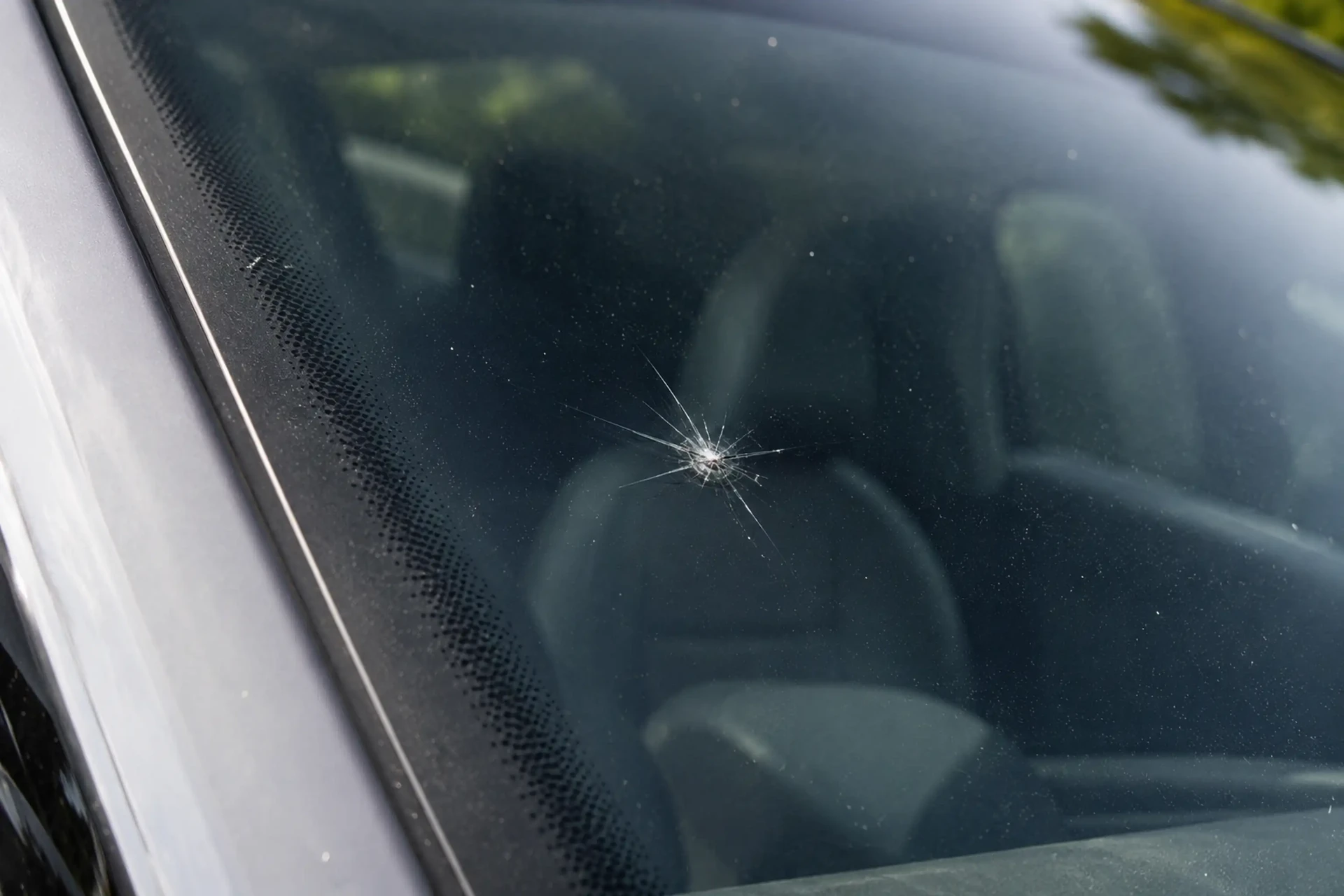
As with other protective surface films, SkyShield may help reduce certain minor marks or everyday environmental exposure on suitable glass. It cannot guarantee that a roof will not chip, crack or shatter, particularly after an impact or because of structural or thermal stresses. If the owner is worried about expensive panoramic-glass replacement, film may be part of the conversation, but it must never be sold as an unbreakable-glass guarantee.
Before deciding, ask the outlet to confirm the selected SkyShield variant, which side of the roof is to be treated, edge and seal considerations, whether any factory coating affects adhesion, and the precise aftercare/warranty terms.
SkyShield VLT Options and the View From Inside
Visible Light Transmission, or VLT, describes the proportion of visible light transmitted by a film or measured glazing system. It is not a direct measurement of total solar heat rejected. A darker film generally changes how much visible light comes through, but darkness alone does not establish its total solar performance.
Ceramic Pro Malaysia currently lists SkyShield film options of 5%, 15%, 30% and 75% VLT. As a buying guide, 5% creates a very dark appearance, 15% remains dark, 30% offers a more balanced shaded impression, and 75% preserves more visible light. Those are film-variant labels. The final light transmission of a roof depends on the combined film and existing glass, not simply the number printed on the selected film.
Ask to view physical samples in suitable lighting rather than selecting by a phone photograph. Also consider whether a child frequently looks through the roof, how important the panoramic view is to passengers, and whether the vehicle already has an effective built-in shade.
Do not automatically apply windscreen/front-side VLT minimums to roof glazing without first checking the specific vehicle classification and current rules. VLT can be a useful optical comparison even where the legal requirements differ by glazing area.
IRR, TSER, UVR, VLT and Heat Reflection Are Different Metrics
Marketing can make several different solar-control numbers sound interchangeable. They are not. Infrared Rejection (IRR) describes rejection of infrared energy over a specified measurement band or test method. Total Solar Energy Rejection (TSER) addresses a broader portion of incident solar energy using a defined testing framework. UV rejection concerns ultraviolet radiation, and VLT concerns visible light. A claim about reflected solar heat must be identified with its own measured definition and test conditions. For a dedicated breakdown of these solar metrics, see our TSER vs IRR car tint guide and car tint buying guide.
SkyShield's official page currently publishes 95% IRR and 99% UVR. It is reasonable to say those are the manufacturer's published figures for the product. It would be inaccurate to rewrite 95% IRR as 'rejects 95% of all solar heat', to assume 95% TSER, or to promise that every cabin becomes a specific number of degrees cooler.
A careful purchaser should ask: Which film variant was tested? Which spectrum or wavelength range was measured? Was testing on film alone or a complete glass-and-film assembly? Were the conditions comparable? The purpose is not to overwhelm the customer with technical terms, but to make performance comparisons honest and relevant.
| Metric | What it describes | What it does NOT prove |
|---|---|---|
| VLT | Visible light passing through film or glazing under test conditions | Total heat rejection, UV performance or legal suitability of every glass position |
| IRR | Infrared rejection over a stated test range | The same percentage of total solar energy rejected or battery energy saved |
| TSER | Total solar-energy rejection using a defined method | Guaranteed cabin temperature or range in every climate |
| UVR | Ultraviolet rejection | Overall thermal comfort, impact resistance or zero skin exposure |
| Film thickness (mil) | Physical film thickness | Universal ability to stop glass cracking, installation quality or optical compatibility |
Could Extra Roof Film Affect Glass or a Vehicle Warranty?
A panoramic roof is not just a large window. It may include laminated or tempered components, factory solar-control layers, embedded technology, seals and adhesives. Film choice and placement can change how a particular glass system absorbs or releases energy; installation also involves moisture, tools and access to edges. Any compatibility judgement should be made for the specific glass and vehicle, not inferred from a generic photograph of a similar model.
Vehicle manufacturers may place restrictions on aftermarket materials or damage resulting from unauthorized modifications. That does not mean every aftermarket film automatically voids the entire vehicle warranty. It means customers should check the relevant manual, written warranty terms and, when uncertain, seek clarification from the manufacturer or the responsible qualified service team before installation.
For example, Tesla's owner documentation includes cautions about vehicle window treatments and damage resulting from them. The exact wording and relevance depend on the model and document version. This should prompt a specific compatibility check, not an exaggerated statement that every Tesla glass roof is unsafe to treat.
Ask whether the roof has unusual heating or solar coatings, pre-existing cracks, chips or repaired areas. Ask what happens if removal is needed, whether a roof-mounted antenna or sensor is relevant, and who handles any dispute about affected glass. No reputable installation should promise that a protective film eliminates all glass failures.
Preparation, Positioning and Finishing Matter
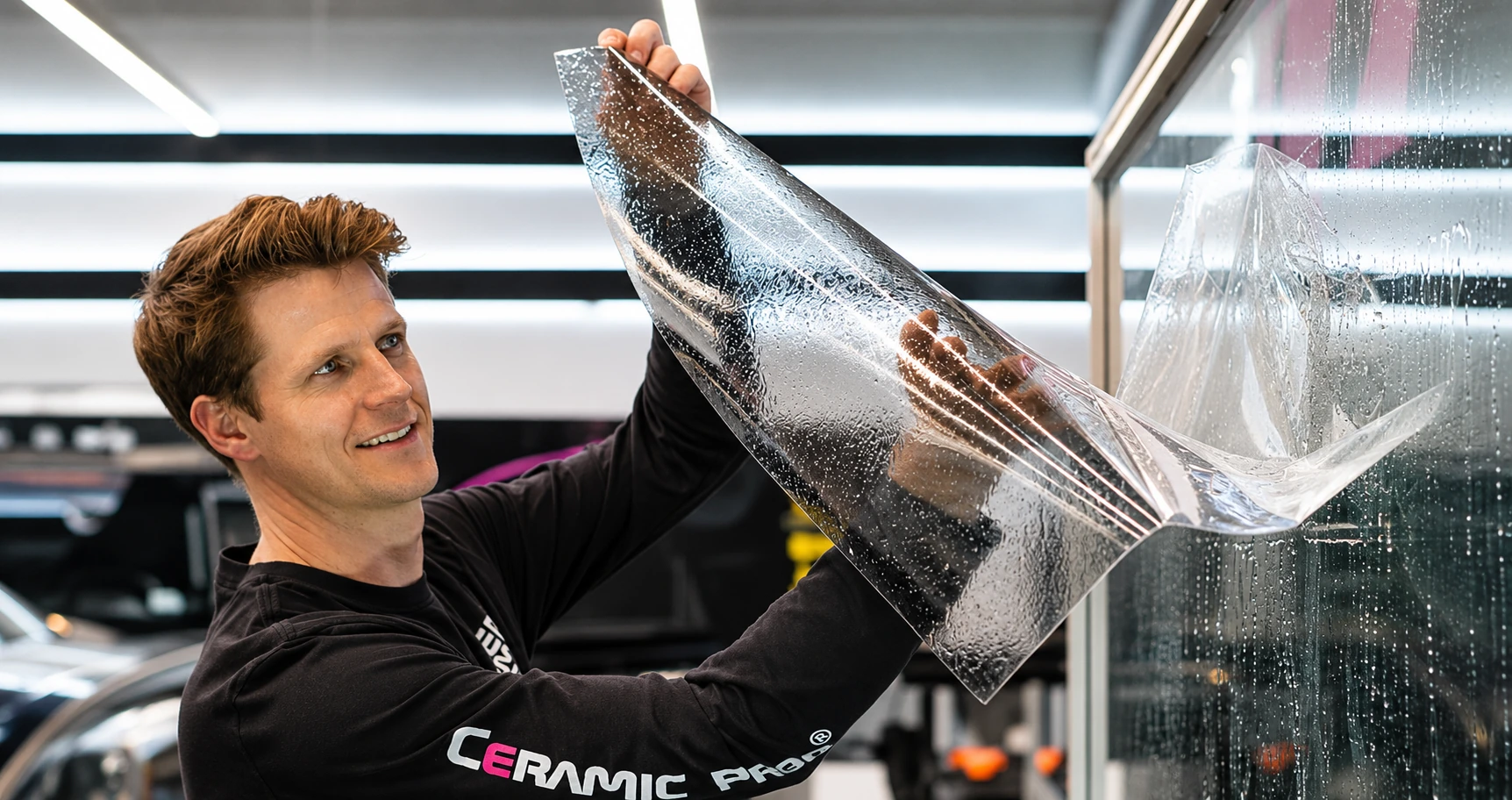
The supplied SkyShield installation footage shows a real application sequence on panoramic glass, including a large film section being positioned and a technician working through the wet fitting process. It helps illustrate why large roof dimensions, glass curvature, cleaning, appropriate tools and careful edges require planning.
Before installation, the roof should be inspected for existing damage and contamination, and the product should be confirmed compatible with the vehicle. Film handling and fitting should follow the particular manufacturer's procedure; ordinary tint application methods cannot simply be assumed to suit every protective roof film.
During the work, film positioning, remaining debris, trapped moisture, corners and boundaries need attention. Some temporary moisture patterns or cure behaviour may be normal depending on product instructions, but the installer should explain what is expected and when to return if a concern persists. Avoid trying to lift or trim roof-film edges at home.
These are visual examples of workmanship, not an independent test of optical performance, glass safety or temperature reduction. The intended takeaway is straightforward: document the product, assess the roof, install with suitable methods and inspect the completed area before handover.
SkyShield Installation
The Installed Roof Should Still Suit the Car
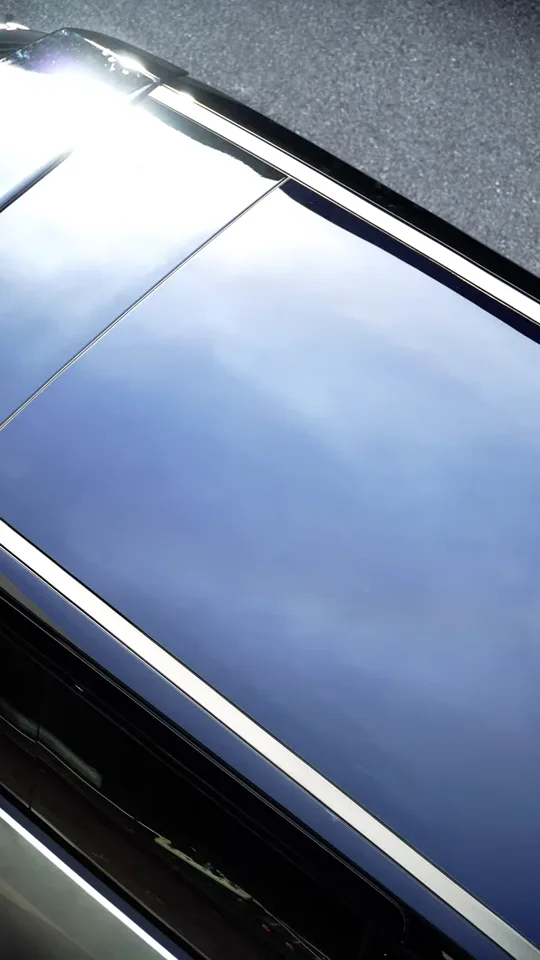
A good roof-film result is about more than a glossy exterior image. The final appearance should match the owner's chosen light transmission, maintain acceptable visibility and show a consistent finish without unexpected interference with seals or adjacent components. The installation should be explained in the context of the actual roof, not only the packaging specification.
The provided top-down image shows the visual effect of a finished SkyShield-treated panoramic roof, while the external reflection photograph shows its integrated glossy appearance. These genuine branded media are useful for setting realistic appearance expectations. They do not establish the car's exact original glass construction or quantify the thermal benefit.
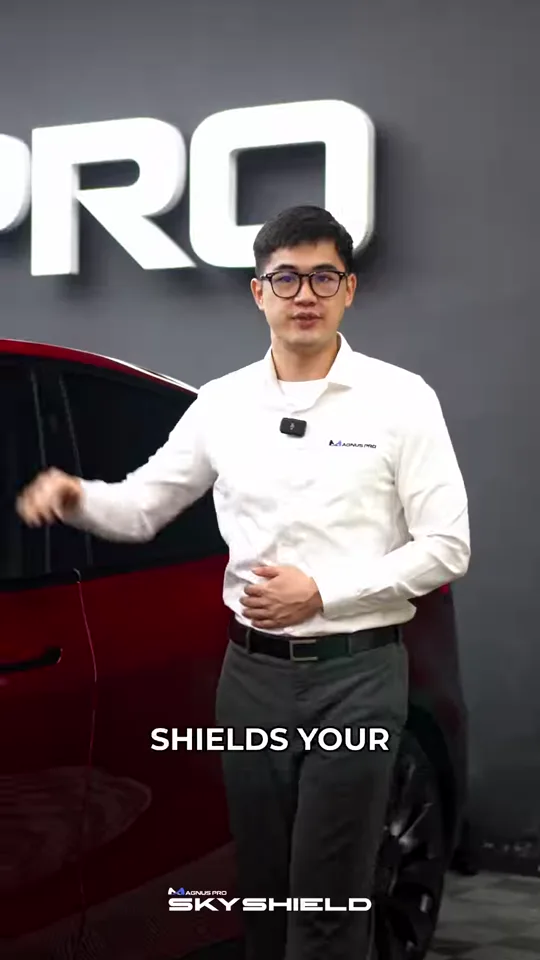
The short explanation video can help readers see how SkyShield is presented in practice. Any quantitative statements in its audio must be checked against the official product sheet before being repeated in article text. A clear written handover should identify the selected film variant, treated roof panel, cleaning and curing guidance, warranty terms and the correct outlet contact.
SkyShield Explained
Choose by Actual Glass Construction, Not the Badge
Tesla Model 3 and Model Y, XPENG X9 and other EVs can have substantial glass areas, but roof design varies between models, years and markets. BYD vehicles, Proton e.MAS models and other cars should not be treated as one category for installation purposes. Some use distinct roof arrangements, factory shading, fixed panoramic glass or different glazing technologies. For broader vehicle-wide decisions across paint, side glass and windscreens, see our EV Car Protection Malaysia guide.
For a Tesla owner, start with the correct Malaysian owner's manual and consider the roof's existing UV and solar-control features. Ask whether the relevant warranty language distinguishes authorized installations and damage from third-party alterations. Do not assume that every Tesla generation has the same roof.
For XPENG X9, an existing authentic SkyShield Garage Journal installation can demonstrate one real vehicle job—provided the story's identity and service have been verified. It should not be used to claim that every XPENG model or roof variant is approved.
For BYD, Proton e.MAS and other EVs, first establish the exact variant, roof type and factory glass specification. A useful workshop consultation should identify whether a roof accessory or film is compatible before discussing its shade. Never fabricate a model-level approval list or blanket 'EV certified' claim. You can also browse additional verified jobs in our Garage Journal.
The Most Cost-Effective Answer Might Be a Shade—or Nothing
A roof film is not a mandatory purchase for every new EV. If your factory roof glass already keeps the cabin comfortable and the vehicle has a good integrated shade, a second layer may add little practical value. If the only problem is direct brightness during occasional afternoon trips, a well-fitting removable shade may be worth trying before applying film permanently.
Consider your priorities in this order. First, identify whether the discomfort is from direct sunlight on passengers, overall cabin heat after parking, or a desire to protect exposed glass from everyday marks. Next, compare factory features and reversible options. Then ask for the actual film's documented solar and material specifications and a compatibility assessment. Finally, compare installed cost, warranty, appearance, maintenance, reversibility and the owner's likely use of the car.
Also be wary of any pitch that treats darker film as automatically cooler, claims universal battery savings or declares glass unbreakable. A credible specialist should be willing to explain the limits, including when the vehicle's existing roof or the alternative shade is likely to be sufficient.
Eight Questions to Ask Before Booking
- What is the exact vehicle model, variant and model year, and what roof glass does it use?
- Does the vehicle already have solar-control glass, UV treatment or a built-in shade?
- Is the proposed film approved or suitable for the roof construction and manufacturer guidance?
- Which exact SkyShield variant and VLT is being recommended, and why?
- What is the film's documented TSER, IRR, UVR or other applicable measurement—and what test method was used?
- Which parts of the roof will be covered, and how are edges, seals and existing marks handled?
- What are the actual curing, cleaning, replacement and warranty conditions?
- What specific comfort or surface-protection benefit is reasonably expected, without promising damage-proof glass or a fixed battery-range gain?
Final Verdict
There is no universal winner between sunroof PPF, tint and a removable shade. Dedicated roof PPF is worth considering when compatible glass needs an additional film layer with product-specific solar-control characteristics. Conventional tint makes sense when the roof's glazing and main objective favour a solar-control film. A shade may deliver a practical, reversible answer to brightness. And unchanged factory glass can still be the best choice if it already meets the owner's needs.
For Malaysia's panoramic-roof owners, the strongest purchase is not the highest advertising number. It is a documented fit between the actual vehicle, the product's measured properties, the installation process and realistic expectations. Magnus Pro SkyShield is one option within that decision; review its published specifications and ask a qualified outlet to assess your roof before choosing a shade.
Find an Outlet
Ceramic Pro Malaysia's official locations directory lists its participating outlets and contact information. For a SkyShield enquiry, share your vehicle's model, year and photos of the roof with the chosen outlet and confirm that the product and installation service are offered there before visiting. The website's existing GET FREE QUOTE interaction and locations directory are the appropriate starting points.
Frequently Asked Questions
Sources and methodology
- Ceramic Pro Malaysia — Magnus Pro SkyShield Product Page
Manufacturer-published specifications (six-layer construction, 7.5-mil thickness, 95% IRR, 99% UVR, 5/15/30/75% VLT film variants). Product grade and test-method documentation remains important.
- Tesla Malaysia — Model Y Owner's Manual
EV glass compatibility illustration; check the exact model year and market manual. Does not imply Tesla endorsement of aftermarket film.
- Tesla Owner Documentation — Cleaning and Exterior Glass Guidance
Model- and year-dependent guidance on cleaning and exterior glass treatments.
- Ceramic Pro Malaysia — EV Car Protection in Malaysia Guide
Broader Malaysian EV protection guide covering paint, side glazing, windscreens and panoramic roofs.
- National Renewable Energy Laboratory (NREL / U.S. DOE) — Vehicle Solar Load and HVAC Energy Study
Broader research on vehicle solar load and climate-control energy demand; does not serve as SkyShield-specific range testing.
- Energy & Environmental Science (2026) — Experimental Transparent Radiative Cooling Research
Distinct experimental transparent cooling-film technology; its laboratory conditions and results are not test evidence for Magnus Pro SkyShield.
- Ceramic Pro Malaysia — After Care & Warranty
Official product aftercare and warranty reference to read alongside job-specific installation paperwork.
- Ceramic Pro Malaysia — Official Locations Directory
Participating Malaysian outlets and contact details; confirm product availability and vehicle compatibility before visiting.
- Ceramic Pro Malaysia — XPENG X9 Magnus Pro SkyShield Garage Journal
Verified real-world SkyShield installation example; does not represent universal approval across all models or roof variants.
Original media note: The five photographs and two videos in this guide are genuine Ceramic Pro Malaysia / Magnus Pro SkyShield installation and presentation media. They demonstrate fitment and visual appearance, not controlled thermal, optical or EV battery-range testing.