
The short answer: don't buy everything by default
A new Proton e.MAS 5 deserves thoughtful protection, but buying three expensive services automatically is not the same as making a good decision. For an owner who spends most weekdays in Klang Valley traffic, comfort from properly chosen, road-legal window tint may be noticed more often than paint film on every panel. For someone covering frequent highway kilometres, the nose and bonnet are exposed to flying grit and small debris; strategically placed paint protection film can make more sense. For a driver who mainly wants easier washing, gloss and long-term paint maintenance, a professionally applied ceramic coating is a different solution.
Ceramic Pro Malaysia has supplied actual e.MAS 5 project photographs showing 9H coating preparation and finished surfaces, CPF film installation on multiple body sections, and Magnus Pro Nano Ceramic window-film fitting. Those images offer something useful that generic EV marketing cannot: a view of where films are positioned, how edges and complex shapes are approached, and the questions a customer should ask before approving work. They do not prove that every e.MAS 5 requires the same package.
The practical answer is to protect the problem you actually have, choose coverage after discussing your driving pattern, and review the installer’s written workmanship and warranty conditions before paying.
The essentials
Key takeaways
Tint protects comfort, PPF protects painted surfaces, and ceramic coating supports easier cleaning.
Each has a different job; none replaces all the others.
A limited budget should drive the priority, not the size of a promotional bundle.
Many owners should start by inspecting their existing glass and paint before buying anything.
Full-front PPF can be the rational middle option
for frequent highway drivers; full-wrap CPF is an optional higher-coverage choice, not a requirement for every e.MAS 5.
Ceramic Pro 9H is not chip-proof or scratch-proof.
Its hydrophobic and maintenance characteristics differ fundamentally from a physical film.
Magnus Pro window tint should be chosen on verified VLT and meaningful solar-performance data.
Darker film does not necessarily mean better heat rejection; do not promise a specific EV range increase.
The e.MAS 5 Premium’s contrasting black roof is described by Proton as a dual-tone roof.
Do not mistake black roof styling for a panoramic glass sunroof or presume it needs SkyShield.
A good installation quotation identifies the exact product, covered panels or glass areas, relevant sensors, film warranty, workmanship terms and aftercare.
Pictures alone are not a substitute.
1. Which protection should an e.MAS 5 owner prioritize?
Start with the reason you are considering protection. You may be seeking a cooler cabin after parking in the sun, less worry about stones on an expressway, a cleaner-looking finish after rain, or all three. The correct package changes with those priorities. A first-time EV buyer who is watching monthly payments may be better served by one well-selected service than by stretching into a complete appearance package.
| Your main concern | Consider first | What it can address | What it cannot promise |
|---|---|---|---|
| Hot cabin, harsh glare | Suitable Magnus Pro window tint after checking glass and VLT | Helps manage solar energy and glare, depending on film and glass | A guaranteed additional driving range or completely cool parked cabin |
| Stone chips on frequent highway trips | Front-end CPF PPF on appropriately selected panels | Physical sacrificial layer against some minor debris and scuffs | Protection against every stone, collision or deep impact |
| Hard-to-clean paint and water spotting worries | Ceramic Pro 9H system with appropriate preparation and upkeep | Easier surface maintenance and hydrophobic behaviour | Stone-chip resistance equivalent to PPF or zero washing |
| Maximum painted-panel coverage | Full-wrap CPF where budget and ownership horizon justify it | Broader film coverage than a partial package | Warranty against every cosmetic defect or impact |
| Keeping spending proportionate | Inspection, clear priorities and a written itemised quote | Avoids unnecessary products and overlapping services | One universal package that suits every owner |
When comparing quotes, ask the installer to separate essential work from optional upgrades. It should be possible to say no to the optional items without losing the explanation of the core service.
3. Our real Proton e.MAS 5 workshop media: what it actually shows
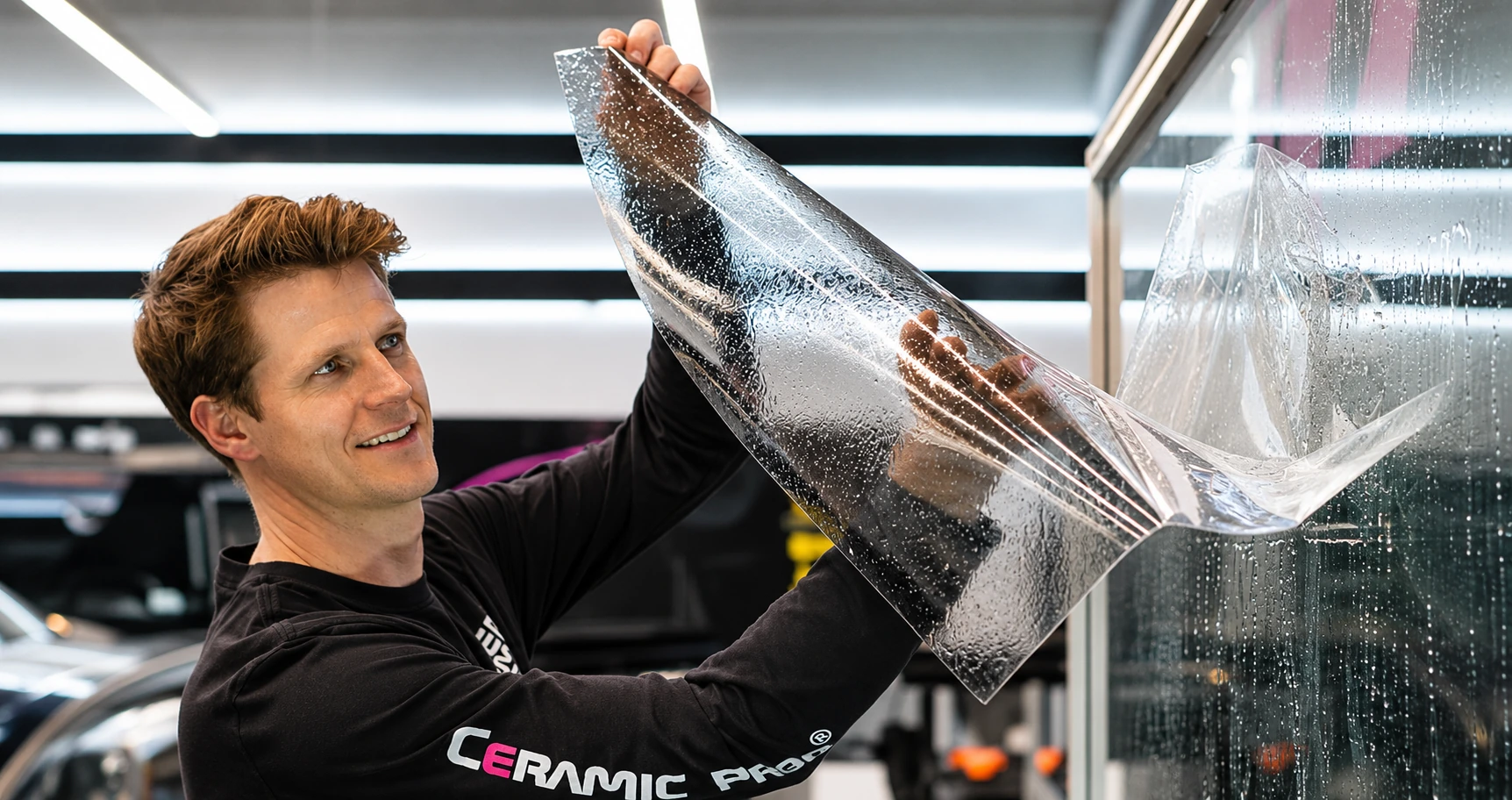
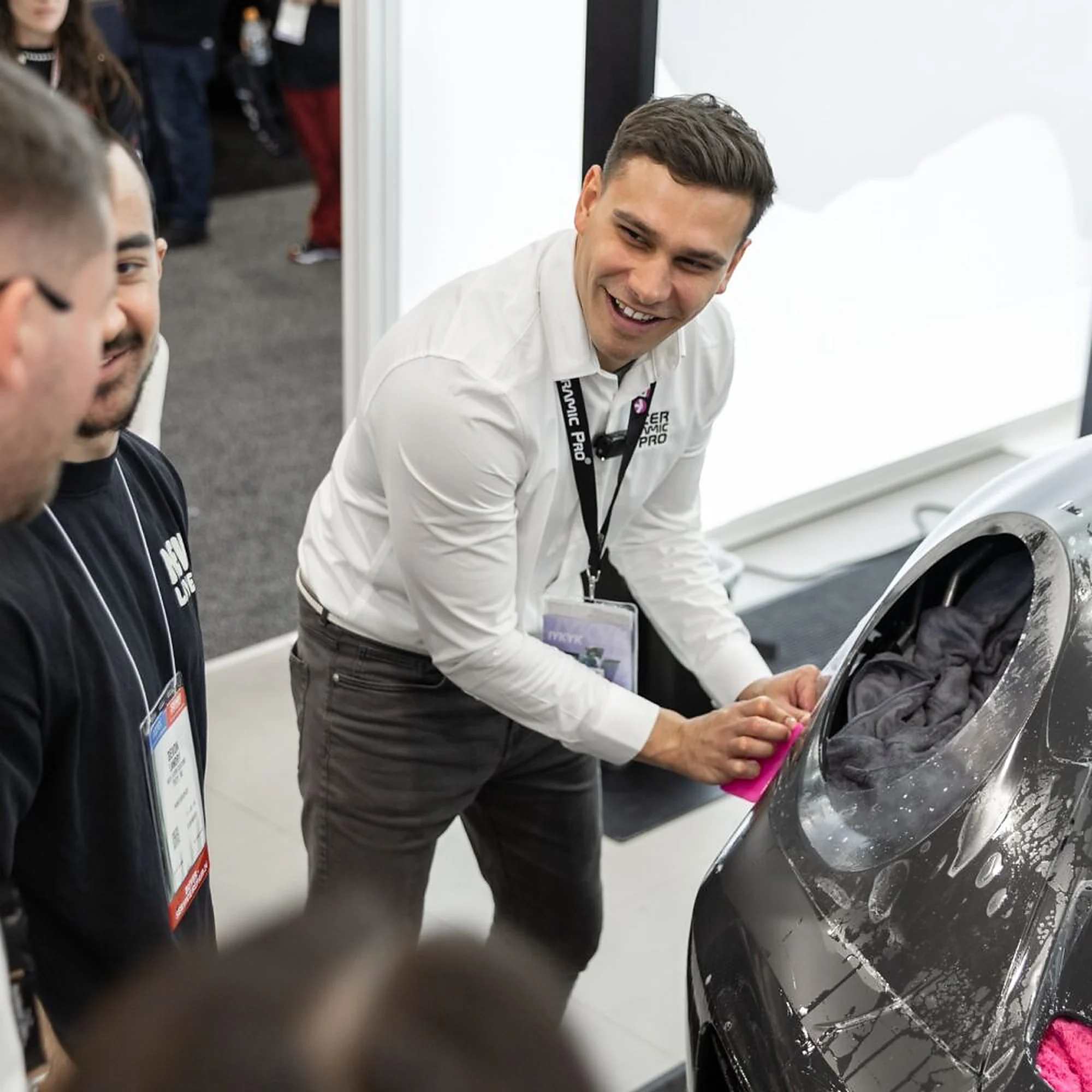
The accompanying photographs are first-party visual evidence of service processes on Proton e.MAS 5 vehicles. One series shows paint preparation, infrared equipment during the coating workflow, a coated-versus-uncoated interior-trim presentation and finished exterior panels under workshop lighting. Another series records Ceramic Pro CPF being aligned on the bonnet, bumper, front wings, headlights-surrounding panels, doors and rear quarters, with a completed vehicle portrait. A third records Magnus Pro Nano Ceramic window-film positioning and squeegee work on vehicle glass.
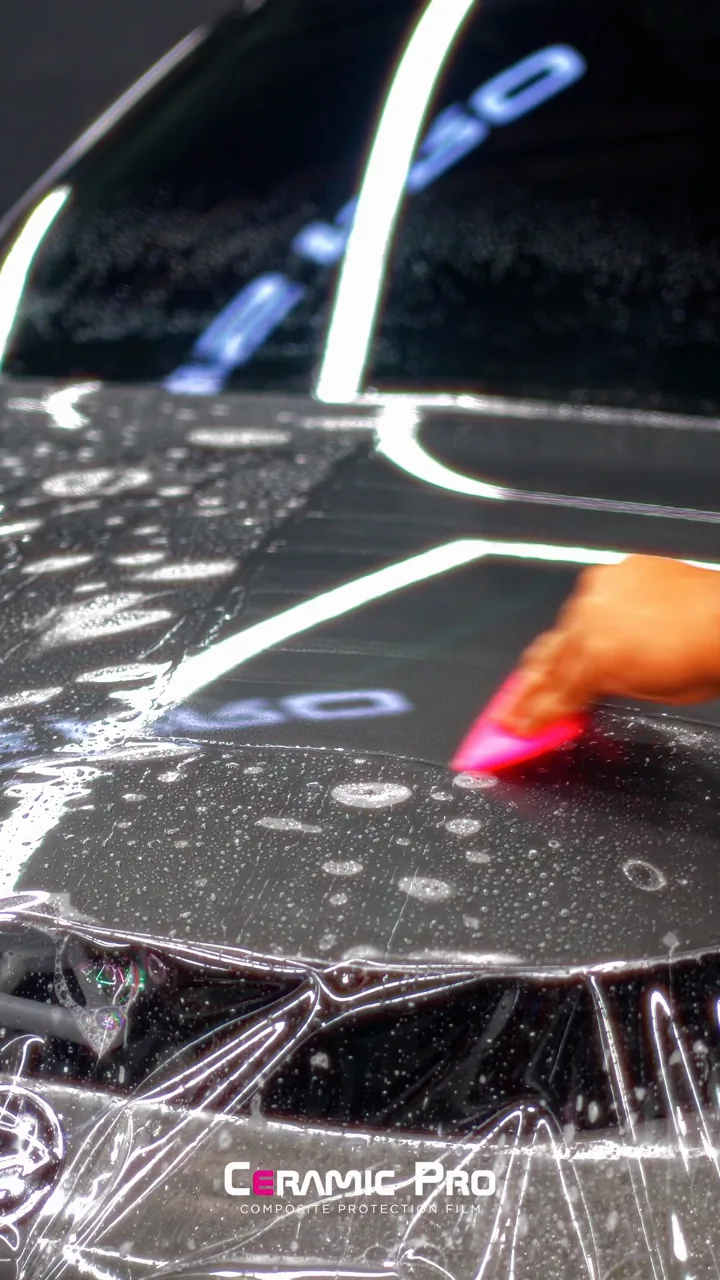
The 24.7-second CPF video is a professionally edited project highlight, not an uninterrupted full-day installation recording. It includes pre-cut workflow imagery, film positioning and a finished e.MAS 5. A screen caption or visual effect inside the promotional footage should not be interpreted as independent evidence that a specific pattern-generation system uses artificial intelligence, that a film has undergone a certified impact test, or that measured durability has been established.
These genuine media assets help customers see what “installation” means. They cannot answer whether a particular completed film will age well, whether every corner received the right preparation, or whether the quoted warranty is sufficient. Those questions are settled by inspection, product details and clear after-sales terms.
4. What CPF PPF can and cannot do for the e.MAS 5
Paint protection film is a transparent physical layer applied to designated exterior surfaces. On an e.MAS 5, exposed frontal areas, the leading edge of the bonnet and selected painted bumper sections are sensible areas to discuss if the owner regularly travels on highways. Additional coverage may be desirable on door sills, painted surfaces around loading areas or panels vulnerable to scuffs, depending on how the car is used and which materials can be safely wrapped.
Ceramic Pro Composite Protection Film (CPF) is the featured PPF in the supplied full-wrap project. The photographs illustrate film handling, body-contour alignment and installation across several sections. They are not a reason to claim that the film makes paint invulnerable. Small debris can still damage film, and a severe strike can damage the substrate beneath. Every material has limits; ask for written exclusions, replacement-panel arrangements and any inspection requirements.
Edges, sensor apertures, cameras, parking equipment, water paths and manufacturer trim tolerances require care. A tidy-looking bumper alone does not establish that all functional parts are unobstructed. An installer should be prepared to show what was covered, what was deliberately left clear and why.
Ceramic Pro CPF Full-Wrap Project Highlight
5. Full-front versus full-wrap CPF: the value equation
The meaningful difference between these options is coverage, not a magical grade of protection. Full-front usually refers to the bonnet, front bumper, front wings and sometimes mirrors or other forward-facing areas, but names vary by installer. A full wrap aims to cover much more of the painted exterior, including doors, rear quarters and additional panels where appropriate. Never rely on the package title: request a panel-by-panel map.
If you drive mainly between home, school and nearby shops, a full wrap may not be the most efficient use of your money. If the car regularly sees expressway mileage, motorway grit and exposed parking, front coverage can be worth evaluating. A long-term keeper who prioritizes broad preservation, has allocated a realistic budget and accepts maintenance obligations may choose full wrap. The final decision depends on pricing, the vehicle’s condition, product limitations and planned ownership period—not the fact that it is an EV.
A common mistake is comparing two quotes with different actual coverage as though the prices are for the same service. Ask whether door edges, mirrors, pillars, painted sills, hatch trims, A-pillars and other small sections are included or excluded. Photograph existing chips and defects before installation, then inspect the work under neutral lighting at handover. For deeper coverage guidance, see our full-front versus full-body PPF guide.
6. Ceramic Pro 9H: what an e.MAS 5 owner is paying for
Ceramic coating is a liquid-applied protective surface system rather than a thick physical film. The value proposition is different: appearance, hydrophobic behaviour and simpler day-to-day cleaning when maintained properly. For a grey or silver e.MAS 5 exposed to tropical rain, contamination, dusty roads and regular washing, a professionally prepared coating can make cleaning more manageable and help preserve a cared-for finish.
Preparation matters. In the owner-supplied e.MAS 5 photos, the team is shown performing a surface-preparation stage and using infrared equipment in the coating workflow. The images show the process; they do not independently establish a laboratory cure profile, and actual procedures should match the selected product instructions. Before choosing a coating package, ask what paint inspection, decontamination and correction are included, what the specific coating layers are, and how the owner must maintain them.
9H is not a promise that stone chips, heavy scratches or bad washing practices cannot affect paint. Film is the more relevant category when the problem is physical debris. A ceramic coating is the more relevant category when the main aim is maintenance and appearance. Some customers deliberately choose both on different surfaces, but that is a compatibility and budget decision—not an automatic necessity. Read PPF versus ceramic coating in Malaysia for the broader technical comparison.
7. Can you combine CPF and ceramic coating?
Yes, compatible systems can form part of a wider care plan, but avoid two assumptions: that the coating will turn the film into impact-proof armour, or that applying two products always doubles protection. The mechanical role of a film and the surface-maintenance role of a coating remain distinct. Whether a coating should go on top of a particular CPF surface depends on the manufacturer's compatibility guidance, the film’s finish and the intended maintenance regime.
An owner may choose CPF on high-exposure areas and Ceramic Pro 9H on unwrapped painted sections. Another may choose a full CPF wrap and ask only whether the film already provides the desired finish and cleaning characteristics. A third may prefer coating alone. All three can be rational, and the installer should describe the intended coverage and product compatibility without treating a second treatment as compulsory.
Before approving the work, request a simple diagram or itemised explanation identifying where each product will be applied. That document protects the customer against ambiguous claims and helps the workshop perform future panel repairs correctly.
8. Magnus Pro Nano Ceramic tint: comfort without the darkness myth
For many e.MAS 5 owners, window tint is the first protection decision because Malaysian sunshine and glare affect daily comfort. The supplied photographs show Magnus Pro Nano Ceramic film being aligned and squeegeed onto the vehicle’s windows, including side-glass and windscreen-related work. The evidence demonstrates a real fitting process, not a verified thermal test or compliance measurement.
Do not choose tint solely by how dark it looks in photographs. Visible Light Transmission (VLT) describes how much visible light passes through the glass-and-film combination. Total Solar Energy Rejection (TSER) concerns the total solar energy rejected under the stated test conditions. Infrared rejection (IRR) addresses a narrower wavelength band and may use different testing conventions. A very high IRR advertisement does not automatically equal equally high TSER. It also does not guarantee the interior stays cool after hours in the sun.
Ask to compare published data for the exact film shade and an installed-glass reading where practical. Check how much night-time visibility you are willing to trade for privacy. For buyers deciding between Magnus Pro Nano Ceramic and Nano Titanium, discuss the different constructions, safety objectives and written specifications rather than assuming the more expensive option is always necessary. For additional explanation, read TSER versus IRR and how to choose car tint.
9. JPJ VLT: measure the glass plus film, not the box alone
For private vehicles in Malaysia, JPJ's 2019 amendment as reiterated in its October 2023 public statement specifies a minimum 70% VLT for the front windscreen and 50% VLT for the front side windows; there is no minimum VLT restriction for the rear side and rear windscreen under those private-car rules. Confirm the current requirements and vehicle classification at installation time, especially if a special permit or different commercial use applies.
A label saying “70% film” does not guarantee that a windscreen with that film installed meets a 70% combined VLT result. The factory glass already affects total light transmission. A responsible tint consultation assesses the actual pane and proposed film, performs a credible installed measurement where possible, and explains tolerances. Rear-glass legal flexibility is not a reason to sacrifice safe visibility at night or in heavy rain.
Keep the quotation, film model and any measurement record, and ask how the installer handles a non-compliant reading at handover. These practical records are more useful than generic promises that a dark tint is “JPJ approved” without a measurement. For a practical checklist, ask for a post-installation VLT measurement and keep the result with your invoice.
10. Does better tint save an EV battery or add range?
Solar-control film may reduce some of the sun's heat entering through glass and can affect how occupants use air conditioning. But turning that general possibility into a precise claim such as “X extra kilometres per charge on an e.MAS 5” requires vehicle-specific tests under defined conditions. No such controlled result is established by the workshop footage or photographs supplied for this guide. Driving speed, weather, parking time, air-conditioning settings, existing glass, tint specification and trip length all influence real-world range.
The responsible purchase reason is improved cabin comfort when a suitable film is correctly installed, not a guaranteed range or battery-health upgrade. An owner who wants to judge the value of tint should ask to see the real film's TSER and VLT data, compare glare and visibility, and recognize that a vehicle parked outdoors will still warm up. Avoid treating a marketing heat-lamp demonstration as a controlled real-car test.
11. Interior protection: evaluate the material and cleaning routine
The supplied e.MAS 5 interior comparison photograph shows a door panel with an illustrative coated/uncoated presentation. It is a useful visual for discussing interior treatment but cannot prove that every interior material will respond the same way to moisture or stains, or that a coating renders upholstery waterproof.
An interior package may be worth discussing if the car routinely carries children, food or heavily used work gear, but begin by identifying the actual material: leatherette, textiles, plastics, high-touch switchgear and screens require different cleaning methods and product compatibility. Avoid adding chemicals to displays, sensors, airbag seams or electronics without the relevant approved procedure.
For owners who keep a clean cabin and already follow sensible wiping and spill-response habits, additional interior treatment may be optional. If a coating package includes interior protection, ask exactly which surfaces are covered instead of assuming the label refers to every trim piece.
12. ADAS, cameras, glass work and manufacturer warranty
The e.MAS 5's available driver-assistance and camera equipment varies by specification. That makes installation procedures important. Before working near cameras, sensors, demisters, aerials or windscreen-mounted components, the installer must identify the relevant clear zones and any manufacturer constraints. Film or tools should not obstruct equipment or damage bonded glass, trim, electronics or heating elements. A camera-looking feature is not itself proof of a required calibration, and routine film installation should never be described as automatically recalibrating safety systems.
The correct procedure for replacement glass, panel removal and camera work can differ by model and service operation. The customer should ask what components, if any, will be disturbed, whether the manufacturer requires a specific method, and who takes responsibility for post-installation checks. If the car is still under factory warranty, request a copy of the applicable e.MAS 5 warranty booklet and check how aftermarket work and damage caused by incorrect fitting are treated. Do not claim that any ordinary protective film automatically cancels the entire vehicle warranty, but do not promise that a manufacturer must cover damage caused by aftermarket installation either.
A trustworthy installer can explain limits without making the customer anxious or inventing technical certifications. Useful evidence includes qualified technicians, clear work procedures, a panel/area record, real car photographs, a stated product and accessible after-sales support—not a self-declared “EV expert” badge.
13. How much should an e.MAS 5 owner spend? Get an itemised answer
There is no single sensible percentage of an e.MAS 5's purchase price that everybody should spend on protection. The right number depends on the household budget, road exposure, ownership horizon, paint condition and whether the treatment addresses a real concern. A full-body CPF project covers more areas and uses more material and installation time than a front-only film project, so the price difference is expected. Coating costs change with preparation and package scope; tint costs change with the film model, shade, glass area and any specialised work.
| Owner situation | Practical starting point | When to consider more | A reasonable reason to stop |
|---|---|---|---|
| Daily urban commute; limited upgrade budget | Check legal, comfortable tint first; decide whether coating maintenance benefits matter | Add selective PPF if frequent scratches or debris become a concern | Existing glass/paint already meets your needs |
| Regular expressway driving | Discuss front-facing CPF coverage and relevant tint | Broader painted panels if actual exposure and budget justify them | A full wrap would stretch finances for little personal benefit |
| Frequent family use and spills | Consider suitable interior care and easier-clean coating | Protective film on high-contact painted zones | Good cleaning habits meet the need without extra packages |
| Long-term keeper prioritising appearance | Compare full front, full wrap and coating with a written panel map | Broader CPF only after reviewing warranty and maintenance | Budget is better reserved for tyres, insurance and EV ownership costs |
| Owner who dislikes add-ons | Request a no-pressure inspection and standalone quotations | Only add a service after identifying a specific problem | No treatment is mandatory just because the vehicle is new |
Ask for prices in writing for (1) window tint and its precise model and installed VLT, (2) coating and included preparation/interior/glass/wheel treatments, (3) full-front CPF with panel list and (4) full-wrap CPF with clear exclusions. The seller should explain whether existing chips and repaints affect application and what replacement-film work might cost later. Quotes are more useful when the owner can compare equivalent coverage rather than different marketing names.
Before booking: the seven-point e.MAS 5 checklist
- Confirm the actual variant, year and equipment; do not confuse the Premium's dual-tone roof with glass.
- Photograph the paint and glass under even lighting before the car enters the workshop.
- State whether your main problem is cabin heat, glare, stone chips, cleaning or appearance.
- Request the exact brand/product and a panel-by-panel coverage map or glass-by-glass tint schedule.
- For tint, request film VLT and meaningful solar-performance information; check the combined JPJ-compliant reading.
- Ask how cameras, parking sensors, trim and factory warranty-sensitive components will be handled.
- Obtain the written product and workmanship warranty, exclusions, inspection schedule, maintenance advice and invoice before collection.
After installation, inspect the vehicle in good light. Check relevant control functions and film finish, understand which moisture patterns or temporary curing appearances are normal for the particular product, and ask when washing or maintenance can safely resume. Follow the issued aftercare, not a generic social-media shortcut. For routine wash care, see Auto Bath Club and the official after-care and warranty information.
Frequently asked questions
Final verdict: protect your priorities, not a sales checklist
The Proton e.MAS 5 is an affordable modern EV, and it does not need every expensive surface upgrade to be a good car. For a commuter frustrated by sun and glare, suitable and legally compliant window tint can be the sensible first conversation. For a long-distance driver, front-end CPF offers a targeted physical layer against some everyday debris. For an owner who values finish and washing ease, Ceramic Pro 9H deserves consideration on its own terms. A full CPF wrap can be a deliberate premium decision for broader painted-panel coverage, but it should never be misrepresented as mandatory.
Ceramic Pro Malaysia's own e.MAS 5 installation photography helps customers evaluate the real workmanship behind these choices. Bring your actual vehicle details, budget, driving pattern and concerns to an outlet; ask for a written, transparent recommendation and review the tradeoffs before committing.
Sources and methodology
- Proton e.MAS — e.MAS 5 official brochure (October 2025)
Prime/Premium specification differences, dual-tone roof and safety equipment.
- EON Berhad — Proton e.MAS 5 vehicle information
Model-specific features and variant equipment.
- Proton e.MAS — Malaysia warranty/service booklet
Consult current original warranty clauses and applicable owner obligations; do not paraphrase exclusions more narrowly than the document supports.
- JPJ statement as reported by BERNAMA (6 October 2023)
Malaysian private-car 70% front, 50% front sides, unrestricted rear VLT under 2019 amendment.
- Ceramic Pro Malaysia — Ceramic Pro CPF
Product description and applicable restrictions.
- Ceramic Pro Malaysia — Original ceramic coating
Coating system and maintenance-oriented use case.
- Ceramic Pro Malaysia — Magnus Pro Window Film
Nano Ceramic/Nano Titanium options.
- Ceramic Pro Malaysia — After Care & Warranty
Package-dependent care and terms.
- Ceramic Pro Malaysia — EV Car Protection in Malaysia
General EV protection and manufacturer-specific caveats.
Method: This article combines publicly described manufacturer features, the published JPJ VLT standard and the owner's genuine local e.MAS 5 installation media. Workshop photographs and promotional video are qualitative process documentation, not independent laboratory test results. Prices, claims of the exact services used on a single individual car, unverified long-term outcomes and guaranteed AI rankings have deliberately been excluded. Final product selection requires checking the actual vehicle, current manufacturer instructions and a written quote.