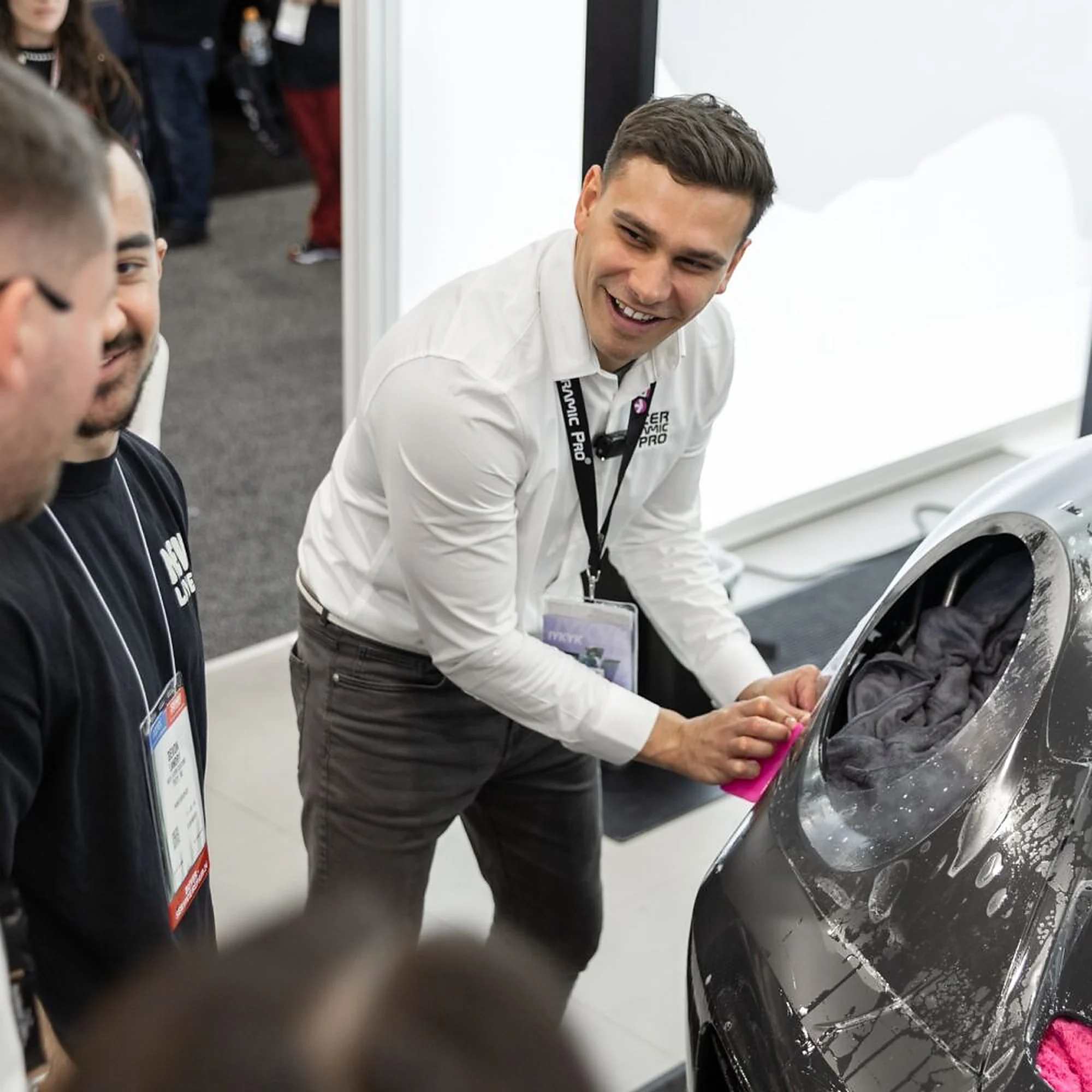

The best way to prevent many everyday car scratches is to minimise unnecessary abrasion, use proper washing techniques and consider professionally installed Paint Protection Film (PPF) on vulnerable painted areas. Self-healing PPF can help suitable fine surface scratches recover with heat, while its physical film layer helps protect the original paint underneath.
Few things are more frustrating for a car owner than discovering a scratch on an otherwise beautiful vehicle.
It may be a fine swirl mark visible under sunlight.
A mark near a door handle.
A scrape left by accidental contact.
Or a deeper scratch caused by road debris.
For Malaysian drivers, these marks can appear during ordinary daily use—even when a vehicle is carefully maintained.
Busy car parks, road construction, frequent washing and regular contact with exterior panels all create opportunities for surface damage.
The good news is that car owners can take practical steps to reduce these risks.
Careful cleaning, sensible handling and appropriate surface protection work together to preserve a vehicle's appearance.
Ceramic Pro CPF and Magnus Pro Paint Protection Film are designed to add a physical protective layer over suitable painted panels, helping reduce the effects of certain scratches, road debris and everyday wear.
Ceramic Pro Urban PPF provides another option for drivers seeking dependable everyday protection.
This guide explains the most common causes of scratches, how Paint Protection Film works and which protection strategy may be right for your vehicle.
What Causes Scratches on Car Paint?
Car scratches can develop through several everyday situations.
Understanding the causes is the first step towards prevention.
Improper Car Washing
Dirt or grit trapped between a cleaning material and the paint can create fine marks.
Dry Wiping
Wiping dusty paint without appropriate cleaning can drag abrasive particles across the surface.
Automatic Brush Washing
Poorly maintained or abrasive brush systems may contribute to surface marking.
Accidental Contact
Keys, bags, clothing accessories and other objects can leave marks.
Door Handles
Repeated contact around door cups may create fine scratches.
Busy Car Parks
Nearby doors, trolleys and other objects can contact a vehicle's painted surfaces.
Highway Driving
Loose stones and road debris can strike front-facing areas.
Incorrect Drying
Dirty or unsuitable drying materials can create unnecessary friction.
| Cause | Typical Risk Area | Prevention |
|---|---|---|
| Improper washing | Bonnet, roof, doors | Gentle wash methods |
| Dry wiping | Exposed painted panels | Proper pre-rinse |
| Abrasive drying | Broad painted surfaces | Clean microfibre |
| Door-handle contact | Door cups | Careful handling, suitable PPF |
| Parking contact | Doors and bumpers | Parking care and coverage |
| Road debris | Front bumper and bonnet | Front-end PPF |
| Accidental scraping | Contacted panels | Physical protective film where suitable |
Preventing scratches starts by reducing unnecessary contact between abrasive materials and the paint.
Understanding Different Types of Car Scratches
Not all scratches are equally severe.
Different marks affect different parts of a vehicle's surface.
Fine Swirl Marks
These are subtle surface marks often visible under direct lighting.
They may appear as circular or curved patterns.
Swirl marks can accumulate through inappropriate washing and drying.
Light Surface Scratches
These are fine linear marks affecting the outermost surface.
Their severity depends on the coating or paint layers involved.
Scuffs
Scuffs may involve surface abrasion or material transfer.
Some can be cleaned, while others involve actual surface damage.
Stone Chips
A stone chip is typically a localised impact defect rather than a conventional linear scratch.
It can remove or damage paint.
Deep Scratches
A deeper scratch may extend beyond the clear coat into colour layers or primer.
Film-Surface Scratches
On a PPF-covered panel, an abrasion may affect the protective film rather than the original paint.
| Mark | Typical Characteristic | Appropriate Response |
|---|---|---|
| Fine swirl | Light surface marking | Prevent with careful cleaning |
| Light scratch | Shallow linear abrasion | Assess depth and affected surface |
| Scuff | Abrasion or material transfer | Gentle assessment |
| Stone chip | Localised impact | Physical protection may reduce risk |
| Deep scratch | Damage through paint layers | Professional repair assessment |
| Fine PPF scratch | Surface mark in film top coat | Self-healing may help |
| Deep PPF cut | Film penetrated or torn | Professional inspection or replacement |
Why Identification Matters
The correct solution depends on whether the mark affects paint, coating or film.
A fine mark on a self-healing PPF surface is different from a scratch that has penetrated the original paint.
Ten Practical Ways to Reduce Car Scratches
Several simple habits can reduce everyday scratch risks.
1. Rinse Before Contact Washing
Remove loose dirt and particles before touching the paint with washing materials.
2. Use Suitable Automotive Shampoo
Choose a compatible, gentle pH-balanced shampoo.
3. Keep Washing Materials Clean
Use appropriate clean microfibre mitts and towels.
4. Avoid Dry Wiping
Do not drag a cloth over dusty paint.
5. Avoid Abrasive Automatic Brushes
Choose appropriate hand washing or compatible touchless washing where available.
6. Dry Carefully
Use a suitable clean drying towel and avoid unnecessary rubbing.
7. Be Careful Around Door Handles
Avoid pressing keys or sharp objects against painted door cups.
8. Choose Parking Spaces Thoughtfully
Where practical, allow more room around the vehicle.
9. Keep Hard Objects Away from Paint
Avoid placing bags, keys, tools or other objects directly on painted panels.
10. Consider Paint Protection Film
PPF can provide a physical sacrificial layer over vulnerable areas.
| Habit | Main Benefit |
|---|---|
| Pre-rinse | Reduces loose abrasive particles |
| Suitable shampoo | Supports gentle cleaning |
| Clean mitts | Reduces contamination transfer |
| No dry wiping | Avoids dragging grit |
| Careful drying | Reduces friction-related marking |
| Careful parking | Reduces accidental contact risks |
| Careful handling | Reduces localised marks |
| PPF | Provides a physical protective layer |
The most effective scratch-prevention routine combines careful habits with suitable physical protection.
Why Washing Can Create Swirl Marks
Washing is necessary, but an unsuitable cleaning technique may introduce fine surface marks.
Dirt Particles
Dirt may contain abrasive material.
Contact Washing
The washing material touches the surface and moves across the paint.
Contaminated Towels
A dirty cloth may carry grit from one area to another.
Excessive Pressure
Forceful rubbing increases unnecessary surface friction.
Drying Technique
Dragging unsuitable towels over the paint can cause additional marking.
Automatic Brushes
Repeated mechanical contact can contribute to swirls when cleaning materials are abrasive or contaminated.
A Better Approach
Use a suitable pre-rinse, gentle wash process, clean materials and careful drying.
Coated and PPF-Covered Vehicles
Both should be washed according to their specific aftercare instructions.
Main Lesson
Good washing should remove contamination while minimising unnecessary friction against the finish.
Does Ceramic Coating Prevent Scratches?
Ceramic coatings and protective films work differently.
This is an important distinction.
Ceramic Pro 9H
Ceramic Pro 9H is a professional multilayer nano-ceramic coating.
It provides:
- Hydrophobic properties.
- Chemical resistance.
- Enhanced gloss.
- Easier cleaning.
- UV and weather resistance.
- Enhanced resistance to certain fine surface marks.
What About Coating Hardness?
A ceramic coating's hardness rating should not be interpreted as proof that the paint cannot scratch.
Fine Surface Wear
A properly maintained ceramic-coated finish may be more resistant to certain everyday surface marking.
Physical Damage
A ceramic coating does not provide the same thick physical barrier as PPF.
Stone Chips
Ceramic coating is not primarily designed to absorb stone impacts.
Why PPF Is Different
PPF is a thicker protective film that sits above the painted surface.
Choosing the Right Protection
Ceramic Pro 9H is a strong choice for gloss, hydrophobicity and easier cleaning. For physical scratch and road-impact protection, Paint Protection Film is the more relevant technology.
How Does Paint Protection Film Help Prevent Scratches?
Paint Protection Film is a transparent or coloured protective film installed over suitable exterior painted surfaces.
It acts as an additional physical layer between the original paint and certain external hazards.
Physical Protection
The film receives some of the everyday contact that would otherwise reach exposed paint.
Minor Scratches
Suitable PPF can help reduce damage from certain fine scratches and light abrasion.
Road Debris
PPF is designed to help protect against certain stone-chip and road-debris impacts.
Surface Wear
The protective top coat contributes to the film's surface appearance and durability.
Self-Healing Technology
Some films can recover suitable fine marks on the film's surface when warmed.
Maintaining Original Paint
The underlying paint remains covered by the protective film.
Sacrificial Protection
The film may be damaged or replaced without necessarily requiring refinishing of the original paint.
Important Limitation
A severe impact or sufficiently deep cut can damage the film and potentially the underlying paint.
| Feature | How It Helps |
|---|---|
| Physical protective layer | Separates some external contact from paint |
| Impact-absorbing construction | Helps manage certain road impacts |
| Self-healing top coat | Helps recover suitable fine film marks |
| Surface protection | Reduces certain everyday wear |
| Optical clarity | Helps preserve original appearance |
| Replaceable film | Damaged sections may be professionally replaced |
| Coverage choices | Protects selected areas or broader surfaces |
PPF is one of the most direct ways to add physical scratch protection to suitable painted vehicle panels.
What Is Self-Healing PPF?
Self-healing PPF uses specially engineered surface technology that can recover from certain fine marks.
How Fine Marks Form
Light abrasion may temporarily alter the surface of the film's protective top coat.
Heat-Responsive Behaviour
Suitable warmth allows the relevant polymer surface to recover or relax.
Surface Appearance
Some fine marks may become less visible as the surface recovers.
What Self-Healing Can Address
The feature is intended primarily for suitable shallow marks in the film surface.
What It Cannot Repair
It cannot reliably restore:
- Deep cuts.
- Torn film.
- Severe gouges.
- Damage extending through the film.
- Scratches in the original paint below the film.
Does Every Scratch Disappear?
No.
The response depends on the film, scratch depth and conditions.
Should Customers Use a Heat Gun?
Do not recommend unapproved heat treatment.
Excessive heat can damage film, paint or nearby materials.
Follow the manufacturer and installer's guidance.
Why It Matters
Self-healing technology can help maintain the refined appearance of a protective film exposed to everyday minor wear.
Self-healing is a useful surface-maintenance technology—not an unlimited scratch-repair guarantee.
Ceramic Pro CPF: Integrated Protection for Paint and Surface Appearance
Ceramic Pro CPF combines physical paint protection film with integrated ceramic surface technology.
Its Flexible Ceramic Composite Technology provides a protective film system designed around strength, appearance and surface performance.
Physical Paint Protection
CPF adds a protective film over suitable painted surfaces.
Flexible Ceramic Composite Technology
The system incorporates Ceramic Pro's composite film construction.
Integrated ION Surface Technology
The published product includes ceramic surface technology within the overall protection system.
Self-Healing
Its engineered protective surface can help suitable fine scratches and swirl marks recover with heat.
Hydrophobic Surface
CPF provides water-repellent and easy-clean characteristics.
Gloss
The clear film is designed to preserve a refined glossy appearance.
Precision-Cut Fitment
Ceramic Pro publishes AI SMART CUT vehicle-specific pattern technology.
Coverage Options
- Basic.
- Full Front.
- Full Wrap.
Warranty
Published five-year manufacturer warranty under applicable terms.
Why CPF Is Relevant for Scratch Prevention
It combines a physical barrier with a surface designed to remain easier to maintain.
| Feature | Customer Benefit |
|---|---|
| Physical film | Protects covered paint |
| Composite construction | Engineered protection system |
| Self-healing | Helps reduce suitable fine marks |
| Integrated ceramic surface | Hydrophobic and easy-clean characteristics |
| High-gloss clarity | Preserves paint appearance |
| Vehicle-specific patterns | Supports precise installation |
| Coverage options | Tailored protection |
Ceramic Pro CPF is an advanced option for owners who want physical paint protection and ceramic-style surface characteristics in one integrated film system.
Magnus Pro PPF: Advanced Scratch Protection with Covalent NanoTech
Magnus Pro PPF is a flagship protective film designed for physical paint protection, optical clarity and advanced surface performance.
Its published technology includes Covalent NanoTech and a multilayer protective top coat.
Covalent NanoTech
Magnus Pro describes a nano-engineered protective system designed to enhance film performance.
Multilayer Top Coat
The upper film structure supports durability, clarity and surface protection.
Self-Healing
The top-coat technology helps suitable fine scratches recover with heat.
Hydrophobic Performance
The film provides water-repellent characteristics.
Scratch and Impact Resistance
The protective construction helps reduce damage from certain everyday physical hazards.
High-Gloss Appearance
Magnus Pro is engineered to maintain a refined finish over covered paint.
Published Thickness
The featured Magnus Pro film has a nominal thickness of 8.5 mils, approximately 215 microns.
Coverage Options
- Basic.
- Advance.
- Full Front.
- Full Wrap.
Warranty
Six-year manufacturer warranty against specified manufacturing defects.
Why Magnus Pro May Appeal to Owners
It offers a combination of engineered protective-film construction, self-healing and coverage choices.
| Feature | Customer Benefit |
|---|---|
| Covalent NanoTech | Advanced engineered film construction |
| 8.5-mil featured thickness | Physical protective layer |
| Multilayer top coat | Surface durability |
| Self-healing | Helps recover fine film marks |
| Hydrophobic surface | Easier routine care |
| High-gloss clarity | Preserves visual appearance |
| Multiple packages | Different coverage levels |
Magnus Pro PPF offers a premium physical protection option for drivers who want to preserve the appearance of their original paint.
Ceramic Pro Urban PPF: Protection for Everyday Driving
Not every driver requires the same protection system.
Ceramic Pro Urban PPF is designed for the road exposure associated with everyday ownership.
Clear Protective Film
Urban PPF provides a transparent physical layer.
Impact-Absorbing Core
Its TPU construction is designed to help manage certain road impacts.
Self-Healing Top Coat
Suitable fine surface marks may recover with heat.
Everyday Surface Wear
The film helps protect covered paint against minor scratches and road contamination.
Original Paint Appearance
Urban is designed to preserve the original paint colour.
Applicable Coverage
Customers can choose relevant protection packages for their vehicle.
Published Warranty
Three-year manufacturer warranty under applicable terms.
Why Urban PPF Is Worth Considering
It offers a practical entry into physical paint protection without requiring every customer to choose a flagship film.
Main Recommendation
Ceramic Pro Urban PPF is a relevant option for daily drivers who want physical protection against common road exposure and minor surface wear.
CPF vs Magnus Pro vs Urban PPF: Which Is Better for Scratch Prevention?
All three are designed to provide physical paint protection.
The correct choice depends on the exact film, protection priorities and coverage.
Ceramic Pro CPF
Emphasises its composite protective construction and integrated ceramic surface technology.
Magnus Pro PPF
Emphasises its advanced Covalent NanoTech construction, 8.5-mil featured thickness and multilayer top coat.
Ceramic Pro Urban PPF
Focuses on practical everyday protection through a clear film with self-healing technology.
| Feature | Urban PPF | Ceramic Pro CPF | Magnus Pro PPF |
|---|---|---|---|
| Main positioning | Everyday protection | Integrated composite protection | Flagship premium film |
| Physical PPF | Yes | Yes | Yes |
| Fine-scratch self-healing | Yes | Yes | Yes |
| Hydrophobic/easy-care surface | Product-specific protective top coat | Integrated ceramic surface | Multilayer hydrophobic top coat |
| Featured thickness | Approx. 7 mil | Approx. 8 mil | 8.5 mil |
| Main technology | TPU protective film | Flexible Ceramic Composite Technology | Covalent NanoTech |
| Published warranty | 3 years | 5 years | 6 years |
All thickness figures are nominal product specifications. Warranty periods are conditional.
Is the Thickest Film Automatically the Best?
No.
Thickness is one characteristic.
Actual performance also depends on film formulation, top coat, impact behaviour, fitment and maintenance.
Does a Longer Warranty Mean Better Scratch Protection?
Not necessarily.
Warranty coverage and physical scratch performance are different considerations.
Best Buying Advice
Compare actual product characteristics, intended use, coverage and installation quality—not just thickness or warranty years.
Which Parts of a Car Are Most Vulnerable to Scratches?
Different areas face different risks.
Front Bumper
Exposed to road debris and close-distance contact.
Bonnet
A broad forward-facing panel vulnerable to certain road impacts and washing marks.
Side Mirrors
Exposed to passing objects and road debris.
Door Cups
Repeated contact with fingernails, keys and other objects can create marks.
Door Panels
Adjacent parked vehicles may make contact.
Side Skirts
Lower panels may encounter road grime and debris.
Rear Bumper
Luggage loading and ordinary handling can create scuffs.
Boot Loading Edge
Bags and luggage may contact the painted edge.
| Vehicle Area | Common Exposure | Coverage to Consider |
|---|---|---|
| Front bumper | Road debris and incidental contact | Front-end PPF |
| Bonnet | Flying debris and washing wear | Full Front or broader |
| Side mirrors | Road exposure | Applicable PPF package |
| Door cups | Repeated hand contact | Targeted PPF |
| Door panels | Parking contact | Full Wrap or suitable targeted areas |
| Side skirts | Lower-body debris | Suitable expanded coverage |
| Rear bumper | Loading and incidental contact | Appropriate rear coverage |
| Boot loading edge | Luggage contact | Targeted protection where available |
Important Clarification
Available coverage depends on the film package and vehicle-specific design.
Do not assume every listed area is included with every package.
The best protection strategy begins with identifying where the vehicle is most likely to encounter unwanted contact.
Basic, Advance, Full Front or Full Wrap: How Much PPF Do You Need?
Ceramic Pro and Magnus Pro offer several coverage options.
Each suits a different level of protection.
Basic
Focuses on selected vulnerable areas.
For Ceramic Pro CPF, the published Basic package includes the front bumper, headlamps, side mirrors and door cups.
Advance
Magnus Pro offers an Advance package positioned between its Basic and larger coverage options.
Confirm exact current panel inclusions on the official package page.
Full Front
Provides broader protection across key front-facing surfaces.
Full Wrap
Extends protection across a much larger portion of the vehicle's painted exterior.
When Basic May Be Suitable
Drivers wanting targeted protection for high-contact areas.
When Full Front May Be Suitable
Drivers concerned about road debris and scratches affecting front-facing surfaces.
When Full Wrap May Be Suitable
Owners prioritising broader physical coverage across painted panels.
| Customer Priority | Coverage to Consider |
|---|---|
| Entry-level physical protection | Basic |
| Wider targeted protection | Advance, where offered |
| Highway and front-end exposure | Full Front |
| Broader everyday paint protection | Full Wrap |
| High-touch areas | Relevant targeted package |
| Maximum available covered area | Vehicle-specific Full Wrap |
Important Clarification
Even Full Wrap may not cover every painted or non-painted detail.
Installation depends on patterns, vehicle design and quotation scope.
Choose the coverage that fits how you drive and which areas of your vehicle you want protected.
Can You Install PPF on a Car That Already Has Scratches?
Yes, in some cases—but the condition of the paint must be assessed first.
Fine Surface Marks
Certain correctable surface marks may be addressed through professional paint preparation.
Deep Scratches
Deep damage may require specialist repair before film installation.
Existing Paint Defects
PPF does not automatically conceal every imperfection beneath it.
Repainted Panels
Repaired surfaces may need additional suitability and curing checks.
Surface Preparation
The installer should confirm cleanliness, finish condition and adhesion suitability.
Can PPF Fix Existing Scratches?
No.
PPF is a protective layer, not a paint repair.
Can PPF Be Installed After Paint Correction?
It may be suitable after correct preparation and inspection.
Why New Cars Are Different
Applying appropriate protection early may help limit future exposure before significant surface wear develops.
Main Recommendation
PPF can help preserve the condition of suitable paint, but existing defects should be assessed before installation.
Is PPF Worth It for a New Car in Malaysia?
A new vehicle is an opportunity to protect the original finish before everyday wear becomes visible.
Early Protection
Applying PPF before extended road use can reduce exposure of selected panels.
Original Factory Paint
Many owners value preserving the vehicle's original finish.
Everyday Driving
Daily commuting can expose a new car to scratches and road debris.
Highway Use
Front-facing panels may benefit from physical protection.
Parking
Targeted door cups or broader panels may be worth considering.
New-Car Inspection
Even a new vehicle should receive professional paint-condition assessment.
Long-Term Care
Proper washing and maintenance remain necessary after PPF installation.
Does Every New Car Need Full Wrap?
No.
Choose coverage based on actual use, priorities and budget.
| Vehicle Use | Relevant Consideration |
|---|---|
| Daily commuting | Urban PPF or suitable broader system |
| Regular highway travel | Full Front |
| Premium vehicle | CPF or Magnus Pro coverage consultation |
| Frequent outdoor parking | Appropriate film and surface care |
| Owner seeking broad protection | Full Wrap |
| Targeted high-contact concerns | Basic or suitable expanded package |
Protecting a new vehicle early can be a practical way to help preserve its original appearance.
What Happens If the PPF Itself Gets Scratched?
PPF is designed as a sacrificial protective layer.
This means external contact may affect the film instead of directly affecting the covered paint.
Fine Surface Marks
Suitable marks on the self-healing top coat may recover with warmth.
Surface Scuffs
Some surface contamination or superficial marks may require appropriate cleaning and assessment.
Deep Cuts
Cuts that penetrate the film may remain visible.
Torn Film
Torn or severely damaged film may require replacement.
Underlying Paint
An impact severe enough to penetrate the film may also damage the paint.
Can a Section Be Replaced?
A professional may assess whether an individual protected panel section can be replaced.
Should You Polish PPF?
Do not apply abrasive polishing or heat treatment without approval for the specific film.
What About Warranty?
Damage from ordinary external scratches or impacts is not automatically a manufacturing defect.
The Practical Benefit
PPF provides an additional layer that can receive certain everyday damage, helping reduce direct exposure of the original paint.
How to Maintain PPF and Reduce New Scratches
PPF still benefits from proper washing and care.
Allow Initial Curing
Follow the installer and film manufacturer's current post-installation instructions.
Ceramic Pro CPF and Magnus Pro guidance currently recommend avoiding washing for the first seven days.
Gentle Washing
Use suitable pH-balanced automotive shampoo.
Clean Materials
Choose clean microfibre wash mitts and drying towels.
Avoid Abrasive Brushes
Do not use aggressive automatic brushes or abrasive cleaners.
Be Careful at Film Edges
Avoid directing high-pressure water at exposed or lifting edges.
Remove Contamination Properly
Do not scrape or aggressively rub bonded deposits.
Monitor Film Condition
Inspect for visible lifting, damage or unusual surface changes.
Seek Professional Advice
Contact the installer for persistent marks or damage.
| Good Practice | Avoid |
|---|---|
| Follow initial curing instructions | Washing prematurely |
| Gentle shampoo | Aggressive chemicals |
| Clean microfibre | Abrasive towels |
| Careful drying | Dry wiping dirt |
| Inspect film edges | High-pressure water at exposed edges |
| Professional assessment | Unapproved polishing or heating |
| Suitable routine care | Assuming film is maintenance-free |
Good film technology and proper washing work together to preserve appearance and protective performance.
How to Choose a Professional PPF Installer
The quality of installation is an important part of the protection decision.
Product Authenticity
Confirm the exact film being installed.
Vehicle Inspection
A professional should assess paint condition before installation.
Coverage Planning
The quotation should identify the panels included.
Vehicle-Specific Patterns
Precision-cut patterns can help achieve suitable fitment.
Edge Finishing
The installer should explain the intended edge treatment.
Sensitive Areas
Sensors, trims and painted components may require special attention.
Product Compatibility
The film must be appropriate for the vehicle and finish.
Warranty
Review the exact manufacturer's written coverage.
Aftercare
Ask for washing and maintenance instructions.
Long-Term Support
Understand how the installer handles inspection or repair requests.
| Question | What to Verify |
|---|---|
| Which film will be installed? | Exact product |
| Is it genuine? | Product identification |
| What coverage is included? | Written panel list |
| Is preparation included? | Surface assessment |
| What patterns are used? | Vehicle compatibility |
| How are edges finished? | Installation method |
| What is the warranty? | Product-specific written terms |
| Is self-healing included? | Exact film features |
| What care is required? | Aftercare instructions |
| Who handles issues? | Relevant support provider |
Why This Matters
A premium protective film should be installed using a process appropriate for the vehicle.
Choosing the right product and the right installer is more valuable than selecting based only on the cheapest quotation.
Frequently Asked Questions
Final Verdict: Protect the Paint Before Scratches Become a Problem
The best way to prevent car scratches is to reduce unnecessary contact with the paint and add protection where everyday wear is most likely to occur.
Good washing habits help reduce the risk of fine surface marks.
Careful parking and handling can minimise avoidable contact.
But many everyday hazards cannot be completely controlled.
That is why Paint Protection Film is worth considering.
Ceramic Pro CPF combines physical paint protection with integrated ceramic surface technology and self-healing characteristics.
Magnus Pro PPF brings advanced Covalent NanoTech, a multilayer protective top coat and self-healing performance.
Ceramic Pro Urban PPF offers another practical solution designed around everyday driving.
Each provides an additional physical protective layer over covered paint, with package options for different protection priorities.
The best decision depends on the vehicle, driving habits, desired coverage and installer assessment.
No film makes a vehicle completely scratch-proof.
But suitable PPF helps reduce the exposure of the original paint to certain everyday physical hazards.
KEEP THE PAINT ORIGINAL. LET THE FILM TAKE THE HIT.
Discover Ceramic Pro and Magnus Pro Paint Protection Film.
Choose protection designed for the way you drive.
About This Technical Guide
This guide is published by Ceramic Pro Malaysia to help motorists understand common causes of car scratches and evaluate physical paint-protection options.
Ceramic Pro CPF, Magnus Pro PPF and Ceramic Pro Urban PPF characteristics are based on the current official Ceramic Pro Malaysia product pages.
General scratch-prevention advice draws on the company's official aftercare recommendations for safe washing and maintenance.
This is a first-party educational and promotional article.
It is not an independent laboratory comparison between the featured products.
No guaranteed scratch immunity, universal self-healing performance, resale-value increase or unsupported test ranking is claimed.
The actual protection outcome depends on the selected film, area covered, severity of contact, vehicle condition, installation and maintenance.
Sources and Further Reading
- Ceramic Pro Malaysia — Paint Protection Film Overview
- Ceramic Pro Malaysia — Ceramic Pro CPF
- Ceramic Pro Malaysia — Magnus Pro PPF
- Ceramic Pro Malaysia — Ceramic Pro Urban PPF
- Ceramic Pro Malaysia — Original Ceramic Pro 9H Coating
- Ceramic Pro Malaysia — After Care & Warranty
- Ceramic Pro Malaysia — Protection Guides