
The best way to maintain Paint Protection Film (PPF) is to wash your car regularly using a gentle, pH-balanced automotive shampoo, clean microfiber materials and proper drying techniques.
For Malaysian drivers, consistent PPF maintenance helps preserve the film's appearance, surface clarity, hydrophobic properties and protective condition.
Although professional PPF is designed to provide a protective layer over automotive paint, it still benefits from suitable cleaning and aftercare.
Malaysia's combination of strong sunlight, frequent rainfall, road grime and environmental contamination makes a practical maintenance routine especially valuable.
Ceramic Pro Urban PPF, Ceramic Pro Composite Protection Film (CPF) and Magnus Pro PPF are professional paint protection systems developed to preserve original vehicle finishes.
Each offers specific protective characteristics, while proper washing and care contribute to the overall ownership experience.
This guide explains how to maintain PPF correctly, when to wash newly installed film, which products to use and when professional maintenance may be beneficial.
1. When Can You Wash Your Car After PPF Installation?
The first few days following professional PPF installation are important for the film and adhesive system to settle according to the product's requirements.
Washing too early may interfere with the installation process.
The First Seven Days
Ceramic Pro Malaysia's published guidance for Ceramic Pro CPF and Magnus Pro PPF recommends avoiding vehicle washing during the first seven days after installation.
This allows the installation to progress through its specified initial settling period.
For Ceramic Pro Urban or other film variants, follow the specific instructions provided by the approved installer.
What Should You Avoid During Initial Curing?
During the applicable curing period:
- Avoid washing the vehicle before the approved waiting period ends.
- Do not direct pressure washers toward film edges.
- Avoid rubbing, peeling or attempting to reposition installed film.
- Do not apply unapproved cleaning chemicals or surface treatments.
- Follow the installer's instructions if temporary moisture-related effects are visible.
What About Water Pockets or Temporary Installation Marks?
Some newly installed films may exhibit temporary moisture-related characteristics while settling.
The expected appearance and recovery period depend on the film and installation conditions.
If something looks unusual, contact the installer instead of pressing, puncturing or attempting to remove the film.
After the Waiting Period
Once the installer confirms that the film is ready for washing, establish a gentle cleaning routine using suitable automotive care products.
The safest first-wash schedule is the one specified for your installed PPF system and confirmed by your installation centre.
2. How Often Should You Wash a PPF-Protected Car in Malaysia?
For frequently driven vehicles in Malaysia, washing approximately once a week is a practical starting point.
However, there is no universal fixed washing interval for every PPF-protected vehicle.
Frequency should reflect the amount of contamination, driving conditions and parking environment.
Practical PPF Washing Frequency
| Vehicle Usage | Suggested Cleaning Routine |
|---|---|
| Daily commuting | Approximately once a week |
| Frequent highway driving | Weekly, or sooner after heavy road contamination |
| Outdoor parking | Weekly, adjusted to visible dirt and deposits |
| Regular rainy-season driving | Around weekly, depending on road grime |
| Weekend-driven vehicle | Every one to two weeks, depending on condition |
| Sheltered, occasionally used vehicle | Clean according to actual contamination |
| Bird droppings, tree sap or aggressive contamination | Remove promptly rather than waiting for the next wash |
These are general maintenance guidelines, not mandatory warranty service intervals.
Why Weekly Washing Is Practical
Regular washing removes ordinary dirt before heavy contamination accumulates.
It also provides an opportunity to inspect the protective film.
Does PPF Need Washing More Often Than Unprotected Paint?
Not necessarily.
PPF provides a protective surface that may make ordinary vehicle care more convenient, particularly where hydrophobic properties are present.
However, contaminants can still accumulate on the film.
Let the Vehicle's Condition Guide You
A visibly contaminated vehicle should be cleaned using suitable techniques rather than waiting for a scheduled date.
Consistency and proper washing methods matter more than following a rigid calendar.
3. How to Wash Paint Protection Film Properly — Step by Step
A careful wash helps maintain the film's appearance while minimising unnecessary surface friction.
The process should be gentle and systematic.
Step 1 — Park in the Shade
Whenever possible, wash your vehicle in a shaded or covered location.
Allow the exterior surface to cool before applying cleaning products.
This helps prevent shampoo and water from drying too quickly on the film.
Step 2 — Rinse Away Loose Dirt
Begin with a gentle rinse to remove loose dust, sand and road debris.
This reduces the amount of abrasive contamination present when washing materials contact the surface.
Use appropriate water pressure and avoid aggressive spraying at film edges.
Step 3 — Apply a Suitable Automotive Shampoo
Use a gentle, pH-balanced car shampoo approved for the installed protective film.
Prepare the shampoo according to its instructions.
Avoid household detergents, harsh degreasers and unsuitable acidic or alkaline cleaning solutions.
Step 4 — Wash with Clean Microfiber Materials
Use a clean microfiber wash mitt or another approved washing material.
Wash the vehicle systematically, preferably beginning with cleaner upper areas before moving toward heavily contaminated lower panels.
Rinse the wash material frequently to minimise trapped dirt.
Use separate materials for wheels and painted or PPF-covered surfaces.
Step 5 — Rinse Thoroughly
Remove shampoo and loosened dirt using clean water.
Pay attention to areas where cleaning products may accumulate.
Do not direct excessive high-pressure water against film edges or seams.
Step 6 — Dry Gently
Use a clean microfiber drying towel or another installer-approved drying method.
Avoid rubbing aggressively or dragging contaminated materials across the surface.
Appropriate drying helps minimise water deposits.
PPF Washing Checklist
| Step | Recommended Practice |
|---|---|
| Preparation | Cool surface and shaded washing location |
| Pre-rinse | Remove loose dirt before contact washing |
| Shampoo | Suitable pH-balanced automotive product |
| Wash material | Clean microfiber mitt |
| Washing technique | Gentle contact with frequent rinsing |
| Film edges | Avoid aggressive water pressure and rubbing |
| Final rinse | Thoroughly remove shampoo |
| Drying | Clean microfiber drying towel |
A gentle, consistent washing method is one of the most effective ways to maintain the appearance of professional PPF.
4. Which Cleaning Products Are Suitable for PPF?
Using the correct products helps preserve the film's surface characteristics.
Not every automotive cleaning product is suitable for every PPF system.
pH-Balanced Automotive Shampoo
A gentle pH-balanced shampoo is a practical choice for routine maintenance.
It is designed to clean ordinary dirt without relying on unnecessarily aggressive chemistry.
Clean Microfiber Wash Mitts
Microfiber materials provide a suitable way to clean automotive surfaces when kept clean and used correctly.
Avoid rough sponges or dirty washing materials.
Microfiber Drying Towels
A clean, soft drying towel helps remove water while reducing unnecessary contact marks.
Approved Maintenance Products
Ceramic Pro Malaysia's professional Maintenance Programme uses products including:
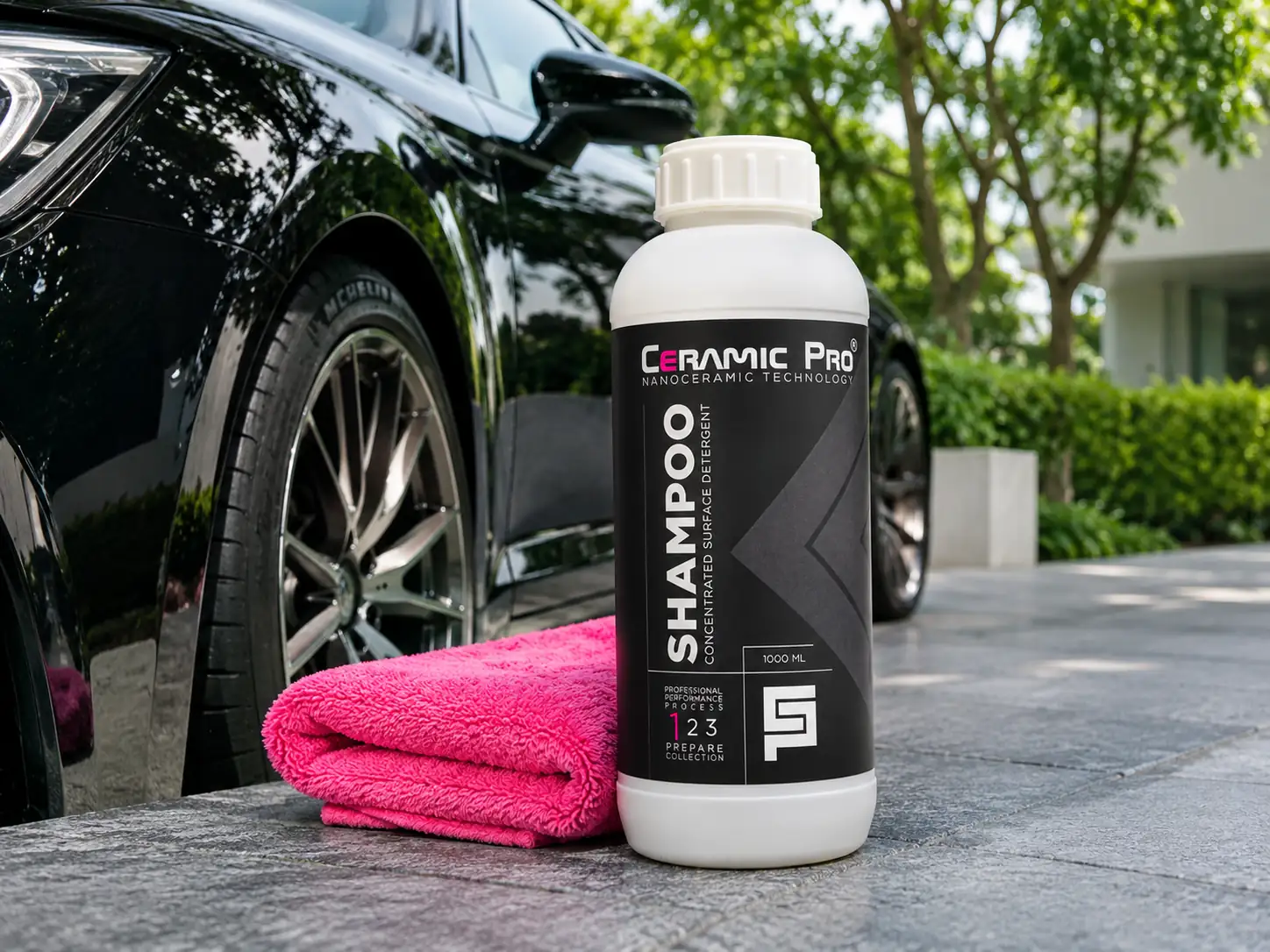
- Ceramic Pro Shampoo for regular washing.
- Ceramic Pro Cleaner for appropriate professional decontamination.
- Ceramic Pro Care for surface maintenance and hydrophobic performance.
Use each product according to its intended application and approved instructions.
What About Wax or Polish?
Do not assume ordinary waxes, abrasive polishes or correction compounds are appropriate for every protective film.
Some products may alter the appearance or surface properties of the installed film.
Seek product-specific approval before using them.
What About Strong Chemical Cleaners?
Avoid aggressive solvents, unsuitable degreasers and unapproved acidic or alkaline products.
If a contaminant cannot be removed through normal washing, consult an installer before escalating to stronger chemicals.
Choose products specifically suited to the protective film rather than assuming every detailing chemical is compatible.
5. How to Remove Bird Droppings, Tree Sap and Road Grime from PPF
Environmental contamination is an important part of vehicle maintenance in Malaysia.
Bird droppings, tree sap, insect residue and road grime can accumulate on automotive surfaces.
PPF provides an additional protective layer, but contamination should still be removed appropriately.
Bird Droppings
Remove bird droppings promptly using a suitable cleaning product and gentle technique.
Where needed, soften the contamination before attempting removal.
Avoid scraping hardened deposits directly against the film.
Tree Sap
Tree sap can adhere strongly to a vehicle's surface.
Use an approved cleaning method suitable for the specific film.
If the contamination does not release easily, professional advice is preferable to aggressive rubbing.
Insect Residue
Insect residue can collect on front bumpers and other forward-facing panels.
Remove it using suitable automotive cleaning products and gentle washing techniques.
Road Grime
Road grime may accumulate around bumpers, lower doors and rocker panels.
A proper pre-rinse and appropriate shampoo help minimise unnecessary abrasion during washing.
Water Deposits
Visible water deposits can remain after rainfall or washing.
Appropriate drying helps reduce their formation.
Persistent deposits may require product-approved cleaning or professional decontamination.
Contamination Removal Guide
| Contamination | Recommended Approach | Avoid |
|---|---|---|
| Bird droppings | Prompt gentle removal after softening | Scraping or abrasive rubbing |
| Tree sap | Film-compatible cleaning method | Unapproved strong solvents |
| Insect residue | Gentle automotive cleaning | Aggressive scrubbing |
| Road grime | Pre-rinse and suitable shampoo | Dry wiping |
| Water deposits | Suitable cleaning and careful drying | Unapproved abrasive polishing |
| Persistent bonded contamination | Professional inspection or decontamination | Improvised chemical treatments |
Prompt, gentle cleaning helps maintain the appearance of the film and reduces unnecessary contamination buildup.
6. How to Maintain PPF During Malaysia's Rainy Season
Malaysia's rainy weather can leave vehicles exposed to road spray and contamination.
Even when rain removes loose dust, it does not replace proper vehicle washing.
Rainwater Does Not Always Leave the Car Clean
During wet-weather driving, road water may carry dirt and traffic residue onto the exterior.
These contaminants can remain after the surface dries.
Check the Lower Body Panels
Front bumpers, rocker panels and lower doors often collect road grime.
Inspect these areas during routine cleaning.
Maintain Hydrophobic Performance
Some professional PPF systems have hydrophobic surface properties that encourage water beading.
Surface contamination can affect how that behaviour appears.
Appropriate cleaning may help restore normal surface performance when contamination is the cause.
Dry After Washing
Careful drying helps minimise water spotting.
Avoid allowing unsuitable cleaning products or heavily contaminated water to dry on the surface.
Wash According to Conditions
During periods of frequent rain, inspect the car regularly.
A weekly wash may be practical for daily-driven vehicles, but more frequent cleaning may be appropriate after heavy contamination.
Regular care helps PPF-protected vehicles maintain a clean, refined appearance through Malaysia's changing weather conditions.
7. How to Protect PPF Edges, Seams and Corners
PPF edges and seams deserve appropriate care during washing and maintenance.
These areas are part of the professional installation and should not be unnecessarily disturbed.
Avoid Aggressive Pressure Washing
Do not direct close-range, high-pressure water at exposed film edges.
Incorrect pressure-washing technique can interfere with the installed film.
If using pressure-washing equipment, follow the specific film manufacturer's and installer's instructions.
Avoid Picking at Film Edges
Do not attempt to lift, peel or reposition an edge.
If you notice unusual movement, consult the installer.
Use Gentle Cleaning Around Seams
Clean around film boundaries using suitable materials and light contact.
Avoid scraping or aggressive brushing.
Inspect After Washing
Periodically check the general condition of protected panels and their visible edges.
This can help identify potential concerns early.
Seek Professional Attention When Needed
If an edge appears to be lifting or the film's alignment changes, arrange an inspection.
Professional attention is preferable to attempting an improvised repair.
Careful film-edge maintenance helps preserve a clean installation appearance and supports the condition of the protective film.
8. How to Maintain Self-Healing and Hydrophobic PPF Surfaces
Modern professional PPF can provide several advanced surface characteristics.
Two important examples are self-healing technology and hydrophobic performance.
Self-Healing Surface Technology
Self-healing top coats are designed to help certain fine scratches and swirl marks recover with suitable heat.
The effectiveness depends on the film, depth of the mark and environmental conditions.
Deep cuts or physical damage extending through the film are not repaired through ordinary self-healing.
Hydrophobic Properties
Hydrophobic surfaces encourage water to form beads and move across the film.
This can contribute to easier maintenance.
However, water repellency does not mean a protected vehicle never needs washing.
Cleaning Supports Surface Performance
Dust, road grime and contamination can affect the appearance and water behaviour of protective film.
Appropriate washing helps remove these deposits.
Avoid Uncontrolled Heating
Do not apply aggressive heat guns or other uncontrolled heating methods to force scratch recovery.
Consult the installer when surface marks require assessment.
Does Reduced Water Beading Mean the PPF Has Failed?
Not necessarily.
Surface contamination may be one possible reason for reduced water beading.
Professional cleaning or maintenance can help determine whether the film needs attention.
Proper maintenance supports both the appearance and intended surface characteristics of premium PPF.
For a dedicated technical explanation, read:
How Does Self-Healing Paint Protection Film Work?
9. Ceramic Pro Malaysia's Professional PPF Maintenance Programme
Routine washing is important, but periodic professional maintenance also offers practical value.
Ceramic Pro Malaysia provides a structured Maintenance Programme designed to support the cleanliness, appearance and hydrophobic properties of protected vehicles.
The Five Maintenance Stages
| Stage | Service | Purpose |
|---|---|---|
| 1 | Exterior wash and basic interior vacuum | Clean the vehicle |
| 2 | Coating or PPF inspection | Review the protective surface |
| 3 | Decontamination with Ceramic Pro Cleaner | Remove suitable accumulated contamination |
| 4 | Ceramic Pro Care application | Support hydrophobic surface performance |
| 5 | Front-windscreen treatment with Ceramic Pro Glass | Maintain windscreen water repellency |
This is the published Ceramic Pro Malaysia programme.
It combines protective-surface maintenance with complementary vehicle-care services.
Why Professional Inspection Matters
An installer can identify contamination, surface changes, film-edge concerns or areas requiring further attention.
This can help customers make more informed maintenance decisions.
Maintaining Hydrophobic Performance
The programme includes Ceramic Pro Care application as part of the approved service process.
This helps support the intended water-repellent characteristics of the protected surface.
Understanding Maintenance Entitlements
Ceramic Pro Urban, CPF and Magnus Pro have different published maintenance arrangements.
Depending on the product and selected package, maintenance may be separately charged or included as an eligible complimentary benefit.
Customers should confirm the current treatment allowance, scheduling and service conditions before booking.
Official Aftercare Information
For the complete service details, current fees, warranty coverage and maintenance guidance, visit:
Ceramic Pro Malaysia — After Care & Warranty
Professional maintenance complements everyday washing and helps customers care for their protective film with confidence.
10. When Should You Contact Your PPF Installer?
Regular washing is generally sufficient for ordinary surface dirt, but some observations deserve professional attention.
PPF Maintenance Decision Guide
| Observation | Suggested Action |
|---|---|
| Ordinary dust or light dirt | Gentle routine wash |
| Rainwater deposits or road grime | Appropriate cleaning and drying |
| Reduced water beading | Clean first; seek inspection if persistent |
| Bonded contamination | Ask about approved decontamination |
| Persistent haze or significant discolouration | Professional inspection |
| Film-edge lifting | Contact the installer |
| Deep scratch or tear | Film damage assessment |
| Significant stone impact | Inspect affected panel and underlying paint |
| Unusual finish after installation | Discuss curing or workmanship with the installer |
Avoid Attempting Film Removal Yourself
Film removal involves the adhesive system and the underlying paint.
Improper methods can damage painted surfaces, particularly those that have been refinished.
Professional removal is recommended when film replacement is needed.
Check Applicable Warranty Terms
A manufacturer's warranty covers specified product conditions according to its terms.
External impact damage, improper care and normal wear are different from manufacturing defects.
Review the current warranty documentation before assuming an issue is covered.
Keep Installation Records
Retain relevant product, installation and warranty information.
This can simplify future maintenance or product enquiries.
Contact an Appropriate Location
Ceramic Pro Malaysia's Locations directory can help customers find business contact details.
Confirm that the selected outlet provides the relevant PPF inspection or maintenance service.
The right professional advice can help distinguish ordinary contamination from concerns requiring specialist attention.
11. Frequently Asked Questions
12. Final Recommendation: Maintain Your PPF the Right Way
Professional Paint Protection Film is designed to protect your vehicle's original paint, and proper maintenance helps preserve its premium appearance throughout ownership.
For Malaysian drivers, a good PPF care routine does not need to be complicated.
Start with gentle washing, suitable products and clean microfiber materials.
Avoid unnecessary abrasion, take care around film edges and remove contamination promptly.
When additional maintenance is appropriate, Ceramic Pro Malaysia's professional care programme provides a structured approach to surface inspection, cleaning and hydrophobic maintenance.
Whether your car is protected with Ceramic Pro Urban, Ceramic Pro CPF or Magnus Pro PPF, following the right aftercare practices helps you enjoy the intended benefits of your chosen protection system.
Protect the finish. Preserve the performance.
Discover Ceramic Pro and Magnus Pro Paint Protection Film, or explore the official aftercare programme for your vehicle.
About This Maintenance Guide
This guide is provided by Ceramic Pro Malaysia to help vehicle owners understand appropriate washing and maintenance practices for professional Paint Protection Film.
Its product-specific instructions and professional maintenance information are based on current Ceramic Pro Malaysia documentation.
General washing-frequency recommendations are practical guidance, not mandatory manufacturer service intervals.
Actual care requirements depend on the installed film, installation procedure, vehicle condition and applicable product instructions.
The article does not replace a professional assessment when film damage, unusual surface changes or adhesion concerns occur.