The moment protection proves its value
A scuffed bumper can make an owner immediately think about repainting. On a vehicle fitted with paint protection film (PPF), however, the visible damage may be concentrated in the film rather than the paint underneath. Until the surface is inspected, the appearance alone cannot tell the full story.
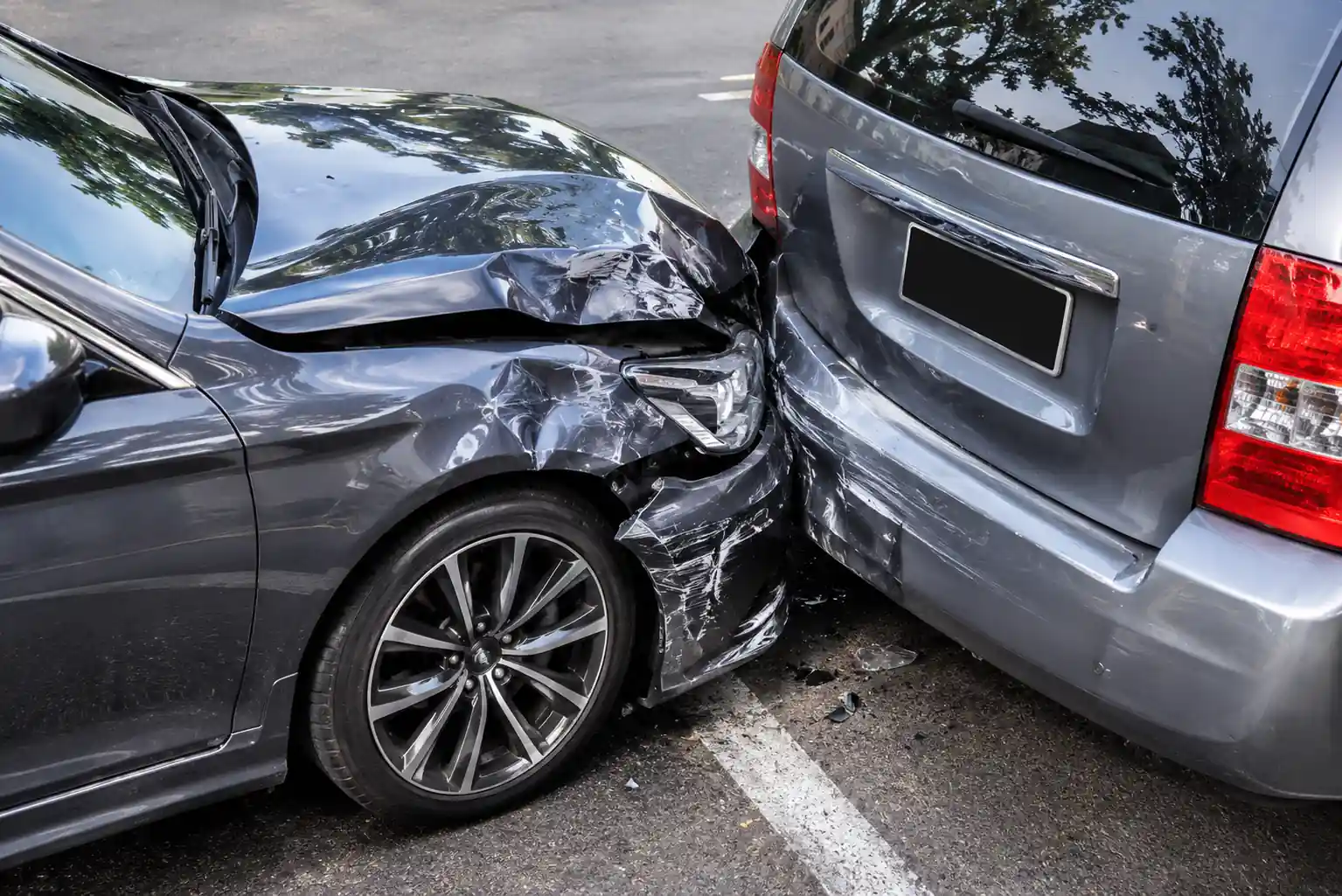
Can PPF protect car paint in an accident? Yes, it can help protect the covered paint against certain contact scratches and abrasions, including some low-severity bumper scuffs. It acts as a replaceable barrier between an external object and the painted surface. It is not collision protection: a sufficiently severe impact can penetrate the film, deform a bumper, damage underlying paint or affect vehicle systems.
In this real BMW X5 customer case, Magnus Pro Malaysia reports that the front bumper was scuffed in an accident while protected by Magnus Pro PPF. As the damaged film was lifted, the prominent scuff marks were no longer visible on the exposed portion of the paint. The footage offers a practical illustration of what paint preservation can look like when the film absorbs the visible surface damage.
The film can be replaced. A vehicle's original factory finish, once removed, cannot be made original again. That is one reason why protecting sound paint before damage occurs can be more meaningful than simply restoring its appearance afterwards.
About this case: Ceramic Pro Malaysia is the first-party publisher and supplies the protection products discussed. The BMW X5 model, accident context, Magnus Pro installation and original paint history are supplied by the business. The footage documents the visible area during removal, not an independent crash test or a complete post-removal inspection. No collision speed, scratch depth, repair invoice, installation date or exact film variant is established by the footage.
The essentials
Seven key takeaways
PPF can help prevent certain surface damage.
Its protection is most relevant to abrasion, contact scratches and some impacts on covered areas.
A damaged film does not automatically mean damaged paint.
Inspect the underlying surface before assuming a repaint is needed.
This BMW X5 case shows the difference.
Visible scuffs on the protected bumper are no longer apparent on the portion of paint exposed as the film is lifted.
Damage can exceed the film's protective capacity.
PPF does not stop dents, cracked bumpers or structural damage from a collision.
Panel coverage matters.
Film cannot physically protect an area it does not cover.
Inspect before replacing film.
The condition of the paint and bumper determines the appropriate repair or replacement approach.
Protection and warranty are different.
Magnus Pro's published PPF warranty excludes accidents; a successful protective outcome does not mean accident replacement is free or insured.
1. Real BMW X5 case: the film took the visible scuffs
The black BMW X5 featured here arrived with visible pale scuff marks across an area of its front bumper. According to Magnus Pro Malaysia, the affected area was protected by Magnus Pro PPF before the incident. The contrast between the marks and the glossy black finish makes the damage particularly noticeable in the footage.
The installer lifts the affected film away from the bumper. As the film separates, the exposed paint appears glossy and the prominent marks that were visible on the protected surface are no longer apparent in the revealed area. This is the most important observation in the case: the visible condition of the film before removal and that of the paint underneath are different.
Watch the real Magnus Pro PPF bumper-scuff case
The short video follows the damaged surface from its initial appearance through the removal process. Look at the marked area between the headlight, bumper opening and wheel arch, then at the portion of black paint that becomes exposed as the transparent film is lifted.

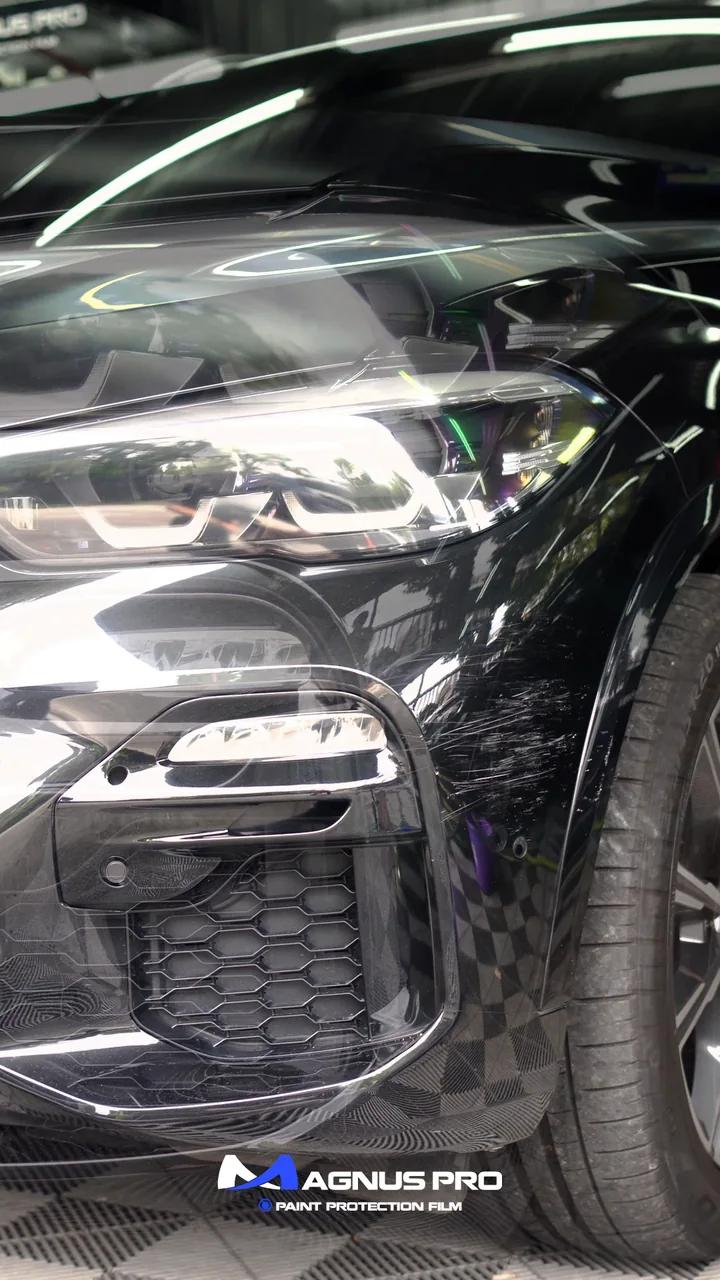
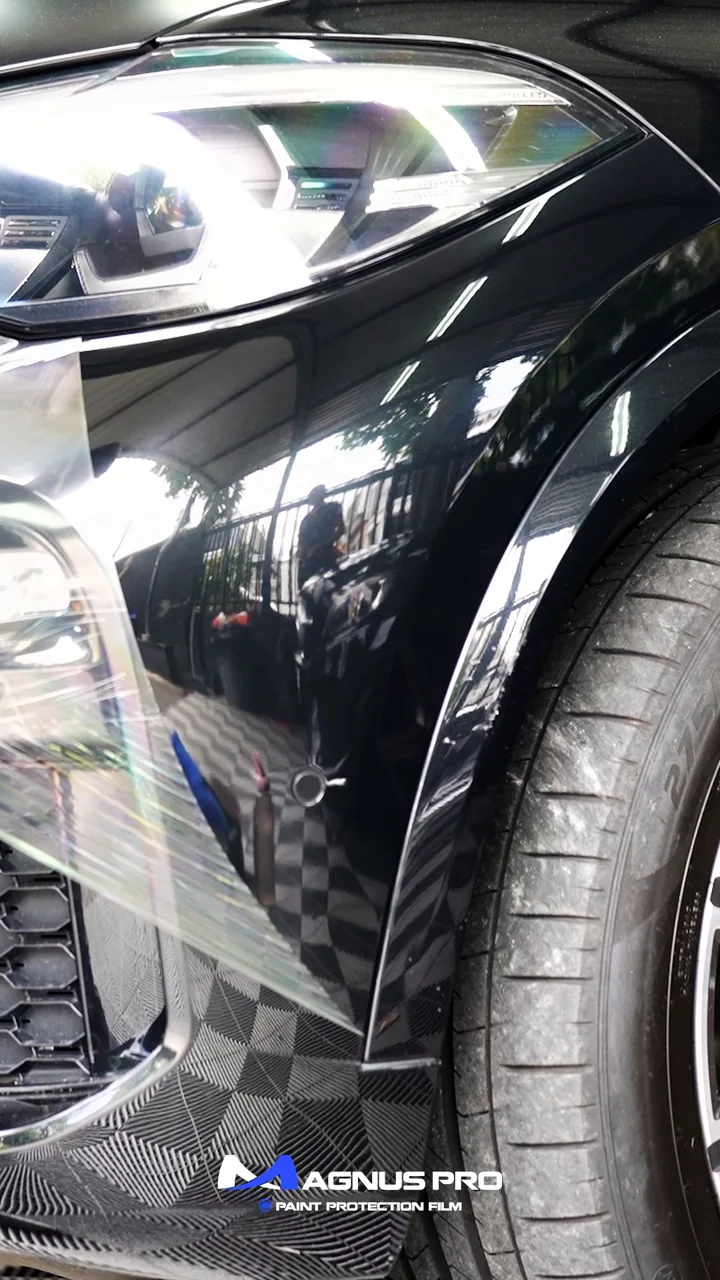
This is not a staged scratch test or a comparison against another film. It is a real customer example of a protective film being sacrificed while the exposed finish appears to have avoided the prominent surface scuffs. The two comparison images above are unretouched frames from the same video distinguishing the visible state before and during removal, not independent before-and-after test results. The clip ends before an entire-bumper inspection is shown, so it cannot establish that every part of the bumper was undamaged or that no other repairs were needed.
2. How PPF helps protect paint during surface contact
Automotive PPF is a transparent film applied over compatible painted surfaces. Unlike an appearance-only treatment, the film creates a separate physical layer. When another object rubs against a covered panel, that object contacts the film first. Depending on the force, shape of the object and nature of the contact, damage may remain within the film rather than reaching the paint.
Think of a protected bumper as having a replaceable outer surface. A scuff can mark that surface even while the paint underneath remains comparatively unaffected. The film may need replacement even though it has performed its protective role. In fact, a film can be visibly damaged precisely because it has taken some of the contact instead of the paint.
Protection has limits. Sharp objects, concentrated force, severe impacts and damage that reaches the underlying panel can exceed what a thin protective layer can withstand. The outcome in the BMW X5 video should not be used to predict the outcome of every collision.
3. What PPF can and cannot protect against
The useful question is not whether PPF makes a car accident-proof. It is whether a particular kind of damage is within the film's intended surface-protection role.
| Type of incident | Potential role of PPF | Important limitation |
|---|---|---|
| Light contact or rubbing | May reduce scratches or surface abrasion on covered paint | Results depend on the force and contact material |
| Parking-related bumper scuff | May take visible marks instead of the underlying finish | Paint transfer, deeper damage or deformation may still occur |
| Road grit and small stone impacts | May reduce certain chips and abrasion | Larger or sharp debris can penetrate the film |
| Deep gouge or sharp-object contact | May reduce some damage before being cut or torn | Cannot guarantee the paint remains unmarked |
| Collision causing a dent or cracked bumper | May still protect some adjacent painted areas | Does not prevent panel deformation or component breakage |
| Serious collision or structural damage | Not a crash-safety system | Vehicle repairs and safety assessment take priority |
Even when the exposed paint looks good, a bumper may have damage behind its surface. The vehicle's condition must be evaluated separately from the appearance of the film.
4. Why original factory paint is worth preserving
For many BMW and other premium-car owners, the appeal of PPF is not only its shine. It is the opportunity to preserve the finish that came with the vehicle. Factory paint is applied as part of vehicle production; a professional repaint can restore appearance, but it does not turn a refinished panel back into its original factory-painted state.
Preserving sound original paint can be particularly important for owners who value originality, want to keep their car for a long time or wish to avoid unnecessary bodywork. Paint condition is also one of many things a future buyer may inspect. PPF cannot guarantee resale value or eliminate depreciation, but reducing avoidable paint damage can help maintain the condition of the car.
The BMW X5 case illustrates this distinction. A visibly marked bumper may look as though it needs cosmetic repair, yet inspection of the paint after lifting damaged PPF may show that repainting the affected area is unnecessary. That decision must follow actual inspection, not the appearance of the video alone.
5. Does a damaged PPF surface mean the film failed?
Not necessarily. A protective film can develop permanent scuffs, cuts or tears while helping to shield the surface below. The correct assessment depends on both the film and the paint. A film that needs replacement after contact may have fulfilled its purpose in that particular area.
Self-healing technology is a separate feature. Certain fine surface marks may diminish under the conditions specified for a self-healing film. Deep accident-related scratches, torn film and damaged adhesive should not be assumed to heal. The BMW X5 footage demonstrates removal of damaged film, not a self-healing result.
When discussing replacement with an installer, ask whether the film remains serviceable, whether the damage crosses a panel boundary, and whether any exposed paint needs treatment. Do not attempt to polish away a deep scuff with an aggressive product before the film condition is understood.
6. Why bumper coverage matters on a BMW X5 or any daily-driven vehicle
A front bumper is exposed to road debris, parking environments and contact around its protruding shapes. It also includes complex curves and, on many vehicles, equipment that requires careful coverage decisions. PPF only helps where suitable film is actually installed. An unprotected bumper section remains exposed to direct contact.
For a vehicle used frequently in Malaysian urban traffic, shopping-centre car parks or on highways, a front-focused PPF package may be worth considering because it addresses several regularly exposed areas. A full-body installation extends protection to more painted panels, but it still cannot make the car collision-proof.
Coverage is vehicle- and package-specific. Ask for a written panel list and confirmation of excluded trim, openings and sensor zones. The BMW X5 case does not establish whether this particular car had a full-body or front-only installation. For a separate explanation of coverage choices, see our Full Front vs Full Body PPF guide.
7. What to do after an accident if your car has PPF
Your safety and the condition of the vehicle come first. If an incident may have affected the bumper structure, lighting, steering, sensors or driver-assistance systems, arrange an appropriate vehicle inspection before treating it as a cosmetic issue. Follow the relevant accident-reporting and insurer instructions.
Once it is safe, document the condition before altering the surface. Photograph the affected panels, retain your PPF installation documents and speak with the installer and insurer where relevant. The aim is to distinguish a damaged film from damaged paint or components without compromising the evidence required for a claim.
| Step | What to do | Why it matters |
|---|---|---|
| 1 | Address safety and required accident procedures | Film condition is secondary to roadworthiness |
| 2 | Photograph damage and retain installation records | Establishes the visible condition and product history |
| 3 | Ask the insurer about inspection and claim requirements where applicable | Avoids removing relevant evidence prematurely |
| 4 | Arrange professional PPF and paint assessment | Identifies whether the damage appears limited to film |
| 5 | Agree the appropriate repair or replacement scope | Avoids unnecessary repainting or film replacement where possible |
| 6 | Confirm written costs, coverage and aftercare | Clarifies the work and the terms before proceeding |
If you need more detail about insurance and reinstating protection after bodywork, read our Accident, Insurance & Protection Restoration Guide. It covers a separate question from the physical protection illustrated here.
8. Can you replace just the damaged bumper film?
In many cases, PPF replacement can be assessed on a panel-by-panel basis. If damage is limited to the bumper film and the underlying surface is suitable, replacing that film may be enough to restore protection to the affected area. The actual pattern, adjacent film condition, product availability and vehicle configuration must be checked first.
If the paint is damaged or the bumper needs repair, the appropriate bodywork comes before installing replacement film. The repairer's guidance and the film manufacturer's requirements must be followed before applying PPF to a refinished surface. Replacing film over an unsuitable surface is not a substitute for repairing it.
This BMW X5 footage shows film removal and the exposed portion of paint. It does not show a replacement installation or document a final repair decision. Owners should not interpret it as evidence of a particular repair saving or a free replacement entitlement.
9. PPF protection is not an accident warranty
There is a crucial distinction between a film helping to prevent physical damage and a manufacturer paying for the consequences of an accident. Magnus Pro's published PPF product information excludes accident damage from its warranty. The applicable terms also govern the handling of film and damage associated with improper removal.
A damaged film may therefore need paid replacement even if it has helped protect the paint. Motor insurance is a different matter: ask your insurer whether aftermarket protection was declared, accepted and covered by your policy, and what documentation is required. Do not assume that the film is automatically included in an accident claim.
Read the Magnus Pro PPF product information and After Care & Warranty for applicable product terms. The free accident re-coating and eligible Nano Titanium tint replacement programmes described in our separate restoration guide are different benefits; they should not be confused with free accident-related PPF replacement.
10. What to look for when choosing protection before an incident
The strongest reason to install PPF is preventive: the barrier needs to be in place before an object contacts the paint. Once a panel has been damaged, applying film will not reverse that damage.
Choose a film with documented specifications, appropriate clarity, suitable application for your vehicle and an installer who can explain both the product's capabilities and its limitations. Discuss coverage according to the actual way you use the car rather than selecting an installation solely because of the longest warranty or lowest initial price.
For owners considering Magnus Pro, this BMW X5 case offers a practical example to review alongside the technical product information. It is one observed outcome, not evidence that Magnus Pro outperforms every other film. No controlled comparative test was undertaken. Ceramic Pro Malaysia also provides other paint protection film options, so ask the team which solution suits your paint condition, coverage needs and budget.
11. Arrange a local PPF assessment in Malaysia
If your existing film has been scuffed or you are considering PPF for a new BMW or another vehicle, speak with a professional installation team. Bring the vehicle details, photographs, known repaint history and any existing installation record. For damaged film, ask whether an inspection can establish the appropriate next step before work starts.
Ceramic Pro Malaysia's locations directory provides outlet details, including Glenmarie, Petaling Jaya and Kuala Lumpur. Contact the relevant centre to confirm that it handles the requested PPF inspection or installation and to arrange an appointment. The outlet responsible for the featured BMW X5 has not been identified in the supplied case materials.
Final verdict — protect the paint before it needs repairing
Paint protection film cannot prevent every accident. What it can do is provide a replaceable surface layer that may reduce certain types of damage to the paint underneath. That difference is particularly meaningful when the original finish is worth preserving.
The BMW X5 case is a clear visual illustration: a front bumper with prominent scuffs, a damaged layer of Magnus Pro PPF and glossy paint revealed as the film is lifted. It is a practical reason to consider physical paint protection, alongside the limitations, installation quality and ownership costs that matter when choosing PPF.
Protect the original finish where possible. Inspect the damage before assuming repainting is necessary. Choose a protection system that is right for your vehicle.