
Regular automotive window tint is designed mainly for solar heat rejection, glare reduction and UV protection. It is not a substitute for a dedicated windshield protection film, which is engineered to provide a physical barrier against certain flying stones, road debris and surface impacts.
This distinction matters for Malaysian drivers who already have premium window tint and assume that their front windscreen is also protected against stone chips.
Window tint can make driving more comfortable under strong sunlight.
However, reducing solar heat and absorbing an impact from a flying stone are two different functions.
Magnus Pro Windshield Protection Film (WPF) is developed specifically for physical windscreen protection.
Its engineered EPU-based construction, protective layers and self-healing surface help defend the windscreen from certain everyday road hazards while preserving optical clarity.
For drivers who regularly travel on Malaysian highways or want additional protection for their front windscreen, understanding these differences helps make the right choice.
This guide compares ordinary window tint, safety-focused window film and dedicated windshield protection film, including their materials, functions, visibility and installation considerations.
1. Does Window Tint Protect a Windscreen from Stone Chips?
Ordinary automotive window tint is not primarily designed to protect the front windscreen from external stone-chip impacts.
Its main functions are to manage solar heat, visible light, glare and ultraviolet exposure.
What Happens When a Stone Hits the Windscreen?
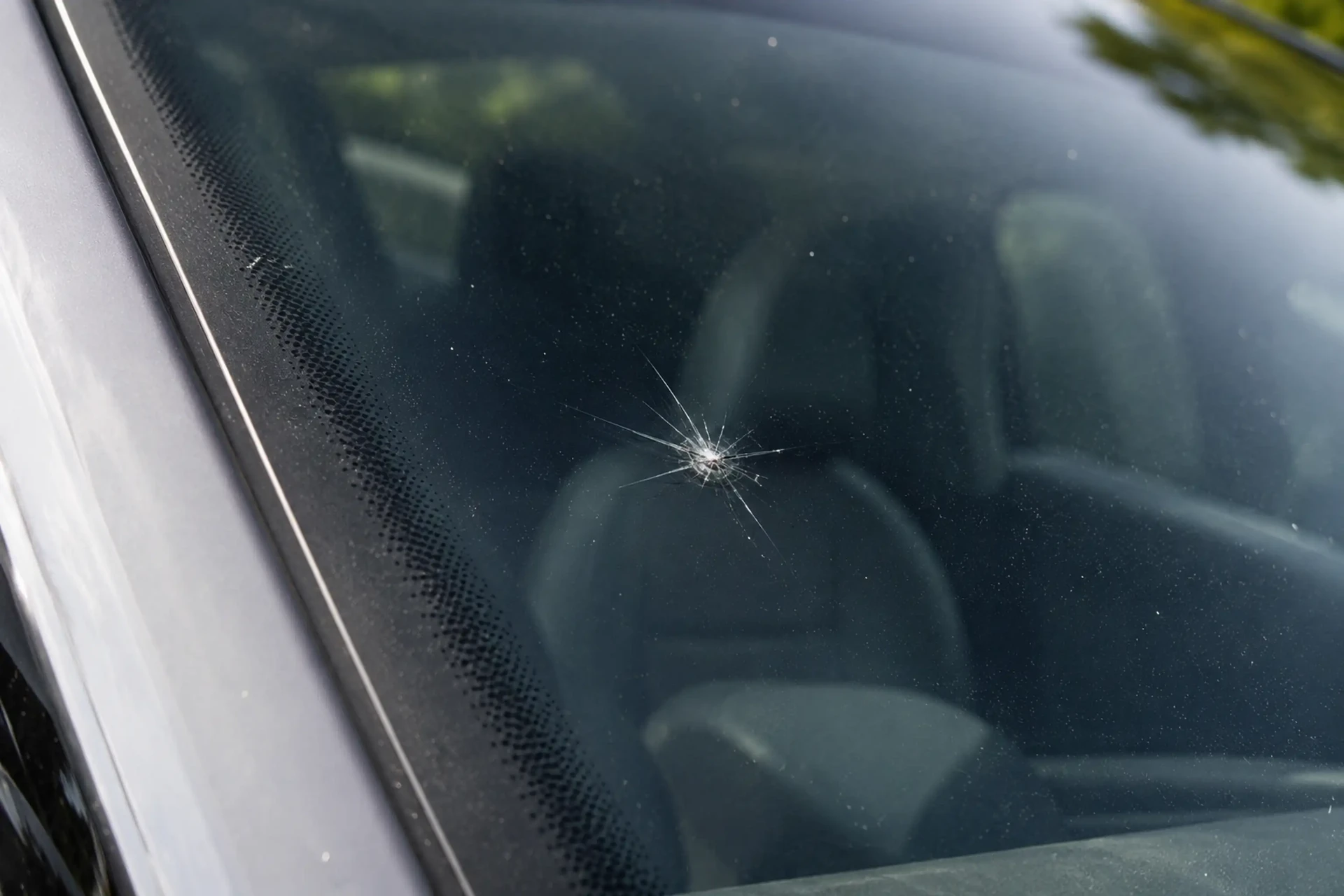
A small stone or piece of road debris may strike the exposed glass.
The outcome depends on several factors, including:
- Impact speed.
- Stone size.
- Contact angle.
- Impact location.
- Glass condition.
- Existing damage.
How Window Tint Differs
Typical automotive tint is designed to modify the properties of light and solar energy passing through the window.
Its construction is not necessarily intended to intercept or absorb exterior stone impacts.
What About Premium Window Tint?
A premium solar-control film may offer excellent heat and UV performance.
Those benefits do not independently establish stone-chip protection.
What About Safety Window Film?
Safety-focused films can have additional physical properties.
However, they should not automatically be considered identical to a dedicated windshield protection film.
What Is the Right Product?
For customers primarily concerned about road debris striking the front glass, a purpose-engineered windshield protection film is the more relevant product category.
A good window tint helps control sunlight. A dedicated windshield protection film is engineered to help protect the glass from physical road hazards.
2. What Is Windshield Protection Film?
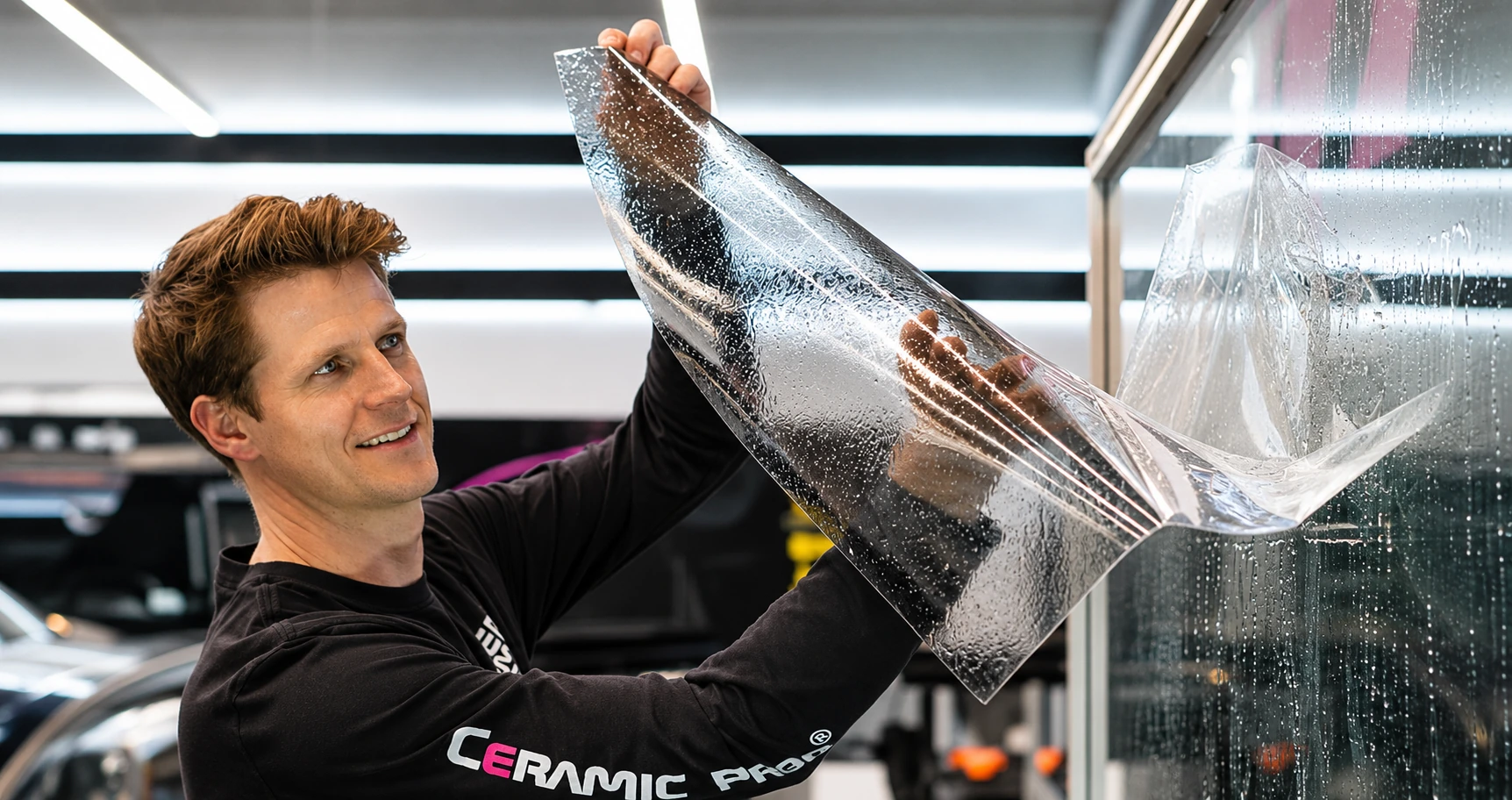
Windshield Protection Film is a clear protective film developed for application to a suitable automotive windscreen.
Its purpose is to create an additional physical barrier between the exposed glass surface and certain external hazards.
Physical Protective Layer
The film adds a flexible protective material over the windscreen.
This layer is designed to absorb or distribute some impact energy when suitable road debris strikes.
Sacrificial Protection
A protective film can receive certain external wear before that wear reaches the underlying glass.
Optical Clarity
A windscreen is a critical part of the driver's forward view.
The protective film must therefore be engineered to preserve suitable transparency and visual clarity.
Surface Technology
Selected WPF products include specialised top coats that support scratch resistance, water behaviour and self-healing characteristics.
Professional Installation
The film must be fitted correctly for the particular windscreen and vehicle.
Why It Is Different from Tint
WPF is designed around physical glass protection.
Window tint is designed primarily around optical and solar-control performance.
Windshield Protection Film adds a dedicated protective layer over the glass while maintaining the clear view needed for everyday driving.
3. Window Tint vs Windshield Protection Film: Main Differences
Although both products are transparent automotive films, their primary functions are different.
Magnus Pro Nano Ceramic Window Film
Nano Ceramic is developed for solar heat rejection, UV protection, optical clarity and glare management.
Its published film thickness is 2 mil.
Magnus Pro Nano Titanium Window Film
Nano Titanium is a 6-mil safety-focused film offering solar-control properties and additional physical window-protection characteristics.
Its intended safety-film function should not be confused with road-facing windshield impact protection.
Magnus Pro Windshield Protection Film
Magnus Pro WPF is a specialised 6.5-mil protective film developed to help reduce damage from certain road-debris impacts while maintaining forward visibility.
Main Product Comparison
| Feature | Nano Ceramic Tint | Nano Titanium Film | Magnus Pro WPF |
|---|---|---|---|
| Main purpose | Solar-control comfort | Solar control plus safety-focused window protection | Physical windscreen protection |
| Published thickness | 2 mil | 6 mil | 6.5 mil |
| Heat rejection | Core product objective | Product-dependent solar control | Not its primary published objective |
| UV protection | Yes | Product-dependent | Published 99% |
| Enhanced glass-fragment retention | Not primary function | Safety-focused feature | Not the primary stated purpose |
| Stone-chip protection at front glass | Not primary design purpose | Not equivalent to dedicated WPF | Core design purpose |
| Optical clarity | Important | Important | Critical |
| Self-healing | Depends on exact product | Depends on exact product | Published heat-responsive layer |
| Main installation goal | Driving comfort | Comfort and safety-related benefits | Road-debris and surface protection |
Why Thickness Alone Is Not Enough
A 6-mil safety film and a 6.5-mil windshield protection film may have different materials and installation purposes.
Their thickness does not make them interchangeable.
The Main Buying Lesson
Choose the film according to the specific problem you want to solve—not because two products have similar thickness figures.
4. Why Does a Windscreen Need a Different Type of Protection?
The front windscreen faces different exposure conditions from most vehicle windows.
Direct Road-Debris Exposure
Stones and road debris can be thrown toward the vehicle by moving traffic.
The windscreen is one of the forward-facing surfaces exposed to these hazards.
Important Visibility Requirements
The windscreen must preserve a clear view of the road, traffic, pedestrians and surrounding conditions.
Wiper Contact
Unlike many side windows, the windscreen experiences repeated wiper-blade movement.
Weather Exposure
Heavy rain, road spray and dust make surface cleanliness and optical clarity particularly important.
Glass Construction
Automotive windscreens are generally made from laminated safety glass.
Protective film is an additional surface layer, not a replacement for the original glass structure.
Why Product Engineering Matters
WPF must balance physical protection, transparency, surface characteristics and compatibility with its intended windscreen application.
The front windscreen requires a protective system engineered for road-facing hazards without unnecessarily compromising visibility.
5. How Does Magnus Pro Windshield Protection Film Work?
Magnus Pro Windshield Protection Film uses engineered coating layers and a flexible Elastomeric Polyurethane (EPU) core to help defend the windscreen against certain physical road hazards.
Its construction is developed to combine protective behaviour with optical clarity.
Specialised Coating Layer
The surface coating contributes to the exposed film's intended characteristics.
Self-Healing Layer
A specialised layer supports the recovery of suitable fine surface marks under the manufacturer-specified conditions.
Flexible EPU Core
Elastomeric Polyurethane provides the central flexible material structure.
Its properties contribute to the film's protective function.
Adhesive System
An acrylic adhesive helps secure the film to a properly prepared surface according to the approved installation process.
Protective Liners
Temporary liners protect material surfaces before or during fitting.
They are removed as appropriate during installation.
Published Construction
| Component | Main Purpose |
|---|---|
| Protective Liner | Temporary material protection |
| Coating Layer | Exposed surface characteristics |
| Self Healing Layer | Fine-mark recovery characteristics |
| Elastomeric Polyurethane | Flexible protective body |
| Acrylic Adhesive | Film bonding |
| Liner | Temporary adhesive protection |
What Does the Film Actually Do?
Magnus Pro WPF is designed to help absorb or distribute impact energy from certain flying stones and road debris.
The degree of protection depends on the impact and installation conditions.
Is Every Impact Prevented?
No.
Severe physical impacts may still damage the protective film or underlying glass.
Why This Product Is Relevant
Magnus Pro WPF provides an additional protective barrier specifically developed for the exposed windscreen—not simply another layer of ordinary car tint.
Explore the official product:
6. What Do Magnus Pro WPF's Technical Specifications Mean?
The current Magnus Pro product page provides several useful technical specifications.
Understanding what they measure helps customers assess the product accurately.
6.5-Mil Thickness
The published thickness is 6.5 mil.
This describes the film's physical construction.
It does not guarantee a particular percentage of stone-chip prevention.
Approximately 91.1% Visible Light Transmission
VLT measures the proportion of visible light passing through the tested material.
A high VLT is relevant to a clear windscreen application.
The installed windscreen's final VLT depends on the original glass and any additional film.
Less Than 0.8% Optical Haze
Haze relates to the scattering of transmitted light.
Lower haze is desirable for maintaining a clear visual image.
99% UV Rejection
Magnus Pro publishes 99% UV rejection for its WPF.
This is a UV-protection specification, not a statement that 99% of total solar heat is rejected.
Heat-Responsive Self-Healing
The product specification references heat-responsive self-healing at 75°C.
This is a stated technical condition, not an instruction for owners to heat the installed windscreen themselves.
Water Contact Angle
A published water contact angle of at least 106° indicates hydrophobic surface characteristics under the relevant measurement.
It does not replace the need for correct wiper operation and visibility.
Additional Material Specifications
The product page also publishes tensile strength, break strength and peel strength figures.
These describe different mechanical characteristics and should not be converted into invented real-world stone-impact ratings.
Magnus Pro WPF Specification Summary
| Property | Published Figure | What It Helps Describe |
|---|---|---|
| Thickness | 6.5 mil | Physical film construction |
| Film VLT | Approximately 91.1% | Visible-light transmission |
| Optical haze | Below 0.8% | Low-haze transparency |
| UV rejection | 99% | Ultraviolet rejection |
| Self-healing | Heat-responsive | Fine-mark surface technology |
| Water contact angle | At least 106° | Surface water behaviour |
| Tensile strength | At least 230 kg/cm² | Mechanical material property |
How Should Customers Interpret These Figures?
The specifications describe different physical and optical characteristics.
No single number proves the complete protective performance.
Magnus Pro WPF is designed around the combination of physical protection and clear driving visibility.
MAGNUS PRO WINDSHIELD PROTECTION FILM
Engineered for road-debris protection. Designed for optical clarity.
7. Why Optical Clarity Matters as Much as Protection
A front-windscreen film should not be selected based only on its physical construction.
Driving visibility remains essential.
Clear Forward View
The windscreen provides the driver's primary view of the road.
Optical Haze
Excessive haze can make transmitted light appear less clear.
Night Driving
Streetlights and vehicle headlamps can make optical imperfections more noticeable.
Rainy Conditions
Heavy rain, reflections and road spray can challenge visibility.
Windshield Curvature
A vehicle's glass shape and installation quality may influence the finished visual experience.
Product-Specific Performance
Magnus Pro WPF publishes a film VLT of approximately 91.1% and haze below 0.8%.
These figures support the product's optical-clarity positioning.
Does High VLT Guarantee Perfect Visibility?
No.
Installed visibility also depends on glass condition, film condition, installation and lighting.
What Should Owners Check?
Before accepting an installation, assess:
- General forward clarity.
- Any visible distortion.
- Persistent haze.
- Reflections.
- Optical behaviour under different lighting conditions.
- Relevant vehicle camera and sensor requirements.
Why Professional Installation Matters
Careful fitting is particularly important where the protective film covers the driver's primary field of view.
The right windshield protection must preserve confidence in what you see ahead—not simply provide a physical barrier.
8. Can Ordinary Window Tint and Windshield Protection Film Be Used Together?
They may form part of a combined protection plan when the selected products and vehicle are compatible.
However, the installation should be professionally assessed.
Different Functions
Window tint primarily addresses solar-control and visibility characteristics.
WPF primarily addresses physical windscreen protection.
Different Film Positions and Procedures
Conventional automotive window tint is generally applied to the inside of vehicle glass.
Dedicated WPF is designed to protect the exposed windscreen surface according to its approved installation method.
Compatibility Matters
The selected combination must be suitable for the actual glazing system and installation requirements.
Total Visible-Light Transmission Matters
Each additional film may affect how much visible light passes through the completed windscreen.
What About Sensors and Cameras?
Modern vehicles may include rain sensors, front-facing cameras or head-up displays.
The installer should confirm the selected film's compatibility with the vehicle and relevant manufacturer requirements.
Should Customers Install Both Automatically?
No.
The best combination depends on the customer's objectives, original windscreen and applicable regulations.
Recommended Approach
Discuss both intended products with the installer before installation.
A coordinated windscreen protection plan should address solar control, physical protection, visibility and vehicle compatibility together.
9. What Are Malaysia's Windscreen VLT Requirements?
Malaysia's established rules for standard private passenger vehicles require a minimum 70% Visible Light Transmission through the front windscreen.
The requirement concerns the completed glazing system.
Standard Private Passenger Vehicle Limits
| Vehicle Window | Minimum VLT |
|---|---|
| Front windscreen | 70% |
| Front side windows | 50% |
| Rear side and rear windscreen | No standard minimum for eligible private vehicles, subject to applicable conditions |
Different requirements may apply to commercial and public-service vehicles.
Confirm current rules directly with JPJ.
Film VLT Is Not Final Windscreen VLT
The original glass may already absorb or reduce some visible light.
Adding window tint or WPF can change the final combined reading.
Is Magnus Pro WPF Automatically JPJ-Compliant?
Its published film VLT of approximately 91.1% is not, by itself, proof that every completed windscreen will achieve at least 70%.
The final result depends on the vehicle's glass and installed combination.
Why Professional Measurement Matters
Ask for the completed front-windscreen VLT to be assessed using an appropriate meter.
What About Optical Clarity?
VLT is only one requirement.
The completed windscreen must also preserve suitable visual clarity and satisfy relevant glazing requirements.
What If the Car Already Has Tint?
The installer should check the existing combination before adding WPF.
More About JPJ Requirements
JPJ Tint Rules in Malaysia: VLT Explained
Legal suitability must be evaluated on the completed windscreen—not just the film's advertised percentage.
10. Who Should Consider Windshield Protection Film in Malaysia?
Dedicated windshield protection film may appeal to drivers who place a high priority on preserving the front glass.
Frequent Highway Drivers
Vehicles travelling regularly on highways may encounter flying stones and road debris.
Daily Commuters
Regular road use creates ongoing exposure to ordinary road hazards.
New-Car Owners
Owners of newly delivered vehicles may want to consider windscreen protection early in ownership.
Owners of Vehicles with Complex Windscreens
Some vehicles have sophisticated cameras, sensors or other integrated windscreen systems.
The suitability and compatibility of protective film should be professionally assessed.
Owners Who Value Clear Forward Visibility
Magnus Pro WPF is engineered for a low-haze protective finish.
Drivers Seeking Additional Glass Protection
WPF may be worth considering alongside other vehicle-protection systems.
Customer Priorities
| Main Priority | Product Worth Considering |
|---|---|
| Lower solar heat entering through glass | Window tint |
| Manage glare and visible light | Window tint |
| UV protection | Suitable window film or WPF, based on verified data |
| Physical road-debris protection | Windshield Protection Film |
| Additional side-window safety-film construction | Nano Titanium |
| Solar control and front-glass protection | Compatible, professionally assessed combination |
| Maintain original windscreen appearance | Magnus Pro WPF |
Customers should choose protection based on their actual driving needs and the specific risks they want to address.
11. What If the Windscreen Already Has a Stone Chip?
Windshield protection film is intended primarily as a preventive product.
It is not a repair solution for existing glass damage.
Existing Chips
A visible chip should be assessed before film installation.
Existing Cracks
Cracks can affect the suitability and safety of the windscreen.
The appropriate action depends on the damage and relevant vehicle safety requirements.
Professional Assessment
A qualified glass-repair or automotive-glazing specialist should determine whether repair or replacement is appropriate.
Can WPF Cover the Existing Damage?
Applying protective film should not be presented as a substitute for proper glass repair.
What About Insurance?
Any repair or replacement entitlement depends on the customer's actual insurance policy.
Do not assume every policy covers the same work.
When Should WPF Be Considered?
A suitable, sound windscreen provides the appropriate starting point for professional protective film assessment.
Useful Distinction
| Windscreen Condition | Recommended Next Step |
|---|---|
| No visible damage | Consider preventive WPF |
| Small visible chip | Professional glass assessment |
| Crack | Professional repair or replacement assessment |
| Significant visibility concern | Prioritise roadworthiness and safe visibility |
| Replacement glass installed | Assess suitability for WPF |
Windshield protection is best considered before damage occurs, following an assessment of the existing glass.
12. Does Windshield Protection Film Require Special Maintenance?
Like other exterior protective products, WPF benefits from suitable cleaning and periodic inspection.
Keep the Windscreen Clean
Remove ordinary dust, road grime and other contamination using compatible methods.
Look After Wiper Blades
The manufacturer notes that trapped dust, sand and debris can contribute to fine film scratches during wiper operation.
Replace Worn Wipers
Worn or damaged blades should be addressed according to the vehicle manufacturer's recommendations.
Avoid Abrasive Cleaning
Use suitable products and materials recommended for the installed protective film.
Inspect Optical Clarity
Pay attention to changes in haze, scratches or visibility.
Follow Initial Installation Guidance
The installer should provide the relevant curing and cleaning instructions.
Understand the Warranty
Magnus Pro publishes a one-year warranty for specified WPF manufacturing defects.
Routine wear and external road-impact damage are distinct from manufacturer-defect coverage.
Replacement Considerations
Magnus Pro recommends regular inspection and generally reviewing film replacement around one year, depending on wiper use, driving conditions and surface wear.
The actual decision should be made according to film condition and professional advice.
WPF Care Checklist
| Care Area | Recommended Practice |
|---|---|
| Cleaning | Use compatible products and methods |
| Wipers | Keep blades clean and in good condition |
| Surface marks | Assess any unusual scratches |
| Optical clarity | Monitor forward visibility |
| Initial care | Follow installer handover instructions |
| Warranty | Review the product-specific WPF terms |
| Replacement | Assess condition and manufacturer guidance |
Proper windscreen and wiper care helps maintain the clarity and protective function of installed WPF.
13. Is Windshield Protection Film Worth It Compared with Tint Alone?
The answer depends on what the customer wants to protect against.
If Heat Rejection Is the Priority
A suitable professional window tint is the more relevant product.
If Stone Chips Are the Priority
A dedicated windshield protection film provides the protective technology specifically designed for that purpose.
If Both Matter
A compatible installation plan may address both needs.
Understanding Value
Customers should consider:
- Driving conditions.
- Frequency of highway use.
- Existing windscreen condition.
- Vehicle-specific glass characteristics.
- Desired solar-control performance.
- Interest in physical impact protection.
- Warranty and maintenance preferences.
- Total installed quotation.
Is WPF a Replacement for Window Tint?
Not generally.
Their primary functions differ.
Is Window Tint Enough for Full Windscreen Protection?
It should not automatically be treated as a stone-chip protection system.
Does WPF Eliminate All Future Glass Damage?
No.
It is designed to help reduce certain impact-related risks, not guarantee complete immunity.
Final Buying Principle
Choose window tint for solar comfort, WPF for purpose-built physical windscreen protection, and a compatible combination when both benefits are desired.
14. Questions to Ask Before Installing Magnus Pro WPF
A professional consultation helps customers understand the protective film and its suitability.
Confirm the Product
Ask for Magnus Pro Windshield Protection Film, not standard Nano Ceramic or Nano Titanium tint.
Confirm the Current Specification
Review the product's published thickness, VLT, haze and other relevant characteristics.
Check the Existing Glass
The windscreen should be inspected for damage and suitability.
Check Any Existing Tint
Confirm whether the vehicle already has a windscreen tint installed.
Discuss Vehicle Compatibility
Identify cameras, sensors, HUD and other vehicle-specific features that may be relevant.
Confirm VLT
Ask how the completed windscreen will be assessed for applicable JPJ requirements.
Understand Aftercare
Ask about wiper care, suitable cleaning and inspection.
Review the Warranty
Confirm the WPF-specific warranty and relevant conditions.
Get a Clear Quotation
Ask what is included and whether any preparation is separately chargeable.
Pre-Installation Checklist
| Question | Why It Matters |
|---|---|
| Is this dedicated WPF? | Confirms correct product |
| What is the current film specification? | Avoids outdated product data |
| Is the windscreen suitable? | Confirms installation condition |
| Is tint already installed? | Establishes compatibility requirements |
| What is the completed VLT? | Supports regulatory compliance |
| Will optical clarity be checked? | Supports forward visibility |
| Are cameras and sensors compatible? | Addresses vehicle-specific requirements |
| What aftercare is needed? | Supports film appearance |
| What warranty applies? | Clarifies product coverage |
| Which outlet will install it? | Confirms qualified service availability |
Product Consultation
Magnus Pro Windshield Protection Film
A suitable professional installation should combine the right product, sound glass, clear visibility and appropriate aftercare.
15. Frequently Asked Questions
16. Final Verdict: Protect the Right Thing with the Right Film
Window tint and windshield protection film perform different but complementary functions.
Magnus Pro Window Film is developed around solar-control technology, driving comfort, UV protection and selected safety-film characteristics.
Magnus Pro Windshield Protection Film is engineered to help defend the exposed windscreen against certain stone chips, road debris and everyday surface wear.
Its flexible EPU-based construction provides a physical protective barrier, while its low-haze optical design supports the clear view needed during driving.
For Malaysian motorists, the right choice depends on the priority.
If the objective is to reduce solar heat, a suitable window tint should be considered.
If the objective is to add protection against flying stones, dedicated WPF is the more relevant solution.
And if both are important, the installer can assess a compatible, legally suitable combination.
The best protection plan begins with understanding the technology—not assuming that any film applied to glass performs the same function.
PROTECT WHAT'S AHEAD.
Discover Magnus Pro Windshield Protection Film and request a professional recommendation for your vehicle.
About This Technical Guide
This guide is published by Ceramic Pro Malaysia to help Malaysian motorists distinguish automotive solar-control tint from dedicated windshield protection film.
Magnus Pro product construction, optical specifications, UV rejection and warranty information are based on the current Ceramic Pro Malaysia product pages.
The discussion of Malaysia's VLT requirements refers to official Ministry of Transport and JPJ guidance.
The article does not claim independent stone-impact test results, universal camera compatibility, guaranteed damage prevention or measured reductions in windscreen replacement costs.
Actual protection and optical suitability depend on the film, glass, vehicle, installation, driving conditions and maintenance.
Sources and Further Reading
- Ceramic Pro Malaysia — Magnus Pro Windshield Protection Film
- Ceramic Pro Malaysia — Magnus Pro Window Film
- Ceramic Pro Malaysia — After Care & Warranty
- Ministry of Transport Malaysia — Parliamentary Answer on VLT Requirements, 1 July 2019
- Ceramic Pro Malaysia — How to Protect Your Windscreen from Stone Chips
- Ceramic Pro Malaysia — JPJ Tint Rules: VLT Explained
Use first-party sources for manufacturer claims and official Malaysian government sources for the legal context.