
Professional ceramic coatings can be applied using different methods, including spray equipment and manual applicators. Controlled HVLP spraying can offer advantages for distributing compatible coating material across complex vehicle surfaces and into suitable recessed areas, while careful levelling, surface preparation and curing remain essential to the final result.
When Malaysian car owners compare ceramic coatings, they often focus on a few familiar questions.
How many layers are included?
How many years is the warranty?
How glossy will the vehicle look?
Will water bead on the paint?
These are relevant considerations.
But there is another important question that often receives less attention.
How is the ceramic coating actually applied?
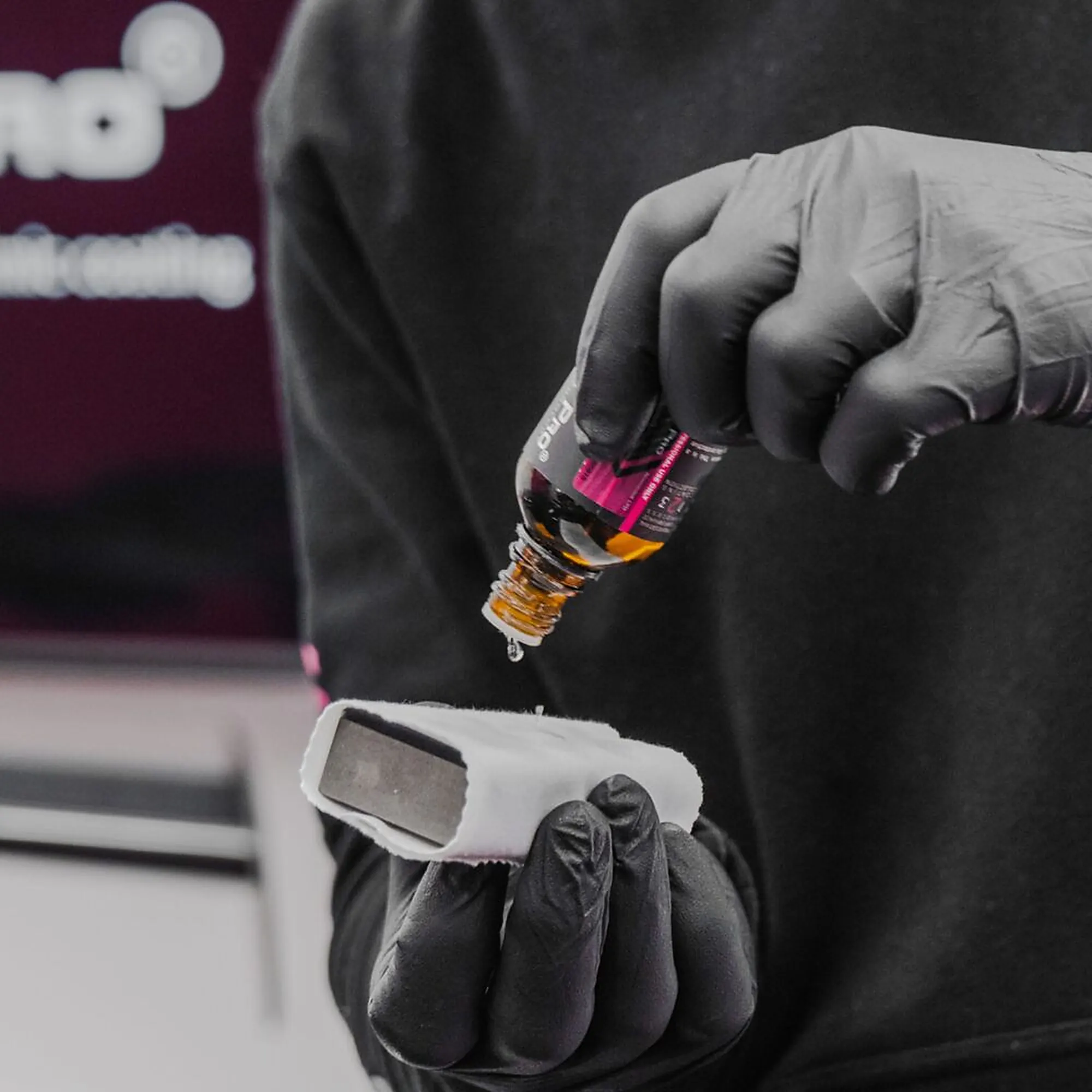
Some professional systems use a small applicator pad or microfibre cloth.
Others support spray application, including suitable professional spray equipment.
The method can influence how material is distributed over the surface, how different body contours are approached and how the technician manages the installation.
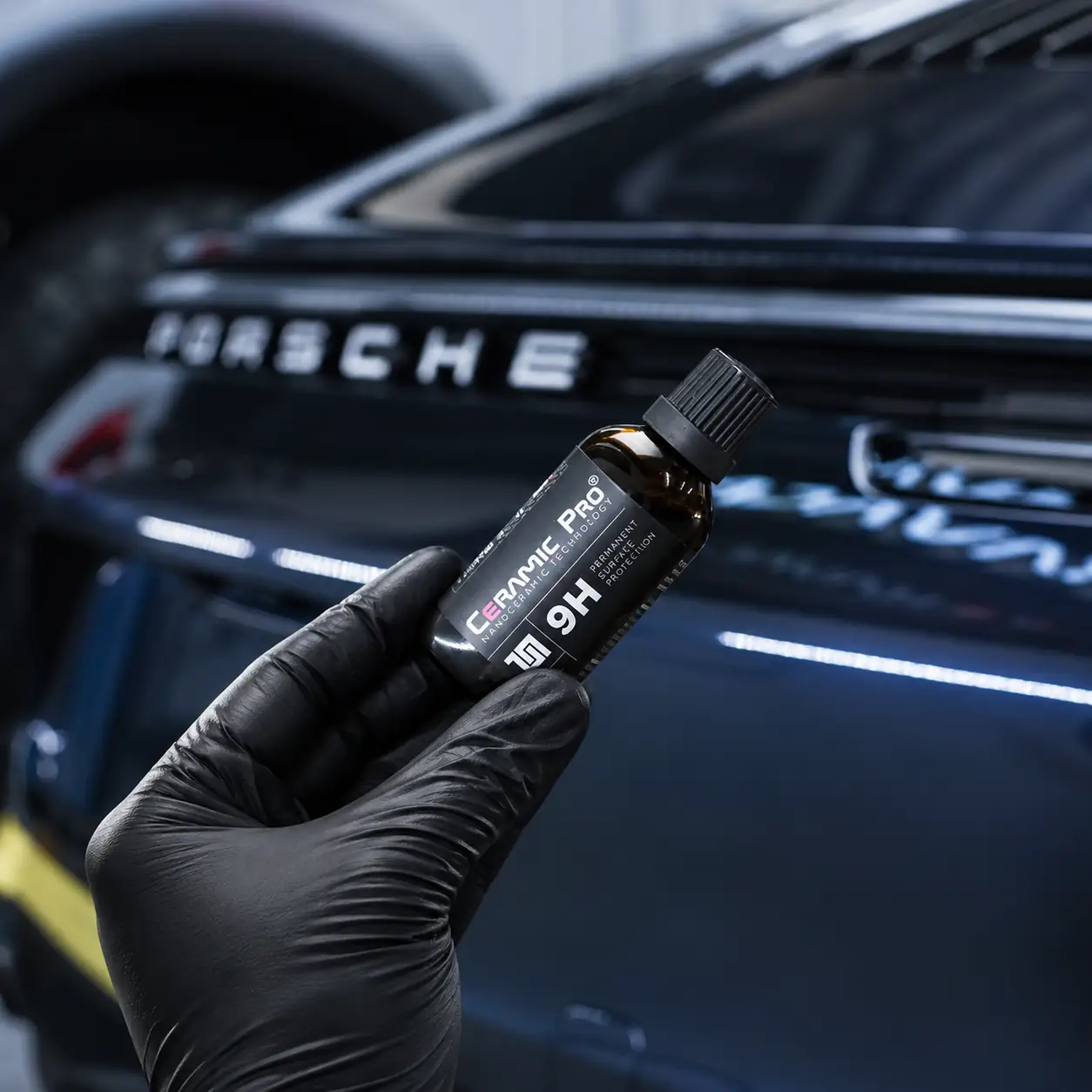
Ceramic Pro 9H is a professional multilayer nano-ceramic coating whose manufacturer explicitly supports both spray and manual applicator application.
For suitable installations, controlled spray application can be a useful part of a professional coating workflow.
But the equipment alone does not determine the final quality.
The formula, paint preparation, controlled environment, film levelling, technician and curing process all matter.
This guide explains the differences between spray and hand application, the advantages of HVLP technology, where each method performs well and what customers should ask before investing in professional ceramic coating.
1. Why Does Ceramic Coating Application Method Matter?
Application method matters because it influences how liquid coating material is delivered to the vehicle and how the installer controls the protective layer.
Ceramic coating is not simply a polish applied for shine.
Professional products are designed to form a protective surface after application and curing.
Controlled Material Distribution
The installer needs to distribute the coating appropriately across the intended surface.
Surface Coverage
The process should account for the vehicle's contours, panel shapes and relevant treatment areas.
Film Levelling
Coating material must be managed according to the product's flashing and levelling requirements.
Paint Preparation
The surface must be suitable for coating before application begins.
Environmental Conditions
Temperature, humidity and contamination can influence application behaviour.
Coating Formulation
The product must be suitable for the selected application method.
Professional Technique
An experienced technician must understand the material and process.
Why This Matters to Customers
Two installations using the same product may produce different visual results when workmanship or preparation differs.
The application method is one important part of a complete professional coating system.
2. What Is HVLP Spray Application?
HVLP stands for High Volume, Low Pressure.
It is a professional spray-system technology designed to atomise suitable liquid coatings using a high volume of air at relatively low pressure.
High Volume
The system uses a substantial volume of air to help deliver and atomise the coating material.
Low Pressure
HVLP uses lower atomising pressure than conventional high-pressure air spraying.
Controlled Spray Pattern
The technician can manage an appropriate spray pattern to distribute compatible material.
Lower-Velocity Delivery
The relatively low atomising pressure can reduce coating-particle velocity compared with conventional air-spray systems.
Transfer Efficiency
When configured correctly for a compatible coating, HVLP can reduce unnecessary spray losses compared with conventional high-pressure air spraying.
Access to Recessed Areas
An appropriate spray pattern can help deliver coating material to suitable recesses and complex shapes.
Why Professional Skill Matters
The technician must control material delivery, movement, surface orientation and application conditions.
HVLP Explained
| Feature | Meaning |
|---|---|
| HVLP | High Volume, Low Pressure |
| Delivery | Atomised liquid coating |
| Spray pattern | Controlled by suitable equipment and technique |
| Main advantage | Controlled distribution of compatible materials |
| Complex contours | Can assist with suitable recessed areas |
| Material efficiency | May improve relative to conventional high-pressure air spraying |
| Limitation | Requires suitable product, equipment and operator skill |
| Safety | Proper ventilation, controls and PPE required |
Industry Reference
United States Environmental Protection Agency technical guidance describes HVLP as a controlled spray technique that can improve transfer efficiency and reach certain recessed areas.
This industrial guidance explains the equipment principle. It is not a direct test of Ceramic Pro 9H against hand application.
HVLP is a professional material-delivery technology, not a guarantee that every spray-applied coating will perform better.
3. How Does Manual Ceramic Coating Application Work?
Manual ceramic coating application commonly uses a small applicator pad or microfibre-covered applicator.
The installer places the coating onto the applicator and works across the selected surface.
Direct Material Placement
The technician delivers coating material through the applicator.
Section-by-Section Control
The product is worked over manageable areas.
Controlled Contact
The installer can apply material directly to the intended surface.
Levelling
The coating is levelled or wiped according to its application instructions.
Suitable Areas
Manual application is useful for many accessible surfaces and suitably formulated coating systems.
Potential Challenges
Certain highly recessed or complex areas may require additional attention or alternative tools.
Why Technique Matters
Pressure, coverage, product quantity and timing can all influence the installation.
Is Manual Application Outdated?
No.
Many modern professional coatings are specifically designed to be applied manually.
Ceramic Pro 9H itself officially supports applicator application.
Main Lesson
Manual application is a valid professional coating method when the coating is designed for it and the installer follows the correct procedures.
4. Spray vs Hand-Applied Ceramic Coating: Key Differences
Spray and manual application deliver coating material differently.
Neither technique should be evaluated independently of the product formula and technician.
Material Delivery
Spray application atomises a compatible liquid coating.
Manual application places coating through direct contact with an applicator.
Surface Distribution
Spraying can support a controlled pattern over broad or curved areas.
Manual application offers direct placement and controlled section-by-section work.
Complex Shapes
Spray delivery can provide access to certain narrow or recessed areas that may be harder to reach with a standard applicator.
Material Control
Both methods require appropriate product quantity and careful technique.
Levelling
Both methods may require finishing, levelling or wipe-off, depending on the product.
Working Environment
Spray application requires additional controls to manage airborne mist and overspray.
Installer Skill
Both methods require training and suitable workmanship.
Comparison Table
| Factor | HVLP Spray Application | Manual Applicator Application |
|---|---|---|
| Delivery method | Atomised spray | Direct applicator contact |
| Material distribution | Controlled spray pattern | Controlled manual movement |
| Broad panel contours | Potentially useful | Also suitable |
| Recessed areas | Can assist access | Depends on applicator reach |
| Local precision | Requires masking and spray control | Direct placement may be advantageous |
| Airborne overspray | Requires management | Generally less aerosol generation |
| Levelling | Product-specific | Product-specific |
| Clean environment | Important | Important |
| Installer expertise | Essential | Essential |
| Final durability | Depends on total coating system | Depends on total coating system |
Does One Method Always Win?
No.
The proper method depends on the coating formulation, substrate and approved installation procedure.
Buying Advice
Ask which method your installer uses, why it is appropriate for the selected coating and how they control the finished result.
5. Advantage One: Controlled Coating Distribution Across Body Panels
A professional spray system can provide a controlled pattern of liquid material.
For suitable formulations, this may help technicians distribute coating across broad vehicle surfaces and curved bodywork.
Larger Exterior Panels
Bonnet, roof and door panels present different surface shapes and orientations.
Curved Bodywork
Modern vehicles feature pronounced curves and complex transitions.
Consistent Technique
A trained technician can use controlled passes and appropriate material delivery to support a repeatable application process.
Why Uniformity Matters
Coating quality depends partly on how the material is distributed and levelled.
Important Distinction
A visually even spray pattern does not automatically establish a measured uniform cured coating thickness.
Film Levelling Still Matters
The final protective layer depends on the manufacturer's levelling and curing requirements.
What Customers Should Understand
Controlled spray distribution is a useful potential advantage, but the completed coating must still be professionally finished.
Spray application can support controlled distribution. The finished result depends on the entire installation process.
6. Advantage Two: Access to Tight Spaces and Complex Contours
Modern cars are not made entirely of large, flat body panels.
They include complex shapes, narrow areas and recessed surfaces.
Door Recesses
Certain door contours may be more difficult to reach with a standard applicator.
Mirror Housings
Mirror assemblies often include curved surfaces and narrow transitions.
Grille Surrounds
Some painted grille-adjacent components contain detailed recesses.
Curved Bumper Sections
Front and rear bumpers may include complex shapes.
Suitable Detail Areas
Other accessible painted contours may benefit from careful spray delivery.
Why a Spray Pattern Can Help
A controlled spray can direct compatible coating material toward suitable recesses without requiring the same applicator contact angle.
What About Very Deep Areas?
Not every recess can be coated successfully with a spray gun.
Access, airflow, material compatibility and masking remain important.
Surface Compatibility Matters
Not all plastic, rubber, sensor or trim materials should receive the same product.
Practical Examples
| Vehicle Area | Application Consideration |
|---|---|
| Bonnet | Broad surface distribution |
| Roof | Large panel and controlled access |
| Curved bumper | Shape and spray angle |
| Mirror housing | Complex contour |
| Door recess | Limited applicator access |
| Painted grille surround | Masking and detailed control |
| Narrow painted features | Tool suitability and precision |
Main Lesson
For compatible areas, professional spray delivery can help technicians approach certain contours and recesses that are less convenient for a conventional applicator pad.
This is a practical equipment advantage, not proof of universal or complete coverage.
7. Advantage Three: A Repeatable Professional Application Workflow
High-quality coating installations benefit from clear procedures.
Spray equipment can form part of a controlled workflow.
Product Preparation
The correct product must be selected and handled according to its manufacturer instructions.
Surface Readiness
The vehicle should be appropriately prepared before coating.
Equipment Suitability
The spray equipment must be appropriate for the product and approved process.
Application Sequence
The technician follows a defined panel or section workflow.
Levelling and Inspection
The applied material is managed according to its flashing and finishing requirements.
Curing
The coating undergoes its required curing process.
Quality Control
The finished treatment is inspected.
Why Repeatability Matters
A consistent method can help technicians perform work according to an established procedure.
Important Clarification
Repeatability is achieved through proper training and controls—not by using a spray gun alone.
A professional spray workflow is valuable when it forms part of an organised, manufacturer-compatible coating installation process.
8. Does Spray Application Automatically Produce Thicker or Stronger Coating?
No. Spray application does not automatically create a thicker, harder or more durable ceramic coating.
This distinction is important when evaluating marketing claims.
The Coating Formula Matters
The product's chemistry influences how it forms a protective layer.
Material Quantity Matters
Too little or too much product can affect the application.
Levelling Matters
Excess coating may need to be removed or redistributed.
Curing Matters
The final coating properties depend on the required curing conditions.
Multilayer Systems
Certain professional coatings are formulated for multiple layers.
Ceramic Pro 9H
Ceramic Pro 9H is a manufacturer-developed multilayer coating system.
Its current technical documentation supports multiple application methods.
Spray Does Not Equal More Layers
The method used to deliver each layer is separate from the number of layers specified in the package.
Why More Material Is Not Always Better
Applying excessive material is not a substitute for following the manufacturer-approved process.
Main Principle
A professional coating's performance comes from the formulation, approved layering, preparation, application, levelling and curing—not from spray equipment alone.
9. Why Ceramic Pro 9H Supports Professional Spray Application
Ceramic Pro 9H is designed as a professional multilayer nano-ceramic coating.
The manufacturer's current technical data identifies spray as one of its supported application methods.
Official Manufacturer Support
The current documentation lists:
- Applicator application.
- Spray application.
- Dip application.
- Wipe application.
Professional Product
Ceramic Pro 9H is identified for professional use.
Multilayer Capability
The coating is formulated for a multilayer protective system.
Protective Characteristics
Its published functions include:
- Chemical resistance.
- Environmental protection.
- Hydrophobicity.
- UV and weather resistance.
- Gloss enhancement.
- Easier cleaning.
- Enhanced surface hardness.
Application Flexibility
The manufacturer recognises different application methods for suitable conditions.
Why That Matters
This flexibility allows trained professionals to choose an appropriate approved technique for the substrate and installation.
What It Does Not Mean
The manufacturer does not state that every approved spray installation will outperform every approved manual installation.
Ceramic Pro 9H Positioning
Ceramic Pro 9H combines a professional coating formulation with documented application options, allowing trained installers to select suitable methods within the manufacturer's specifications.
Explore:
CERAMIC PRO 9H
Professional multilayer nano-ceramic protection. Advanced gloss. Hydrophobic performance.
10. Does Spray Application Eliminate Manual Levelling?
No.
Spraying describes how coating material is delivered to the surface.
Levelling describes how the applied material is managed to achieve the intended finish.
Flashing
Many professional coatings require a defined period during which solvents or carriers evaporate.
Levelling
The technician manages the coating according to its required finishing process.
Excess Material
Unwanted residue or excess coating must be handled appropriately.
High Spots
A high spot is an area where coating residue or uneven application may become visible.
Why Spray Control Is Not Enough
A consistent spray pattern does not eliminate every possible finishing defect.
Ceramic Pro 9H Technical Guidance
The current manufacturer documentation includes a defined levelling or wipe-off stage.
Why Customers Should Care
A spray gun is not a substitute for detailed finishing and quality control.
Better Customer Understanding
A professionally sprayed coating still depends on correct levelling, inspection and curing where required by the product.
11. Spray-Gun Ceramic Coating vs Consumer Spray-On Coating
The term "spray coating" can describe very different products.
Customers should not assume all spray-applied products are equivalent.
Professional Spray-Gun Application
A professional technician uses suitable spray equipment to deliver a compatible coating formulation.
Consumer Spray-On Products
Some maintenance products are supplied in trigger-spray bottles and applied by spraying and wiping.
Different Product Purposes
A consumer spray-on topper may be designed for maintenance or short-term surface enhancement.
A professional base coating may form part of a multilayer protective system.
Formula Matters
The durability and protective function depend on the actual product.
Application Equipment Is Not Product Chemistry
Using a spray gun does not automatically turn a low-durability product into a professional multilayer coating.
Ceramic Pro 9H
Ceramic Pro 9H is a professional nano-ceramic coating, not merely a quick spray-and-wipe maintenance product.
Clear Comparison
| Product or Method | Main Distinction |
|---|---|
| Professional HVLP application | Equipment and delivery method |
| Manual applicator | Equipment and delivery method |
| Professional Ceramic Pro 9H | Specific multilayer coating formulation |
| Consumer spray-on topper | Separate product category and purpose |
| Spray bottle | Packaging and dispensing format |
The Important Lesson
Judge the actual coating formulation and manufacturer instructions—not whether the word "spray" appears in the product description.
12. Why Professional Surface Preparation Remains Essential
Even a sophisticated application system cannot compensate for inadequate surface preparation.
Ceramic Pro Malaysia publishes a structured preparation process.
Initial Cleaning
The vehicle undergoes appropriate washing and surface cleaning.
Decontamination
Bonded contamination may require specialised preparation.
Paint Assessment
The existing condition of the paint is reviewed.
Paint Correction
Suitable machine polishing may improve correctable surface defects.
Final Surface Preparation
The surface must be ready for coating according to the manufacturer's instructions.
Why Contamination Matters
Unwanted oils, polish residue or other substances can affect coating application.
Why Surface Finish Matters
The appearance of the underlying paint influences the finished result.
Why Spray Cannot Replace Preparation
Spraying over an unsuitable surface does not correct the underlying issue.
Preparation Sequence
| Stage | Purpose |
|---|---|
| Inspection | Assess paint and finish |
| Washing | Remove ordinary contamination |
| Decontamination | Address bonded deposits |
| Paint correction | Improve suitable surface marks |
| Final preparation | Prepare for protective coating |
| Application | Install the selected coating |
| Levelling | Complete product-specific finishing |
| Curing | Develop the specified protective system |
| Final inspection | Assess finished appearance |
The foundation of a professional ceramic coating is the quality of the surface beneath it.
13. Why a Controlled Workshop Environment Matters
Professional coating application involves sensitive materials and application conditions.
A clean, suitable workshop helps technicians manage the process.
Dust Control
Airborne particles can affect surface cleanliness.
Appropriate Temperature
The coating's behaviour can depend on ambient and panel temperature.
Humidity
Humidity can influence some coating formulations and working times.
Suitable Lighting
Lighting helps installers inspect paint preparation and coating finish.
Ventilation
Spraying solvent-containing products can create airborne hazards.
Appropriate local exhaust and ventilation are essential where required.
Personal Protective Equipment
Technicians must follow the applicable Safety Data Sheet, manufacturer instructions and workplace controls.
Overspray Management
Surrounding components must be protected from unintended coating deposition.
Installer Training
Safe, effective spray application requires suitable skills and equipment.
Important Distinction
HVLP equipment can reduce overspray relative to conventional high-pressure air spraying in certain applications, but it does not eliminate overspray or inhalation hazards.
Customer Perspective
A professional spray coating service should demonstrate both application expertise and appropriate workshop safety controls.
14. Why Coating Curing Is Just as Important as Application
Application is only part of the process.
Professional ceramic coatings also require suitable curing.
What Is Curing?
Curing is the process through which the applied material develops its intended final properties.
Ceramic Pro 9H
Ceramic Pro 9H has manufacturer-defined curing and early-care requirements.
Ambient Conditions
Temperature and humidity influence reference application and curing times.
Controlled Infrared Curing
Ceramic Pro Malaysia publishes infrared curing as part of its professional coating process.
Why Infrared Curing Is Relevant
An appropriate manufacturer-approved process can support controlled curing.
Application Method and Curing Are Different
Spray versus manual delivery does not eliminate the need to follow the curing procedure.
Early-Care Instructions
Customers should follow the actual installer's instructions on water exposure, washing and maintenance.
Why This Matters
The customer is purchasing a completed protection system rather than merely a freshly applied liquid.
Main Lesson
Professional application and appropriate curing work together to produce the intended coating result.
15. How Ceramic Pro Malaysia Approaches Professional Coating Installation
Ceramic Pro Malaysia's official coating page presents a structured professional process involving cleaning, decontamination, paint correction, Ceramic Pro 9H application, infrared curing and other package-dependent treatments.
Participating Ceramic Pro Malaysia installations may use controlled spray techniques where appropriate; customers should confirm the method used for their selected centre and package.
Product Selection
The selected Ceramic Pro package determines the intended coating system.
Surface Assessment
Professional installers evaluate the vehicle before treatment.
Paint Preparation
Cleaning, decontamination and suitable correction prepare the vehicle.
Coating Application
Ceramic Pro 9H supports professional spray and applicator methods according to the manufacturer's documentation.
Controlled Spray Capability
Where a participating Malaysian centre uses HVLP, the technique can support controlled application across suitable panels and complex contours.
Manual Finishing
Product-specific levelling and inspection remain important regardless of the initial delivery method.
Infrared Curing
The approved local process may include controlled infrared curing as published.
Final Inspection
The completed vehicle should be checked before handover.
Warranty and Aftercare
Customers receive the applicable product-specific warranty and care instructions.
Confirm Your Installation Method
Customers should confirm the application methods used at their chosen Ceramic Pro Malaysia centre for their selected coating package.
The Customer Benefit
Ceramic Pro Malaysia offers an established professional coating process built around advanced coating technology, paint preparation, suitable application techniques and aftercare support.
16. What Should You Ask Before Choosing a Ceramic Coating Installer?
Customers should evaluate the entire coating installation, not simply the number of layers or warranty years advertised.
Question 1 — What Coating Is Actually Being Installed?
Confirm the manufacturer and product name.
Question 2 — Is the Coating Compatible with the Application Method?
Check whether the selected process is supported by the manufacturer.
Question 3 — Will the Coating Be Sprayed or Hand-Applied?
Ask which method is used and why.
Question 4 — How Are Complex Areas Handled?
Ask how the installer approaches relevant contours and recessed surfaces.
Question 5 — How Is Uniform Application Managed?
Understand the quality-control process, without expecting a universal thickness guarantee.
Question 6 — Is Paint Preparation Included?
Confirm cleaning, decontamination and any appropriate paint correction.
Question 7 — How Is Levelling Performed?
Ask how the installer manages finishing and unwanted residue.
Question 8 — What Curing Process Is Used?
Check that it follows the coating manufacturer's instructions.
Question 9 — What Is the Warranty?
Review the written, product-specific terms.
Question 10 — What Aftercare Is Provided?
Confirm cleaning instructions, maintenance options and support.
Buyer Comparison Checklist
| Item | What to Verify |
|---|---|
| Coating brand | Genuine product |
| Formula | Professional product specifications |
| Application method | Manufacturer-approved |
| HVLP equipment | If claimed, verify actual use |
| Surface preparation | Included stages |
| Recessed areas | Product and substrate compatibility |
| Levelling | Approved finishing process |
| Curing | Correct method |
| Warranty | Written terms |
| Aftercare | Ongoing customer support |
Buying Principle
A credible coating provider should be able to explain how the product is installed and why that process suits the vehicle.
17. Is Professional Spray Application Worth Considering?
Controlled spray application can be worth considering when the coating formulation and installation requirements support it.
For Complex Bodywork
Certain contours and recessed areas may benefit from spray delivery.
For Professional Workshops
A well-controlled spray system can be part of a repeatable application process.
For Premium Vehicles
Owners may appreciate the ability to plan application around complex panels and detailed surfaces.
For Coating-Compatible Substrates
Spray application can be useful where the product is approved and the surface is accessible and suitable.
For Customers Seeking More Information
The application technique gives customers another way to evaluate the quality and professionalism of an installation.
When Manual Application May Be Appropriate
Manual application remains suitable for coatings designed for applicator use and for areas where direct placement offers better control.
Why the Coating Matters More Than the Tool
A professional, manufacturer-approved system should be evaluated as a whole.
The Best Recommendation
Choose a professional coating installation that uses the appropriate method for the product, rather than assuming every spray application is superior.
18. Frequently Asked Questions
19. Final Verdict: The Method Matters. The Complete Process Matters More.
Professional ceramic coating is not simply about applying a liquid product to a vehicle. It is about creating the intended protective finish through the right combination of technology, preparation, application and curing.
Manual application and spray application are different ways of delivering compatible coating material to a surface.
Professional HVLP spraying offers useful capabilities for controlled distribution and access to certain complex body contours.
Those capabilities can form part of a sophisticated installation workflow.
But the quality of the final coating still depends on the product formulation, the condition of the paint, accurate application, levelling and curing.
Ceramic Pro 9H is a professional multilayer nano-ceramic coating whose manufacturer supports several application methods, including spray application.
Its coating technology is designed to enhance gloss, provide hydrophobic characteristics, resist environmental contamination and make everyday maintenance easier.
For Malaysian customers evaluating coating packages, it is worth looking beyond advertised layers and warranty years.
Ask how the vehicle will be prepared.
Ask which application method is used.
Ask how the finished coating will be inspected and cured.
And understand who will support the product after installation.
ADVANCED TECHNOLOGY. PRECISE APPLICATION. PROFESSIONAL PROTECTION.
Discover Ceramic Pro 9H and the complete professional coating process available for your vehicle.
About This Technical Guide
This article is published by Ceramic Pro Malaysia to explain professional ceramic coating application methods.
Ceramic Pro 9H's supported application methods are drawn from official manufacturer documentation.
General explanations of HVLP spray equipment are informed by technical guidance from the United States Environmental Protection Agency and occupational-safety research.
Those sources do not constitute a direct laboratory comparison between Ceramic Pro 9H spray application and another brand's manually applied coating.
This article does not claim all spray-applied coatings outperform manually applied coatings.
It does not claim that manual application is obsolete or that competing brands use inferior procedures.
Customers should confirm the exact application methods used at their chosen Ceramic Pro Malaysia installation centre for their selected package.
Actual coating performance depends on the formula, substrate, surface preparation, application method, technician, curing and maintenance.
Sources and Further Reading
- Ceramic Pro — Official Ceramic Pro 9H Technical Product Information
- Ceramic Pro — Product Application Instructions
- Ceramic Pro Malaysia — Original Ceramic Pro 9H Coating
- Ceramic Pro — Navigating the Sea of Paint Coatings
- United States EPA — Surface Coating Operations and HVLP Technology
- United States CDC/NIOSH — Autobody Repair and Spray Painting Controls
- Ceramic Pro Malaysia — After Care & Warranty
- Ceramic Pro Malaysia — Company
- Ceramic Pro Malaysia — Garage Journal