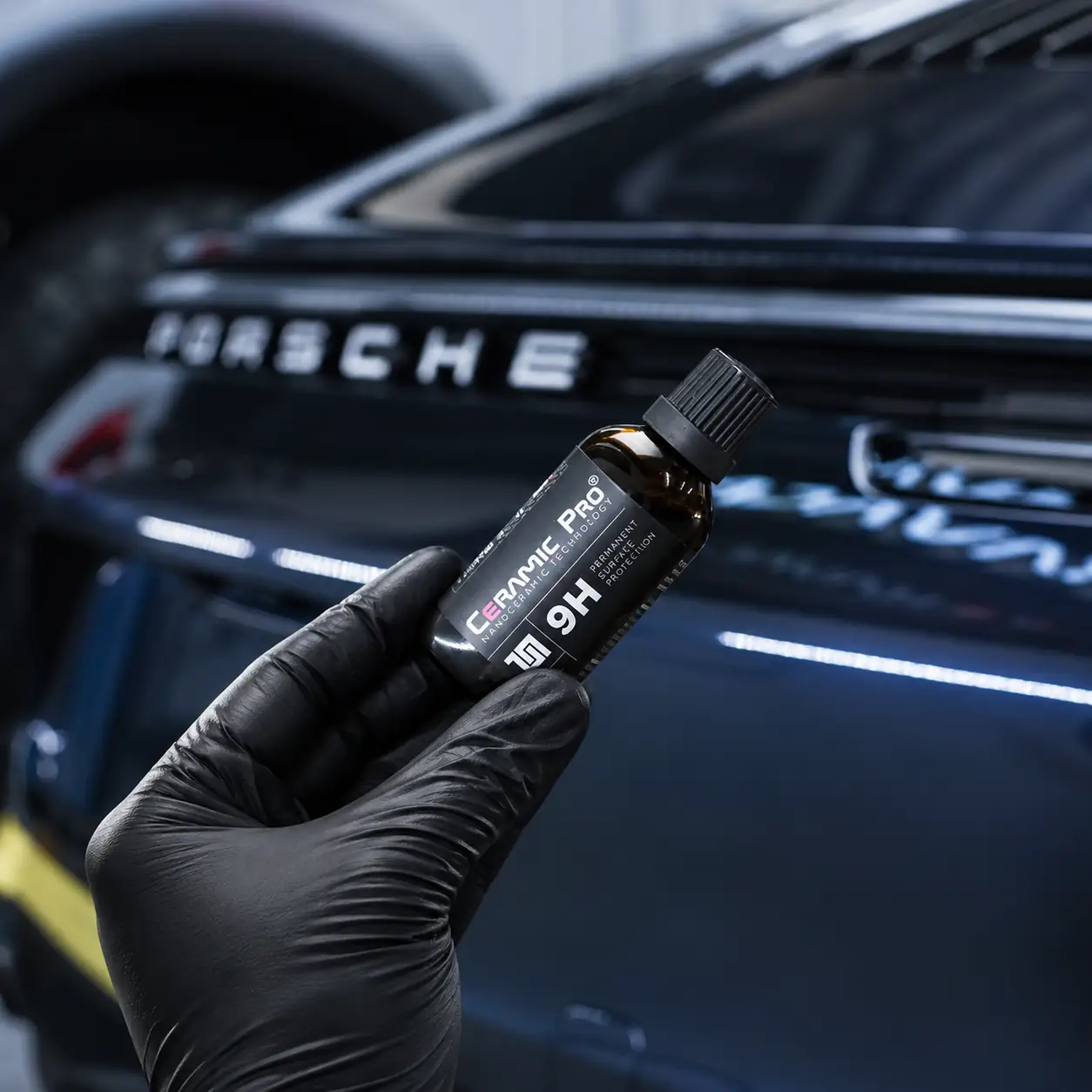

Ceramic Pro 9H is a professional nano-ceramic coating specifically formulated for multi-layer application. Its manufacturer recommends two or more layers under defined application conditions, while SGS laboratory microscopy has documented multilayer Ceramic Pro 9H coating specimens. The purpose of the system is to build a protective coating structure—not to claim that every added layer multiplies hardness or makes paint scratch-proof.
When choosing ceramic coating for a car, Malaysian owners often hear the term "multiple layers".
Some protection packages advertise several coating layers.
Others emphasise a single-layer formulation.
These differences can lead to understandable questions.
Can ceramic coatings actually be applied in multiple layers?
Will the second layer bond properly?
Does the first layer stop another layer from forming?
Does applying more layers really create a thicker coating?
And if some ceramic coatings are intended for a single application, how can Ceramic Pro 9H support several?
The answer begins with the formulation.
Ceramic Pro 9H is a manufacturer-developed, professional multi-layer nano-ceramic coating designed for repeated application under specified conditions.
Unlike a generic claim that any coating can simply be reapplied indefinitely, Ceramic Pro publishes technical requirements for layer quantity, application intervals and curing.
Its manufacturer also publishes laboratory testing information describing the microscopic examination of multilayer coating specimens.
Understanding these details helps explain how Ceramic Pro 9H's system works, what the evidence supports and why professional installation matters.
1. What Is a Multi-Layer Ceramic Coating?
A multi-layer ceramic coating is a protective coating system designed to receive more than one compatible coating application.
The objective is to build a specified protective film over a suitable surface.
A Protective Surface Layer
Ceramic coating forms a thin protective film over appropriately prepared paint.
Additional Compatible Applications
A multi-layer system allows subsequent coating applications according to the manufacturer's instructions.
Film Formation
The applied material undergoes its specified drying and curing processes.
Interlayer Compatibility
The formulation and application timing must support the next application.
Final Protective Structure
The complete system is intended to provide a durable protective finish.
What Makes It Different?
Not every coating product has identical formulation chemistry or application requirements.
Some products are intended mainly for a single layer.
Others specifically support additional layers.
A Simple Explanation
Think of a multi-layer system as a coating engineered for a defined sequence of applications.
It is not simply a technician repeating a procedure without regard for compatibility.
Key Principle
Multi-layer ceramic coating is a characteristic of the product's formulation and approved application system—not a feature automatically shared by every coating on the market.
2. Why Can Ceramic Pro 9H Be Applied in Multiple Layers?
Ceramic Pro 9H's manufacturer identifies it as a professional layer-forming nano-ceramic coating.
Its current technical documentation explicitly supports multilayer application.
Purpose-Designed Formulation
Ceramic Pro 9H is formulated to create a protective coating over compatible surfaces.
Manufacturer-Defined Layering
Its Technical Data Sheet recommends two or more layers.
Controlled Application Timing
The manufacturer provides a specific interval for subsequent applications.
Coating Film Development
Properly applied layers contribute to the overall protective coating system.
Professional Installation
The process requires suitable preparation, environmental control and correct finishing.
Manufacturer Instructions
Actual installation must follow the current product manual rather than assumptions based on other coatings.
Why This Is Important
Ceramic Pro 9H's multi-layer capability is not an unsupported verbal claim.
It is stated directly in the official manufacturer documentation.
Technical Summary
| Ceramic Pro 9H Characteristic | Why It Matters |
|---|---|
| Nano-ceramic formulation | Protective layer-forming technology |
| Multilayer compatibility | Supports additional approved applications |
| Recommended 2+ layers | Manufacturer-defined system |
| Intercoat timing | Controls application sequence |
| Professional installation | Requires trained application |
| Defined curing process | Supports intended coating development |
| Published testing | Provides evidence for relevant material properties |
Ceramic Pro 9H is intentionally designed to support multiple compatible applications as part of its professional coating system.
3. How Do Ceramic Pro 9H Layers Build Up?
The layering process begins with a suitable surface and proceeds through a controlled sequence.
Step 1 — Surface Preparation
The vehicle's paint is cleaned and prepared before coating.
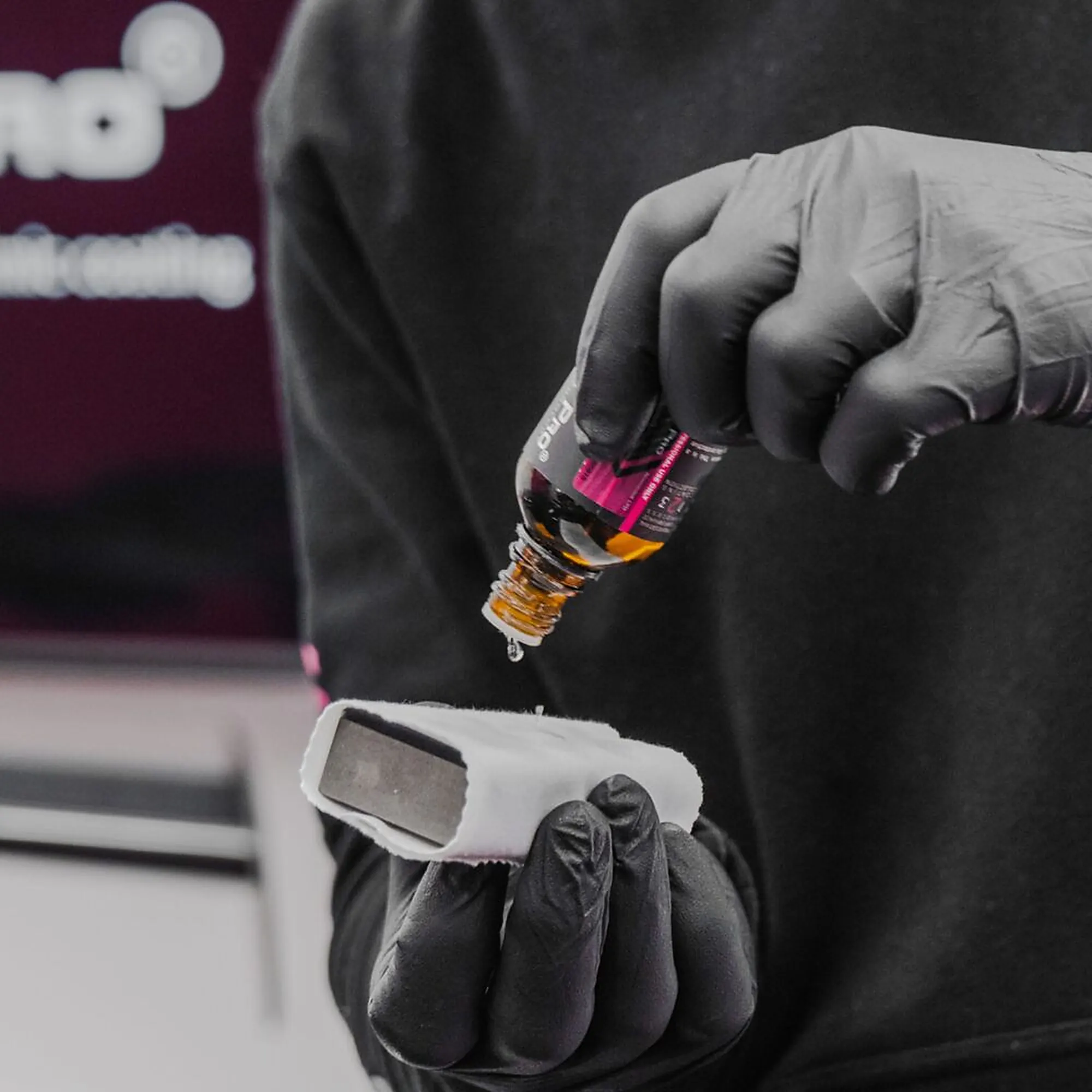
Step 2 — Initial Coating Application
The first Ceramic Pro 9H application delivers the protective coating material to the paint.
Step 3 — Levelling
The installer manages excess material and follows the specified finishing procedure.
Step 4 — Initial Film Development
The coating undergoes its initial solvent-release and film-forming stages.
Step 5 — Intercoat Interval
The installer follows the manufacturer's specified reference timing before applying another layer.
Step 6 — Additional Coating Application
Another compatible layer is applied according to the approved method.
Step 7 — Repeat as Specified
The sequence continues only as required by the selected coating system.
Step 8 — Final Curing
The completed protective system undergoes the specified curing process.
Step 9 — Quality Inspection
The installer inspects the finish and provides relevant aftercare instructions.
Understanding the Sequence
| Stage | Main Purpose |
|---|---|
| Preparation | Establish suitable substrate |
| First layer | Begin protective film formation |
| Levelling | Manage the applied coating |
| Initial curing | Allow prescribed film development |
| Intercoat interval | Prepare for compatible additional layer |
| Subsequent application | Build the specified protective system |
| Final curing | Develop final coating properties |
| Inspection | Check finished appearance |
Important Scientific Distinction
Repeated applications do not guarantee perfectly uniform, separately distinguishable layers across every area of every vehicle.
The resulting structure depends on chemistry, film formation, surface condition and application.
Ceramic Pro 9H's multilayer design is supported by defined application procedures rather than an assumption that any product can be stacked indefinitely.
4. What Does Ceramic Pro's Official Technical Data Sheet Say?
One of the most useful ways to evaluate a technical claim is to examine the manufacturer's actual product specifications.
Ceramic Pro 9H has a published Technical Data Sheet that addresses multilayer application directly.
Recommended Layer Quantity
The manufacturer recommends two or more layers.
Intercoat Interval
The published reference interval is 40–60 minutes.
Reference Environment
The stated interval relates to a controlled reference environment of approximately 25°C and 50% relative humidity.
Application Methods
The manufacturer supports suitable professional application methods, including spraying and manual applicator use.
Chemical Curing
The current specification describes a full chemical curing period of approximately seven days.
Why These Details Matter
They demonstrate that the manufacturer considers layering a defined technical application procedure.
Are These Instructions for DIY Use?
No.
The product is positioned for professional installation.
The manufacturer's current installation manual and product-specific conditions take precedence.
Manufacturer Specification Summary
| Question | Ceramic Pro 9H Manufacturer Guidance |
|---|---|
| Can the product be layered? | Yes |
| Recommended minimum | 2+ layers |
| Is there a defined intercoat interval? | Yes |
| Published reference interval | 40–60 minutes |
| Is application method specified? | Yes |
| Is curing required? | Yes |
| Published full chemical cure | 7 days |
| Is professional application important? | Yes |
What This Demonstrates
Multi-layer application is an explicit feature of the Ceramic Pro 9H technical specification, with defined conditions that installers must follow.
Explore the official Ceramic Pro 9H product information:
Official Ceramic Pro 9H product information
CERAMIC PRO 9H
Purpose-engineered multilayer nano-ceramic technology.
- Manufacturer-recommended 2+ layers.
- Defined intercoat application requirements.
- Professional preparation and curing.
- Relevant SGS multilayer microscopy evidence.
5. Has Ceramic Pro 9H Multi-Layering Been Tested by SGS?
Yes. SGS laboratory testing documented multilayer Ceramic Pro 9H specimens using optical microscopy to examine the coating structure.
This is important because it provides physical observation rather than relying solely on marketing language.
Independent Laboratory Examination
SGS Material & Engineering Laboratory examined Ceramic Pro 9H-coated specimens.
Microscopic Observation
The multilayer test used optical microscopy to examine a cross-section of the coating.
Multiple Identified Layers
The reported examination identified and measured multiple coating layers in the tested specimen.
Why Cross-Section Microscopy Matters
A cross-sectional examination allows investigators to observe material structure and estimate the thickness of observed regions under the specified measurement method.
Why This Is More Meaningful Than a Visual Demonstration
A glossy painted surface alone cannot establish that several layers are present.
Microscopy provides a more direct method of examining the tested coating structure.
What Does the Evidence Support?
The test supports the observation of multiple coating layers in the examined specimen.
What Does It Not Prove?
It does not demonstrate that every installation, coating thickness or layer count will produce the same result.
It does not prove that protection increases proportionally with every additional layer.
Separate Hardness Testing
Ceramic Pro has also published SGS pencil-hardness testing information.
Hardness testing and multilayer microscopy assess different properties and should not be treated as the same test.
Laboratory Evidence Overview
| Type of Test | What It Evaluates |
|---|---|
| Optical cross-section microscopy | Coating structure and observed layer thickness |
| Pencil-hardness testing | Resistance under a specified pencil-hardness method |
| Chemical-resistance testing | Response under specified chemical exposure |
| Adhesion testing | Coating adhesion under a defined test method |
The Important Conclusion
The multilayer capability of Ceramic Pro 9H is supported by manufacturer specifications and independent laboratory observation of tested specimens.
This is a credible basis for explaining the technology without exaggerating what the laboratory actually established.
6. Why Does Coating Thickness Matter?
A ceramic coating creates a protective film over the surface.
Film thickness is one factor that can influence how the coating system behaves.
Surface Coverage
Paint surfaces contain microscopic irregularities.
An appropriate protective coating forms a film over the prepared substrate.
Additional Material
Compatible repeat applications may contribute to greater total coating build.
Protective Characteristics
The manufacturer identifies overall coating thickness as one relevant aspect of its multilayer protection system.
Surface Appearance
The finished film can contribute to gloss, depth and clarity on suitable paintwork.
Not a Linear Formula
Two layers do not necessarily mean exactly twice the final thickness.
Different Panel Conditions
The result depends on the paint substrate, surface preparation and application.
Levelling and Material Quantity
Coating removed during levelling does not remain as part of the final film.
Curing
The final film structure depends on the curing process.
Important Distinction
Layer count is not a direct measurement of final film thickness.
A reliable thickness claim requires an appropriate measurement method and specified test conditions.
7. Does Every Extra Layer Make the Coating Stronger?
Additional compatible layers may contribute to the overall coating structure, but the effect is not automatically proportional.
More Applications May Increase Film Build
Ceramic Pro's manufacturer describes multilayer application as a way to increase the overall coating thickness.
Different Properties Behave Differently
Gloss, scratch resistance, chemical resistance and water repellency are different material properties.
Surface Chemistry Matters
The outermost protective surface influences hydrophobic and contamination-repellent characteristics.
Coating Thickness Is Only One Factor
A thicker film is not automatically superior in every measurable characteristic.
Diminishing Returns
Additional applications may not provide the same improvement at every stage.
Application Quality Matters
Poor preparation or incorrect application can reduce the value of additional material.
No Unlimited-Layer Guarantee
The manufacturer-approved process and actual package determine the appropriate number of layers.
What Should Customers Expect?
A defined multilayer system with an actual product and application process—not a promise that protection multiplies with every coat.
What More Layers Do Not Automatically Mean
| Claim | Correct Interpretation |
|---|---|
| 2 layers = 2× hardness | Not established |
| 3 layers = 3× scratch resistance | Not established |
| 6 layers = 6× protection | Not established |
| More layers always last longer | Not guaranteed |
| Every layer has equal thickness | Not guaranteed |
| Unlimited layers are beneficial | Not established |
| Manufacturer-approved multilayer system | Technically supported |
The value of multilayer Ceramic Pro 9H comes from the complete engineered system, not a simplistic formula multiplying protection by the number of coats.
8. What Is the Difference Between 9H Hardness and Nine Coating Layers?
The name Ceramic Pro 9H is often misunderstood.
The term 9H does not mean nine coating layers.
What Does 9H Refer To?
It refers to a pencil-hardness classification used in surface-coating testing.
What Is Pencil Hardness?
A defined test uses pencils of different grades under specified conditions to evaluate surface resistance.
Does 9H Refer to the Mohs Scale?
No.
Pencil hardness and the Mohs mineral-hardness scale are different measurement systems.
Does 9H Mean Scratch-Proof?
No.
A coating may still be marked by materials or contact conditions outside the scope of the test.
What Does Layer Count Mean?
Layer count refers to the specified number of coating applications within a professional coating system.
Can a Multi-Layer System Have 9H Hardness?
The coating system may be evaluated for hardness according to relevant testing, but layer count and hardness rating remain different properties.
Common Misconceptions
| Term | Meaning |
|---|---|
| Ceramic Pro 9H | Product name incorporating a hardness-related designation |
| 9H pencil hardness | A particular surface test classification |
| Nine coating layers | Nine specified coating applications |
| Multilayer coating | A system supporting repeated compatible applications |
| Mohs hardness | A separate mineral-hardness scale |
| Scratch resistance | Resistance to certain types of surface damage |
| Scratch-proof | An absolute claim not justified by 9H terminology |
The Main Lesson
9H is not a layer count, and a multilayer system does not create a new hardness rating simply by adding more coats.
9. Can Every Ceramic Coating Be Applied in Multiple Layers?
No single application rule applies to every ceramic coating.
Different products have different formulations and manufacturer instructions.
Single-Layer Systems
Some coatings are designed to achieve their intended result with one application.
Optional Second Layers
Other products support a limited number of additional coats.
Multilayer Systems
Some coatings, including Ceramic Pro 9H, are formulated for a broader professional layering system.
Base Coat and Top Coat Systems
Certain products are designed to work together as different layers.
Why Formulation Matters
Carrier solvents, film formation, curing behaviour and compatibility influence the suitable application method.
Why Timing Matters
Applying another layer too early or too late can cause results that differ from the manufacturer's intended process.
Why Product Instructions Matter
A coating designed for one application should not automatically be reapplied using a different product's procedure.
Is Ceramic Pro the Only Multi-Layer Coating?
No.
Other products also support layered application in their own specified ways.
What Makes Ceramic Pro 9H Relevant?
Ceramic Pro 9H has an explicitly documented multilayer application system supported by manufacturer technical data and laboratory evidence.
Comparison of Coating Approaches
| Approach | General Characteristics |
|---|---|
| Single-layer coating | Designed mainly for one approved application |
| Limited-layer coating | Supports a specified additional application |
| Dedicated multilayer coating | Formulated for repeated approved application |
| Base coat plus top coat | Uses different compatible products |
| Maintenance topper | Refreshes selected surface characteristics |
Key Takeaway
Ceramic Pro 9H's strength is not that every other coating is unable to layer. It is that its multilayer capability is specifically formulated, documented and supported by relevant testing.
10. Is Applying Another 9H Layer the Same as Applying Top Coat?
No.
A second Ceramic Pro 9H layer and a separate Ceramic Pro Top Coat serve different roles within the protection system.
Ceramic Pro 9H
The primary nano-ceramic protective coating.
Additional 9H Layer
Another application of the 9H coating according to the manufacturer-approved multilayer process.
Ceramic Pro Top Coat
A distinct coating product used for complementary surface characteristics when specified by the relevant system.
Maintenance Products
Aftercare treatments are separate from the original coating installation.
Why the Difference Matters
Customers should understand what product is applied at each stage.
Why Product Names Matter
Not every protective layer is necessarily another layer of Ceramic Pro 9H.
What Should a Quotation Explain?
The product and number of relevant applications included within the selected package.
Coating System Distinctions
| Term | Meaning |
|---|---|
| 9H base layer | Ceramic Pro 9H protective application |
| Additional 9H layer | Manufacturer-compatible subsequent 9H application |
| Ceramic Pro Top Coat | Separate complementary product |
| Ceramic Pro Care | Maintenance treatment |
| Paint correction | Surface preparation, not a coating layer |
| Infrared curing | Curing process, not a coating layer |
A transparent protection package should distinguish the coating products used from preparation, finishing and maintenance stages.
11. How Does Ceramic Pro Malaysia's Multi-Layer Coating System Work?
Ceramic Pro Malaysia offers professional Ceramic Pro 9H protection packages with different coverage and warranty options.
Professional Surface Preparation
The installation process includes vehicle cleaning, decontamination and suitable paint preparation.
Ceramic Pro 9H Application
The selected package specifies the appropriate protective coating system.
Multilayer Installation
The installer follows manufacturer-compatible procedures for the relevant number of layers.
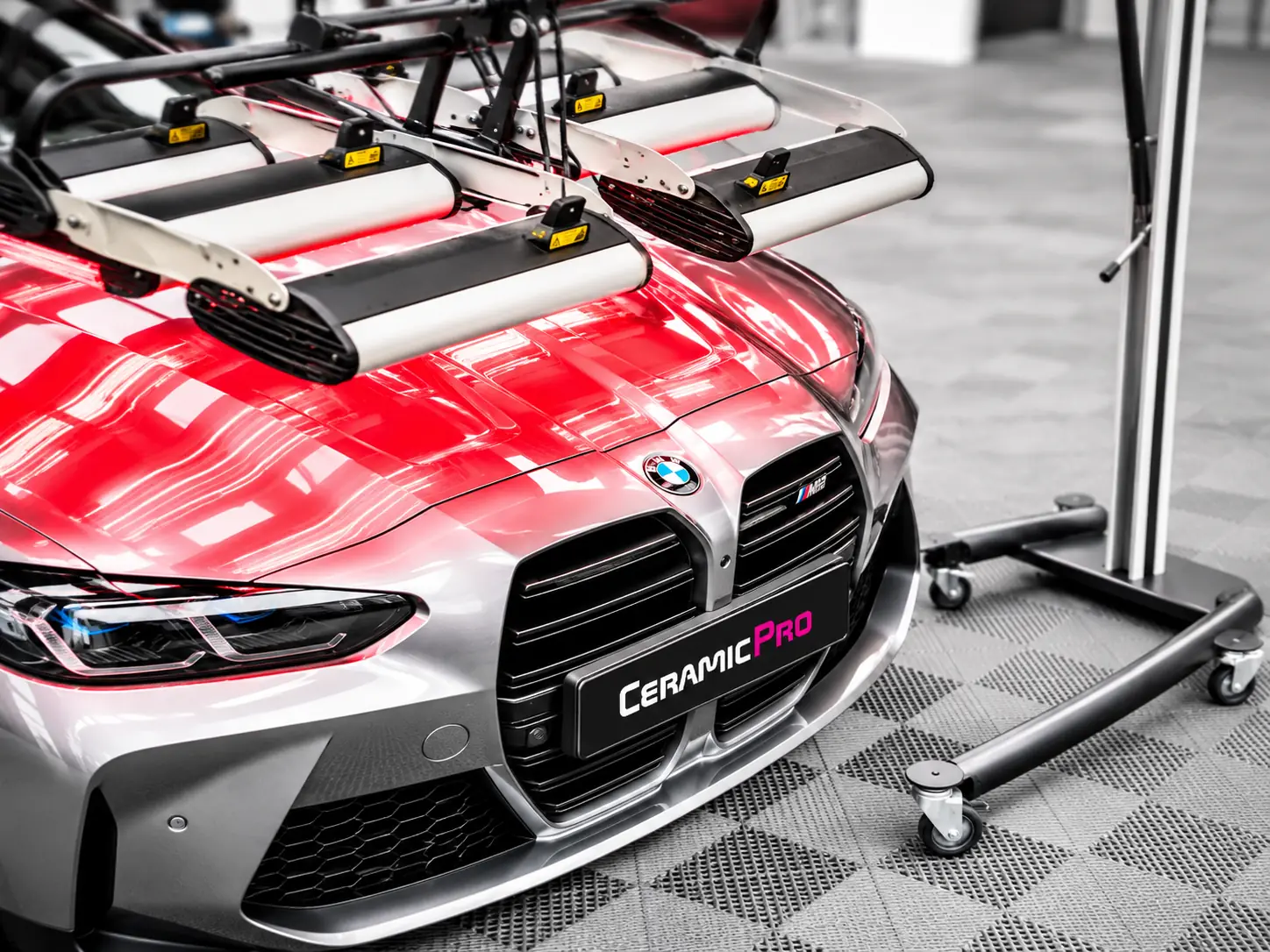
Controlled Infrared Curing
Ceramic Pro Malaysia publishes infrared curing as part of its professional coating process.
Additional Surface Coverage
Different packages may include selected interior or exterior treatments.
Quality Inspection
The completed vehicle is checked before handover.
Warranty Registration
Customers receive warranty terms applicable to the chosen package.
Maintenance Support
A relevant aftercare programme helps maintain the protected vehicle.
Malaysian Package Options
The current Malaysian website publishes:
| Package | Published Warranty |
|---|---|
| Silver | 3 years |
| Gold | 5 years |
| Platinum | 7 years |
The Gold package currently advertises six coating layers.
Exact layer count, coating composition, coverage and included treatments must be verified against the selected current package before making a specific claim about Silver or Platinum.
Important Clarification
A longer warranty period does not automatically mean a proportional increase in measured hardness.
Why Professional Installation Matters
The complete treatment depends on surface preparation, correct product application and proper curing.
Ceramic Pro Malaysia's multilayer offering is a defined professional coating system supported by package-specific services and written warranty terms.
Explore:
12. Why Surface Preparation Matters Before Multiple Layers
A coating system is only as reliable as the surface and procedure used to apply it.
Thorough Cleaning
Surface dirt must be removed.
Decontamination
Bonded deposits should be addressed with compatible preparation methods.
Paint Assessment
An installer evaluates the condition of the original finish.
Paint Correction
Where necessary and safe, correctable paint defects may be improved before coating.
Final Surface Preparation
The surface must be suitable for the selected protective system.
Why Layers Do Not Fix Paint Defects
Additional ceramic coating applications do not automatically remove scratches, oxidation or previous finishing imperfections.
Coating Application
The approved multilayer process begins after preparation is completed.
Quality Control
Every stage contributes to the finished appearance.
Professional Preparation Checklist
| Stage | Objective |
|---|---|
| Wash | Remove ordinary contamination |
| Decontamination | Prepare a clean substrate |
| Paint inspection | Evaluate condition |
| Paint correction | Address suitable correctable defects |
| Final surface preparation | Support coating application |
| Multilayer application | Build the specified system |
| Curing | Allow the coating to develop |
| Inspection | Check finished quality |
The most sophisticated multilayer coating still depends on suitable preparation of the original paint.
13. Why Application Timing and Curing Matter
Ceramic Pro 9H's technical documentation identifies specific conditions for the multilayer process.
Initial Application
The coating is delivered to the prepared surface.
Flashing and Levelling
The installer manages the material according to the product instructions.
Intercoat Timing
Additional coating must be applied within the relevant approved process.
Environmental Conditions
Temperature and humidity influence how coatings behave.
Full Chemical Cure
The product requires time to develop its final specified chemical properties.
Current Manufacturer Reference
Ceramic Pro 9H's current technical data describes a 40–60-minute intercoat reference interval and seven-day full chemical cure.
Does Every Climate Use Identical Timing?
Not necessarily.
The current manufacturer guidance and actual conditions govern installation.
Does More Curing Heat Mean Better Results?
Not automatically.
Any accelerated curing must follow approved procedures.
Why This Matters in Malaysia
Professional installation must account for the local environment and the manufacturer's requirements.
A multilayer formulation must be paired with the correct application sequence and curing process to achieve the intended result.
14. Does a Multi-Layer Ceramic Coating Replace Paint Protection Film?
No.
Ceramic Pro 9H and Paint Protection Film address different types of protection.
Ceramic Pro 9H
Provides nano-ceramic surface protection, hydrophobic properties, chemical resistance and enhanced gloss.
Physical Surface Damage
Ceramic coating is not a thick impact-absorbing film.
Paint Protection Film
PPF adds an additional physical layer over suitable painted surfaces.
Stone Chips
PPF is more relevant when physical road-impact protection is the priority.
Self-Healing
Selected PPF systems can help suitable fine marks recover within their protective top coats.
Ceramic Pro CPF
An integrated composite PPF with ceramic-style surface technology.
Magnus Pro PPF
A professional PPF system with advanced surface and protective-film construction.
Protection Comparison
| Priority | Ceramic Pro 9H | Ceramic Pro CPF / Magnus Pro PPF |
|---|---|---|
| Multilayer nano-ceramic coating | Yes | Not a 9H coating system |
| Gloss enhancement | Yes | Gloss-preserving film |
| Hydrophobic surface | Yes | Integrated protective top coats |
| Chemical-resistant surface | Core benefit | Product-specific |
| Physical impact-absorbing film | No | Yes |
| Stone-chip protection | Not primary function | Primary film benefit |
| Self-healing film surface | No | Yes, for suitable fine marks |
| Professional installation | Required | Required |
Why This Distinction Matters
Consumers should choose protection according to their needs rather than expecting one product to perform every function.
Multi-layer Ceramic Pro 9H provides advanced surface protection, while PPF adds a different type of physical barrier against certain impacts and scratches.
15. Is Ceramic Pro 9H's Multi-Layer Claim Fake?
No. Ceramic Pro 9H's multilayer capability is explicitly documented by its manufacturer and supported by published laboratory observations of multilayer specimens.
However, understanding the evidence is important.
Manufacturer Documentation
The current product specification recommends multiple layers and sets out reference application conditions.
SGS Laboratory Evidence
SGS microscopy has documented multiple layers in tested Ceramic Pro 9H coating samples.
Real Technical Basis
The product is a professional coating formulation specifically described as compatible with repeat application.
What the Evidence Does Not Establish
It does not prove that every real-world installation contains exactly the same film thickness.
Does Every Added Layer Guarantee More Hardness?
No.
A laboratory hardness rating and the quantity of coating applications are separate measurements.
Can Other Coatings Be Layered?
Some can.
The ability to layer is not exclusive to one brand.
Why Might People Be Confused?
Different coating systems have different chemistry, application instructions and marketing descriptions.
How Should Customers Verify the Claim?
Review the manufacturer's official technical data and relevant testing information.
The Correct Conclusion
Ceramic Pro 9H's multilayer formulation is a genuine documented feature, but its value should be explained through actual technical evidence rather than exaggerated claims.
16. How Can Customers Verify Their Ceramic Pro 9H Package?
A transparent installation experience should give customers clear information about what they are purchasing.
Confirm the Product Name
Ensure the package identifies Ceramic Pro 9H.
Understand the Layer System
Ask how the selected coating package is structured.
Confirm Package Coverage
Clarify which areas receive the specified treatments.
Ask About Surface Preparation
Understand the included preparation and correction stages.
Ask About Installation
Confirm that the process follows the current manufacturer requirements.
Confirm Curing
Ask about the required initial care and post-installation instructions.
Review Written Warranty Terms
Check the actual package warranty.
Confirm Warranty Registration
Ask how the installation and relevant warranty are recorded.
Check Aftercare Requirements
Understand cleaning and maintenance obligations.
Customer Verification Checklist
| Question | Why It Matters |
|---|---|
| Is this genuine Ceramic Pro 9H? | Product identity |
| Which package is selected? | Scope and warranty |
| How many coating applications are included? | Installation transparency |
| Are different top coats included? | Product distinction |
| What preparation is required? | Paint condition |
| What is the curing process? | Application quality |
| What areas are covered? | Service scope |
| What warranty applies? | Written customer protection |
| How do I maintain the coating? | Long-term care |
Main Buying Principle
A credible multilayer system should be supported by identifiable products, manufacturer instructions, professional workmanship and clear documentation.
17. Frequently Asked Questions
18. Final Verdict: Multi-Layer Technology Backed by Evidence
Ceramic Pro 9H's multilayer system is a documented feature of its coating formulation—not merely a promotional claim.
The manufacturer explicitly supports repeat application within a defined professional process.
Its Technical Data Sheet identifies recommended layer quantities, intercoat timing and curing requirements.
Laboratory microscopy testing has also examined Ceramic Pro 9H multilayer specimens, providing relevant evidence of the coating structure produced under test conditions.
Together, these sources provide a credible technical foundation for understanding the system.
The important distinction is that multilayer capability does not mean unlimited coating layers or a guaranteed multiplication of scratch resistance.
Each part of the process matters.
The formulation.
The original paint.
The preparation.
The application.
The levelling.
The curing.
And the installer.
Ceramic Pro Malaysia brings this technology into its professional coating packages, supported by established installation procedures, relevant warranties and aftercare.
For customers researching professional ceramic coating, understanding the evidence behind the product is more valuable than relying on exaggerated claims about layer count alone.
ENGINEERED FOR LAYERS. SUPPORTED BY TESTING. APPLIED BY PROFESSIONALS.
Discover the original Ceramic Pro 9H multilayer protection system.
Explore professional coating packages for your vehicle.
GET FREE QUOTE
EXPLORE CERAMIC PRO 9H
DISCOVER CERAMIC PRO MALAYSIA
Sources and Further Reading
- Ceramic Pro — Official Ceramic Pro 9H Product & Technical Data
- Ceramic Pro — Official Laboratory Testing & Certificates Archive
- Ceramic Pro Malaysia — Original 9H Ceramic Coating
- Ceramic Pro Malaysia — After Care & Warranty
- Ceramic Pro Malaysia — Company History & Network
- Ceramic Pro Malaysia — Protection Guides
- Google Search Central — Creating Helpful, Reliable, People-First Content